Malawi discovers the political value of removing a small annoyance
President Peter Mutharika has drawn praise after his government announced that Malawi’s National Identity Card will no longer carry an expiry date, in a reform officials say will spare millions of citizens the recurring cost and inconvenience of renewal.
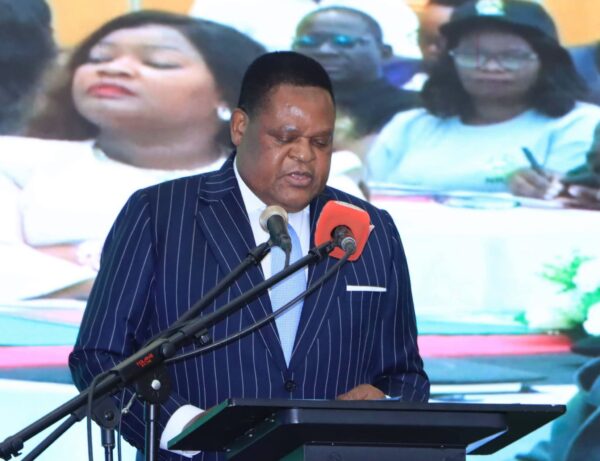
Minister of Homeland Security Peter Mukhito unveiled the change on Tuesday in Lilongwe at the launch of the Nzika Digital ID Wallet, a new system designed to modernise Malawi’s approach to identity management.
Mukhito directed the National Registration Bureau (NRB) to begin issuing the expiry-free cards from September 16 – a date chosen, deliberately or not, to coincide with the first anniversary of the Democratic Progressive Party’s return to government.
The timing is unlikely to be lost on observers. A year into its term, the administration has faced a mixed public reception, with voters crediting it for a degree of economic stability while continuing to raise concerns over corruption and questions about cohesion at the top of government.
Against that backdrop, the ID reform offers ministers a straightforward, easily communicated achievement: a bureaucratic irritant removed, with immediate and visible benefit to ordinary citizens.
Under the previous arrangement, Malawians were required to renew their National ID periodically, a process that frequently involved long queues and, for those in rural areas, considerable travel to registration centres.
Officials say scrapping the expiry requirement will remove that burden entirely, allowing the card to remain valid indefinitely once issued.
The reform sits alongside a wider digital transformation drive within Malawi’s public services.
The newly launched Nzika Digital ID Wallet provides a digital counterpart to the physical card, and the NRB said 22,000 people have already registered since the rollout began.
NRB Principal Secretary Patrick Machika said the initiative was intended to improve efficiency and bring government services closer to citizens, describing it as a central part of the country’s broader digital agenda.
The launch also drew comment from international partners. United Nations Resident Coordinator to Malawi Rebecca Dontoh called the Nzika Wallet an important step in strengthening the country’s digital identity infrastructure, suggesting it could eventually play a meaningful role across sectors including finance and elections, while continuing to complement rather than replace the physical card.
Dontoh, however, struck a more cautious note on the risks of digital exclusion, warning that citizens without reliable access to the internet, smartphones or electricity – a substantial share of the population, particularly outside urban centres – must not be left behind as the system expands.
She urged government to ensure straightforward mechanisms for citizens to correct errors in their records, and stressed that robust data protection safeguards would be essential to sustaining public confidence in the system over time.
For Mutharika, the announcement represents a comparatively uncomplicated win at a moment when his government’s broader record continues to invite more contested assessments.
Whether the goodwill generated by the reform endures, or proves simply one favourable episode within a wider and more critical national conversation about the DPP’s first year in office, remains to be seen.