

Malawi govt seeks court order to ban demos: Analysts say K2bn surety proposal ‘unconstitutional’
Malawi government has applied to the High Court for an order to ban the ongoing nationwide demonstrations to force Malawi Electoral Commission (MEC) chairperson Jane Ansah to resign until the presidential election case is concluded.
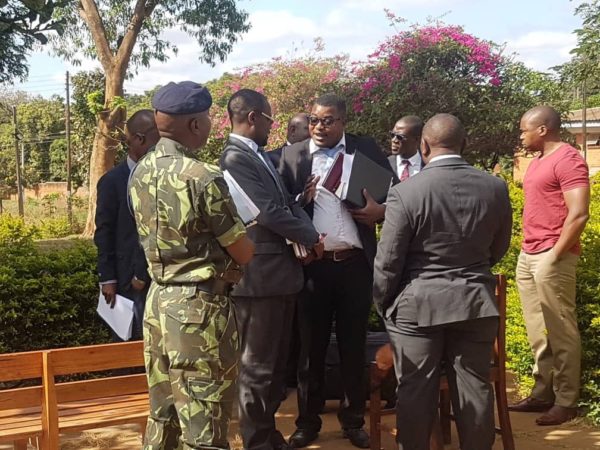
The application for an injunction has been filed by Attorney General Kalekeni Kaphale through the Lilongwe registry of the High Court.
Government wants the Court to order that those who want to take to the streets for protests must first deposit a K2 billion intended as a safeguard against rioting and property damage.
The court has set Monday, August 5 2019 as the day it is going to hear the the application as the Human Rights Defenders Coalition (HRDC) is set for a fresh round of protest on August 6 style ‘One million march’.
HRDC has so far organised five nationwide protests to force MEC chairperson Ansah to resign for allegedly mismanaging the May 21 Tripartite Elections.
The grouping’s lawyer, Khwima Nchizi, has confirmed the development, saying they will challenge the application to stop Malawians from exercising their constitutional right to peaceful and unarmed demonstrations.
In an interview with Nyasa Times, social and governance commentator Makhumbo Munthali said it is unfortunate to note that the Democratic Progressive Party (DPP) government seems not to learn from it’s past.
He pointed out that prior to July 20 2011 demonstrations former President Bingu Wa Mutharika issued a similar directive stopping people from protesting the economic and democratic crisis in that any one intending to organise demonstrators should deposit K 2 million surety.
However, this backfired as the CSOs challenged it as they proceeded to hold demonstrations.
“What this directive as well as other government attempts to block demonstrations achieved was igniting in people anger which led to a large turnout marred with violence,” said Munthali.
He said the Attorney General and entire DPP government must learn from the Commission of Inquiry into July 20 2011 killings which clearly recommended the Executive arm of government to avoid actions that may be viewed as blocking the citizens exercise of right to peaceful and unarmed demonstrations as these ignite anger in the people and subsequently lead to violence.
“Such attempts cannot achieve in ending demonstrations but rather addressing the issues raised by demonstrators as recommended by the Commission of Inquiry report is the one that can bring to an end to the current crisis,” said the governance commentator.
Inspector General (IG) of Police Rodney Jose last week wrote HRDC, demanding that it stops convening the protests following violent and criminal acts during the demonstrations.
Jose said the decision to stop the protests followed the unruly conduct of protesters.
“As you are aware, police officers have been attacked during these demonstrations making it extremely difficult for them to provide security to persons and property. Sadly, the situation is deteriorating with each new demonstration that HRDC convenes,” reads Jose letter to HRDC chairperson Timothy Mtambo.
Section 105 of the Police Act (2010) provides grounds for a police officer to notify conveners of demonstrations if the police will not be able to provide security for the protests.
It reads: “(1) Where an assembly or a demonstration is to take place in compliance with the provisions of this Part, a police officer—
“(a) if he has reasonable grounds to believe that the police will not be able to provide adequate protection for the persons participating in such an assembly or a demonstration, may notify the convener and such persons accordingly and shall give them the grounds in writing.”
Follow and Subscribe Nyasa TV :