

Malawi Parley wants central bank, cabinet bosses, AG to answer further on ‘cashgate’
The Public Accounts Committee (PAC) of the Malawi National Assembly will again summon three of the major players in the country’s Public Finance Management (PFM) system to answer further on issues related to the plunder of billions of kwachas from government coffers.
The probe into the financial plunder known as ‘cashgate’ already saw the Reserve Bank of Malawi (RBM) Governor Charles Chuka, the then Chief Secretary to the Government Hawa Ndilowe, and Accountant General appearing before the committee.
However, in its report the House body says it believes that the three officers knew more about Cashgate than they let out to the committee hence the need to summon them again. The committee says it is not satisfied with the responses given by the three officers in previous appearances.
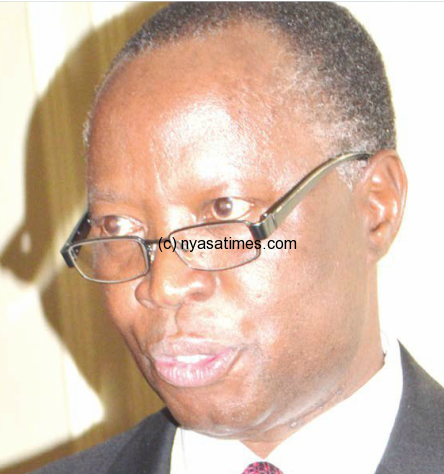
The three were summoned to explain their laxity in allowing billions of public money to be stolen.
A forensic audit covering the period April to September 2013 has since found that K20.3 billion was stolen under the watch of its custodians, raising the figure from the previous suspected K13 billion to have been plundered.
The RBM and the Accountant General’s office handle and control 554 government accounts.
In its report on the review and analysis of the previous committee’s report, PAC states that it would summon the key stakeholders who appeared before this current and previous committees, especially the Accountant General and the Chief Secretary, to present progress reports on what has happened since the revelations of the theft.
Among several areas the committee said it wants the RBM Governor to explain on why his officials were clearing cheques whose signatures were different from the specimen signatures at RBM and to be informed on what the Governor had done with those negligent officers.
During the previous interviews, RBM officials reported that when the signature specimen did not match, officials from Accountant General’s office just told them to pass the cheques because they were too tired or not in a good mood.
The committee also want to find out what measures the RBM had put in place to prevent a recurrence of the Cashgate.
When he appeared before the committee earlier this year, RBM Governor Chuka told Parliament that banks were mandated to honour government cheques as per agreement between Treasury, RBM and the Accountant General.
It was only after Cashgate that a fresh memorandum of understanding (MoU) was signed between government and RBM removing such restrictions.
RBM spokesperson Mbane Ngwira said the Governor would be ready to appear before the committee when summoned.
The RBM came under microscope when last October, investigations by one of the local daily newspapers revealed new details showing that authorities instructed some commercial banks to honour all government cheques from any of their branches for any amount without any limit on behalf of the central bank.
This aspect of the plunder came as the nation grappled to understand how tens of billions of public funds could be cashed so easily and with such reckless abandon without RBM raising eyebrows during the transaction and as it was refunding overdrawn balances to commercial banks.
From the preliminary report of the Baker Tilly forensic audit, commercial banks were also found to be complicit in ‘Cashgate’ and the committee plans to summon again the president of the Bankers Association of Malawi (BAM).
It was also the commercial banks that allegedly cleared questionable cheques with large sums of money without any restrictions.
The final Baker Tilly report, which is said to contain names of all connected to the looting, has been submitted to Auditor General Stephenson Kamphasa who forwarded it to the Anti-Corruption Bureau (ACB), Director of Public Prosecutions (DPP) and Malawi Police Service (MPS) for action.
However, the report was not tabled before Parliament by Minister of Finance, Economic Planning and Development Goodall Gondwe during the just-ended meeting as earlier expected.
This means Malawians will have to wait a while longer to be appraised of the names of companies and individuals who siphoned billions of their taxes.
The ‘Cashgate’ involved a systematic plunder that involved public officers conniving with private sector firms and/or individuals.
Follow and Subscribe Nyasa TV :