

Malawi Secures 50MW Power Boost as DPP Govt Instructs Ministry of Finance, Reserve Bank to Priotise MOMA Payments
Malawi is on the brink of a major power breakthrough as the country prepares to start importing 50 megawatts (MW) of electricity from Mozambique from February 2026, in a move set to significantly ease the crippling load shedding that has battered households and businesses.
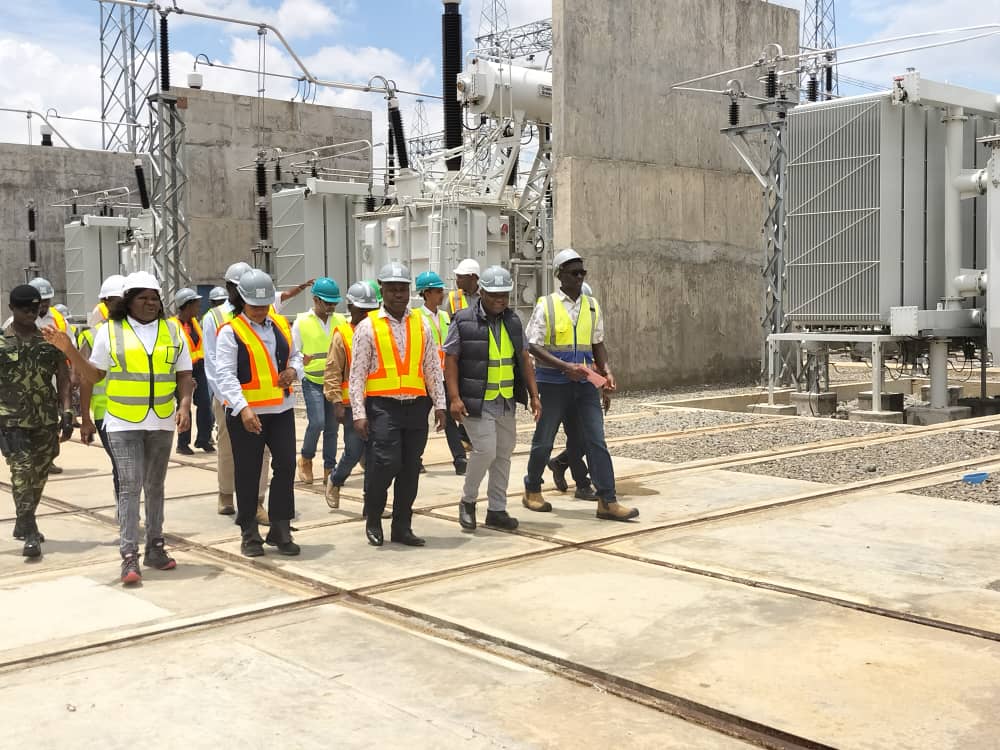
Minister of Natural Resources, Energy and Mining, Hon. Dr Jean Mathanga, disclosed the progress after inspecting works at the Phombeya Substation in Balaka, where she confirmed that the Mozambique–Malawi Interconnector Project (MOMA) is now in its final stages of completion.
Crucially, Dr Mathanga revealed that the project is now firmly backed financially, following strong assurances from the Minister of Finance and the Reserve Bank of Malawi that the required monthly payments will be prioritised.
“This 50MW will go a long way in easing the burden of load shedding that Malawians are experiencing. I have also received firm guarantees that the US$5 million monthly obligation needed to access this power will be honoured without disruption,” said Dr Mathanga.
She stressed that energy is the backbone of economic growth, and government is treating the MOMA project as a national economic lifeline, not just an electricity deal.
The importation of the 50MW is expected to stabilise Malawi’s power grid, support industries, revive struggling businesses and restore productivity that has been lost due to persistent blackouts.
ESCOM Acting Chief Executive Officer, Engineer Sinosi Maliano, confirmed that the 50MW supply has already been secured under an existing Power Purchase Agreement (PPA) with Mozambique.
“This is an immediate and realistic gain. While discussions for higher imports have taken place, the current 50MW is guaranteed and will make a tangible difference in reducing load shedding nationwide,” said Maliano.
The MOMA project connects Matambo Substation in Mozambique to Phombeya Substation in Malawi through 218 kilometres of high-voltage transmission lines, marking one of the most strategic power investments in Malawi’s history.
Once operational, the interconnector is expected to boost national energy security, strengthen investor confidence, and accelerate industrial growth, especially in manufacturing, tourism and mining.
The project also signals renewed momentum in Malawi’s regional energy integration and long-term power stability strategy, bringing fresh hope to citizens who have endured years of unreliable electricity supply.
As February 2026 draws closer, all eyes are now on ESCOM, the Ministry of Energy, Treasury and the Reserve Bank to translate these assurances into uninterrupted power — and finally turn the page on Malawi’s long-standing load shedding crisis.
Follow and Subscribe Nyasa TV :