

Mining Director Martin Nkasala Unveils Aggressive Plan to Push Malawi’s Mining Sector to 10% GDP Contribution
Director of Administration in the Ministry of Energy and Mining, Martin Nkasala, has unveiled an aggressive government plan aimed at transforming Malawi’s mining sector into one of the country’s biggest drivers of economic growth within the next five years.
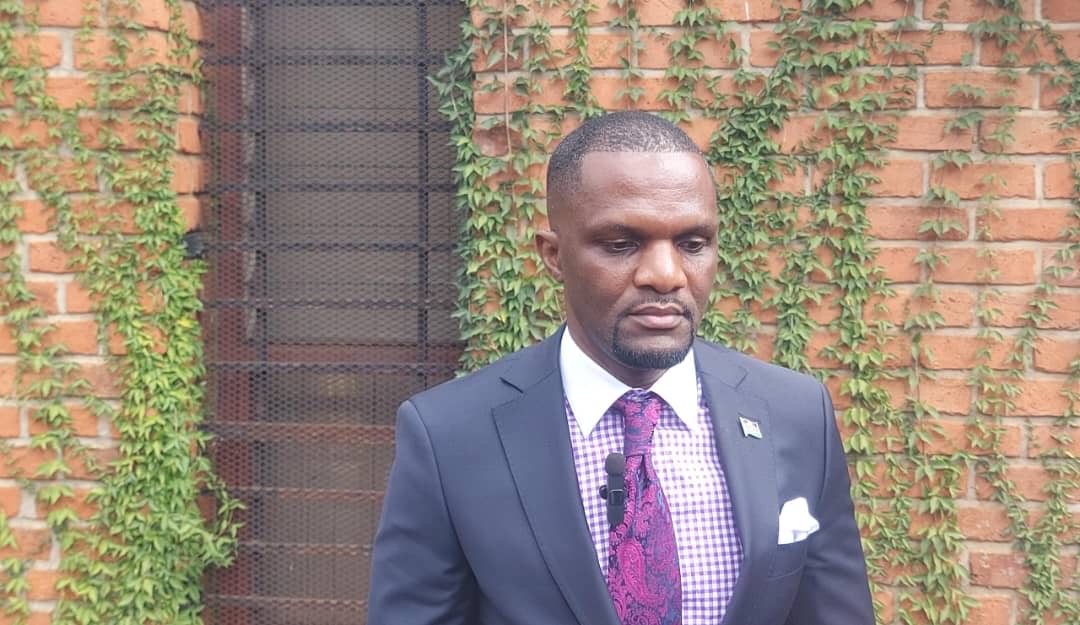
The government says mining, which currently contributes less than one percent to Malawi’s Gross Domestic Product (GDP), is projected to surge to at least 10 percent by 2030 under a sweeping reform agenda targeting investment, transparency and industrial growth.
Speaking during a half-day media training workshop for business reporters in Lilongwe, Nkasala said the government is positioning mining as a key pillar of Malawi’s economic recovery and long-term development strategy.
“The Association of Business Journalists has a key role in ensuring journalists are equipped to report accurate information about the mining sector,” said Nkasala. “This partnership is aimed at strengthening professional reporting, countering misinformation and promoting transparency.”
The training was organised by the Ministry of Energy and Mining in collaboration with the Association of Business Journalists (ABJ).
Govt pushes mining as new economic powerhouse
Government officials believe Malawi’s vast untapped mineral wealth could become a game-changer for the struggling economy if properly managed.
Alongside agriculture, tourism and industrialisation, mining has now been elevated as one of the strategic sectors expected to reduce Malawi’s heavy dependence on tobacco exports and generate new streams of foreign exchange.
Malawi is believed to possess huge deposits of rare earth minerals, uranium, coal, gemstones, bauxite, limestone and heavy mineral sands, but the sector has for years remained largely underdeveloped due to weak policies, limited exploration and inadequate investment.
Now, authorities say sweeping reforms are being rolled out to unlock the sector’s full potential.
Nkasala revealed that government is reviewing mining laws, taxation systems and licensing procedures in a bid to align the sector with international standards and attract serious investors.
“We are strengthening regulatory frameworks, improving transparency in licensing and encouraging greater local participation in the mining sector,” he said.
Crackdown on raw mineral exports
In one of the boldest policy shifts, government has also moved to restrict the export of unprocessed minerals as authorities push for local value addition and job creation.
Officials argue that exporting raw minerals has for years denied Malawi billions in potential revenue and employment opportunities that could be created through local processing industries.
“Exporting raw minerals means exporting jobs and value,” Nkasala said. “Our goal is to ensure that mineral processing and value addition take place within Malawi so that the country fully benefits from its natural resources.”
Economic analysts say the move could trigger industrial growth if backed by stable electricity supply, infrastructure investment and processing plants.
Nationwide mining licence audit exposes gaps
Meanwhile, the Ministry of Energy and Mining has launched a nationwide audit of mining licences amid growing concerns over compliance and transparency in the sector.
According to Nkasala, preliminary findings from the audit have already exposed irregularities and weaknesses in some licensing procedures.
“Once the audit is complete, corrective measures will be implemented to strengthen transparency and accountability,” he said.
The government also wants more Malawians to directly participate in the mining industry, which is currently dominated by foreign investors, especially in large-scale mining operations.
Authorities are now encouraging locals to acquire mining and mineral trading licences to ensure citizens benefit from the country’s mineral wealth.
Journalists challenged to sharpen mining coverage
ABJ Deputy National Coordinator Alex Banda said many journalists still lack specialised knowledge to effectively report on the mining sector despite its growing importance to the economy.
“Accurate and well-researched reporting helps shape a positive narrative on mining and supports national economic growth,” Banda said.
He called for specialised training in mining economics, geology, financial analysis and regulatory frameworks to strengthen business journalism in Malawi.
With global demand for strategic minerals rapidly rising, government believes Malawi could soon position itself as a major player in the regional mining industry if the reforms succeed.
Follow and Subscribe Nyasa TV :