

Msaka concedes Malawi secondary school education system facing serious challenges
Minister of Education, Science and Technology, Bright Msaka has said the secondary school education system was facing serious challenges, pointing out that there was need for a major transformation.
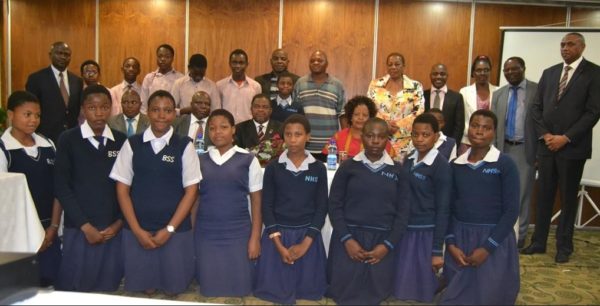
He made the observation on Monday in Blantyre at Mount Soche Hotel when he opened a regional dialogue meeting on secondary education in the southern region chapter.
Msaka said the introduction of free primary education at the dawn of multiparty democracy caused very huge challenges to the secondary sub-sector in that the growth and expansion that occurred was never matched with the growth and expansion at that level.
“We ended up with more primary schools in the country without a commensurate increase in secondary schools. There are 5,400 primary schools versus 749 secondary schools and we have 5million learners in primary schools and only around 400,000 learners in secondary school.
“Over 800,000 learners enroll in primary school every year and less than 100,000 proceed to secondary level per year and we have over 77,000 teachers for primary schools and only 14,000 teachers in secondary schools,” the Minister explained.
Msaka encouraged participants to the dialogue meeting to objectively review what they have done over the past decade and map the way forward towards a vibrant and improved secondary school sector that the nation needs.
Apparently, the ministry of education has engaged the academia to carry out studies on a number of areas that require thorough analysis to help the sector understand the secondary education programme better and use the feedback and recommendations for generation of a comprehensive national education sector plan.
The dialogue session has brought together, the academia, development partners and traditional leaders whereby they are expected to analyze education programmes and reforms at secondary school level, access quality and relevance of secondary education as well as the curriculum in terms of subject arrangement and resourcing.
Two other similar meetings are expected to take place in Mangochi and Mzuzu respectively.
Honourable Minister, what is required is not an overhaul or expansion of bricks & mortal (secondary schools) but rather an overhaul of entire curriculum at primary, secondary school and university level. The world has become a global village and is rapidly moving into the 4th industrial phase. The education system therefore has to prepare the young generation and the old school alike to the this world we probably don’t have a clue about. The focus therefore should not just be building more secondary schools but also seriously look at online access which will allow Malawians tap into a wide number of international teachers/lectures/educators. Build more facilities that are connected to the global village and allow students/pupils to access the world through their own lenses. Build libraries or community centres with satellite links to the bst universities and allow them to register. Think 21st century and not 20th century. Bricks & mortal is now becoming irrelevant.
You funny Mr Msaka!
Why conceding this late? Wolrd Bank told the DPP government about this same issue in 2010 (http://10.150.35.17:6510/siteresources.worldbank.org/EDUCATION/Resources/278200-1099079877269/Education_System_Malawi.pdf) and your government denied it in totality.
At that time and as is shown in this report World Bank told you that the secondary school level, in spite of having a relatively good average Student Teacher Ratio has more than 60 percent of teachers that are under-qualified and most of the under qualified teachers work in CDSSs; 81 percent of the CDSS teaching force is unqualified. Sincerely if you were listening you would have done something on this by now. But alas that was useless to your government.
The Bank further observed that schooling inequalities in Malawi are also geographical and observed that the Northern region has better educational coverage than the Southern and Central region. The Bank gave examples as follows: primary completion rate is more than 50 percent in a few districts (Mzimba, Rumphi, and Nkhatabay) while it is below 30 percent in six others (Dedza, Mangochi, Ntcheu, Machinga, Phalombe, and Thyolo). The secondary completion rate (proxied by the access rate to Form 4) is very low. The Northern region is at the same level as the Southern (12 percent), and Central is lower (9 percent) (see page xxxvii of the executive summary). Sincerely, have you done anything to this to address the problems.
Just to assist your government in case you had no idea how you could go about it the Bank proposed the following:
1. Better manage the allocation of teaching staff and other resources in schools
2. Start developing a better quality, more equitable and efficient secondary education i.e. The average school size in secondary schools is very low (212 students in secondary vs. 642 students in primary education). For the sake of countering the above, you were advised to as follows and I quote: “Economies of scale savings are possible by favoring bigger secondary schools (of more than 150 students). The Bank advised and said: build new classrooms
and deploy new teachers with priority given to the smallest secondary schools (in areas with a population density large enough to attract a sufficient amount of students). Today what has the DPP government done? Looking at the strategies at stake, can you implement them in 14 months for people to appreciate you and vote for you in 2019?
3. On text books and Labs the Bank’s report observes that: “all other things being equal, textbooks and labs are associated with better exam pass rates. Yet in Malawi the average number of textbooks per student is 3.7, and worse still some schools have no textbooks at all. They further more told you that only 23 percent of secondary schools have a lab and advised your government then to increase the number of textbooks and labs in secondary schools. Right now, (8 years since when they advised your government) what have you done? Mvuto ndi kuchulutsa ndale/rhetoric!!
4. I hope you also agree with them that Malawi has a dramatic lack of secondary school teachers in the sciences. If yes have you pursue the program called Strengthening Mathematics and Science in Secondary Education that they gave your government?
And the report is just complex and wonderful………………!
Lastly I for one strongly believes that no studies by academia within Malawi will surpass what the Bank gave us. Sincerely Malawi would have benefited a lot if we tried what they told us that starting re-inventing the wheel. Any resources for whatever you are calling studies are a waste and if anything resources for another cash gate!!
The data quoted on secondary school leaners of 400,000 vs. 749 secondary schools should have been put into context. What is the capacity of these secondary schools? At least a range would do? Simple division will give us 550 learners per school?
The same with 800,000 enrolment should surely give us roughly the same number of potential secondary school candidates. Where do the rest go? Please be highlighting full facts so that we the readers are fully informed.