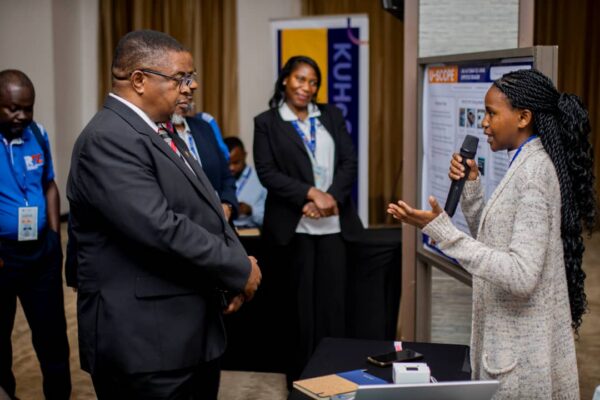

Msaka says Malawi must harness health science to boost economy
Malawi’s Minister of Education, Science and Technology has delivered a rallying cry to the country’s brightest medical minds, insisting health research must be viewed as far more than simply treating patients, but as a genuine engine for driving the nation’s economic transformation.

Bright Msaka SC issued the bold challenge while officially opening the Kamuzu University of Health Sciences (KUHeS) 5th Research Dissemination Conference, held under the theme “Advancing Economic Development through Multidisciplinary Health Research and Innovation.”
“Malawi should look at health research beyond the provision of medical services and recognise its potential to contribute to economic development,” Msaka declared to the gathered researchers and academics.
The minister insisted multidisciplinary research and innovation hold the power to generate genuine, practical solutions for communities across Malawi, while simultaneously strengthening the country’s broader development ambitions.
Msaka didn’t hold back in setting out his expectations either, urging researchers to ensure their work remains legally sound, relevant and genuinely innovative, so government can effectively translate their findings into real-world policy interventions and national development strategies.
Speaking directly to Nyasa Times, the minister revealed a further dimension to his vision, explaining how health research could dramatically boost the economy simply by helping people understand their own health status earlier and take swift action when needed.
“Early detection and intervention could help reduce premature deaths and enable people to remain productive members of society,” Msaka explained, framing preventative healthcare as a direct economic multiplier for the nation.
Meanwhile, KUHeS Council Chairperson Professor Alfred Mtenje used the opening ceremony to highlight research’s critical role closer to home, revealing how investment in research could help the university itself overcome pressing internal challenges.
“Investment in research could help the University find solutions to challenges affecting areas such as financing, accommodation, research infrastructure and international partnerships,” Mtenje said, underscoring just how central research has become to the institution’s long-term financial sustainability.
The prestigious conference, running from 30 September to 2 October 2026, brings together researchers and stakeholders from across Malawi to share groundbreaking findings and explore how health research and innovation can be translated into tangible, practical solutions capable of driving the country’s development forward.