

Mutharika Seeks World Bank Lifeline as Fuel Crisis Tightens Grip on Malawi
President Peter Mutharika has moved to secure urgent financial support from the World Bank as Malawi reels under the weight of soaring global oil prices triggered by escalating tensions in the Middle East.
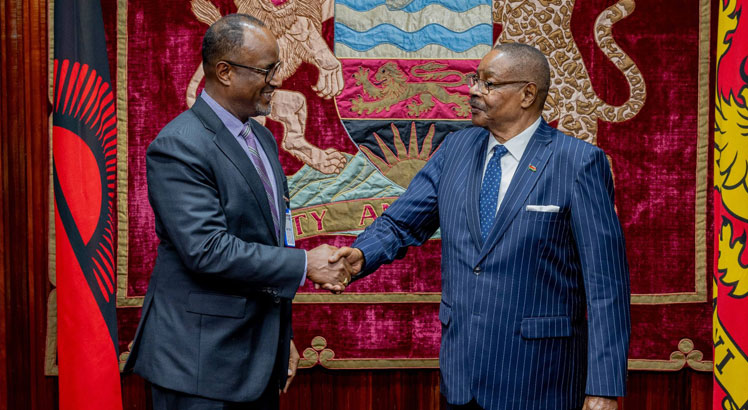
During high-level talks at Sanjika Palace in Blantyre yesterday, Mutharika appealed for emergency assistance from World Bank regional programme director for Africa Nathan Belete and incoming country division director Firas Raad, warning that the external shock is placing unbearable strain on the country’s fragile economy.
“We have discussed the ongoing geopolitical tensions in the Middle East and how they have strained global economies, including that of Malawi. Consequently, I have requested support to cushion us from the impact we are experiencing,” Mutharika said in a statement released by State House.
The appeal comes at a critical moment. Malawi is already battling sharp fuel price increases following the return to cost-reflective pricing under the Automatic Pricing Mechanism (APM). Petrol prices have nearly doubled—from K3,499 last year to K6,672 in April—while diesel has climbed to K6,687. Kerosene prices have surged by over 80 percent, deepening the cost-of-living crisis for ordinary Malawians.
Behind these figures lies a perfect storm: rising global oil prices, acute foreign exchange shortages, and mounting debts to international fuel suppliers—leaving authorities with little room to shield consumers.
The World Bank signaled readiness to step in.
Belete indicated that the institution is considering activating a Rapid Response Option, a financing tool designed to quickly redirect resources to countries facing sudden crises.
“One of our primary concerns is the impact on food prices and the burden on poor and vulnerable populations,” he said. “We have discussed immediate actions to support these groups, as well as strategies to facilitate critical imports.”
Beyond emergency relief, the Bank is also exploring longer-term support in key sectors such as education, health, and infrastructure under a new partnership framework.
Government hopes are partly anchored on an existing $80 million (about K140 billion) World Bank grant and a pending Rapid Response Facility, which Minister of Finance Joseph Mwanamvekha believes could help stabilise the economy. But the scale of the crisis suggests far more will be needed.
Globally, oil markets have been thrown into turmoil. Brent crude prices have surged by between 55 and 60 percent since late February following the outbreak of conflict between the United States and Iran—disrupting nearly a fifth of global oil supply through the strategic Strait of Hormuz.
Prices spiked from around $70 per barrel to a high of $126.41 in April, before easing slightly to between $110 and $115 in recent weeks. The ripple effects have been severe: diesel prices have risen faster than petrol, while kerosene-based fuels have more than doubled in some markets—driving up transport and food costs worldwide.
For Malawi, the impact is especially acute.
Economics Association of Malawi president Bertha Bangara-Chikadza has warned that the country’s heavy reliance on imports leaves it dangerously exposed to global shocks.
“Malawi, being a land-linked economy, is highly exposed to global fuel and geopolitical shocks. This indicates how much inflation is imported rather than domestically determined,” she observed.
Domestic pressures are only making matters worse. Fiscal constraints, climate-related disruptions to food production, and structural inefficiencies are compounding inflationary pressures.
Between January and April alone, international landing costs surged dramatically, with Free on Board prices rising by 42 percent for petrol and a staggering 87 percent for diesel. Meanwhile, the Price Stabilisation Fund—once intended as a buffer for consumers—is weighed down by arrears of about K1.1 trillion, effectively crippling its ability to absorb further shocks.
Analysts warn that relief may not come anytime soon.
Vandana Hari, founder of Vanda Insights, cautioned that oil prices could remain elevated for the foreseeable future. “Prices have nowhere to go but up until the Strait of Hormuz is fully reopened,” she told CNN, adding that the timeline for that remains uncertain.
Against this backdrop, Malawi’s broader economic outlook remains fragile. The United Nations has already flagged slow economic transformation, warning that deep structural weaknesses could undermine the country’s long-term development agenda under Malawi 2063.
In its latest Common Country Analysis, the UN notes that despite recovery efforts, the economy continues to struggle with low growth, rising vulnerability, and limited structural change—conditions that threaten sustainable progress.
Government projections offer modest optimism, with economic growth expected to rise from 2.7 percent in 2025 to 3.8 percent in 2026, and further to 4.9 percent in 2027. But for many Malawians already grappling with rising costs of fuel, food, and basic services, those projections offer little immediate relief.
As pressure mounts, Mutharika’s push for World Bank intervention underscores a stark reality: Malawi is not just facing a fuel crisis—it is confronting the limits of its economic resilience in an increasingly volatile world.
Follow and Subscribe Nyasa TV :