

No devaluation, vows Mwanamvekha, as Malawi eyes new IMF programme
Malawi’s government has ruled out devaluing the national currency, the Kwacha, even as a new World Bank report shows the country still grappling with serious economic headwinds despite some progress on public finances.
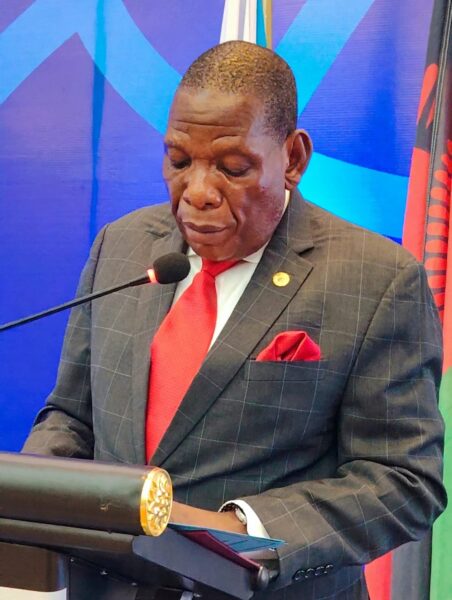
Finance minister Joseph Mwanamvekha conceded that more needs to be done to deliver positive economic outcomes, but was unequivocal that currency devaluation would not be part of the plan.
He said he was hopeful that ongoing talks with the International Monetary Fund and World Bank would produce a “homegrown” reform programme instead.
“This time, we are negotiating with the IMF and the World Bank so that we don’t have to repeat the same mistakes that we have done before.
“We need to come together and come up with reforms that are properly sequenced and timed and also reforms that will protect the vulnerable people,” Mwanamvekha said.
His remarks came as the World Bank launched its latest Malawi Economic Monitor report in the capital, Lilongwe, titled “Building Stability to Unlock Growth.”
World Bank division director Firas Raad said the government had managed to execute its 2026/27 national budget within approved limits for the first time in more than five years, calling it a significant institutional achievement.
The primary fiscal deficit fell sharply, from 3.7 per cent to 0.4 per cent of GDP, while the overall deficit narrowed to 8.8 per cent.
However, Raad cautioned that the improvements have yet to translate into meaningful gains for ordinary Malawians.
GDP growth is projected at just 2.7 per cent this year, only marginally ahead of population growth, with persistent inflation, foreign exchange distortions, unreliable energy supply and a difficult business climate continuing to weigh on investment and job creation.
The report also painted a mixed picture on poverty. The overall poverty rate has fallen to 47.3 per cent from 50.7 per cent, but food poverty has worsened, rising to 24 per cent from 20 per cent, while inequality has widened further.
“These are not abstract statistics; they represent millions of families working harder and earning less, and young people unable to find work,” Raad said.
Talks are also under way on a possible new IMF funding arrangement, with an IMF mission currently in the country for policy negotiations, its first visit in three months.
Despite the World Bank’s praise for recent fiscal discipline, officials in Lilongwe made clear that whatever reforms follow, a devaluation of the Kwacha will not be among them.
Follow and Subscribe Nyasa TV :