

Of Malawi education: Publish and publicise, or Perish
The question of the Malawian education system continues to be discussed, especially by prospective, current and graduate academics. It remains a hot topic in most social media forums, and of cause, parents concerned about the future of their children regarding the career paths opted by their children. The discussions are mainly focused on comparing the standards of the education framework locally, regionally and at times internationally. Whether right or wrong, this comparison has rightly put the framework of our institutions in disrepute on social media forums; question; is our education framework matching the standards expected internally and externally?
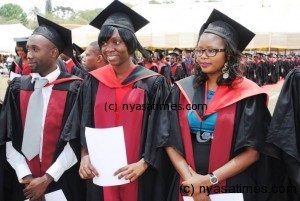
I would like to focus on the Malawi framework and compare it to the UK framework. The patriotic would ask, “Why compare it to the UK framework?” The answer is simple; the UK degree/award is still recognised internationally and accepted in the “academic world”, and since it is taught and researched in English, the academic community worldwide mainly communicate in the English medium.
At the moment, according to a report published this year (2015) by Pearson/ Economist Intelligence Unit, the UK is in second place among European countries, and sixth overall in a global education league table that determines the quality of academic levels from primary school to university.
In first place is South Korea followed by Japan, Singapore, Hong Kong and Finland, making the top 5. The table shows a strong link between improving levels of education and training, coupled with economic growth. South Africa, the highest rated African nation is in 124th position due to the research projects and publications being carried out at University of Cape Town, University of Witwatersrand, Stellenbosch University and University of KwaZulu-Natal. Can a university be respected if it does not carry out research and publish its findings? The answer is simple; NO!!
Malawi, academically in the past competed mainly with South Africa, Zimbabwe and Zambia, regionally, on the deliverance of education. South Africa and Zimbabwe have for decades been the pace setter, and a sizeable number of people currently working in our industry, have qualifications from these nations. However, the need to compare our level of qualification with the UK framework remains important for the development of our overall education framework.
Before we do that I think it is important that we first establish how I am going to do so. As part of my profession based in Cheltenham, UK, I spend time assessing and advising people with international qualifications and compare their LEVEL to the UK framework.
By “level” I mean high/secondary school, post school, undergraduate and post graduate qualifications. When comparing levels, the subject area is considered, but what is important is the level itself. So, my take is based on the Malawi framework compared to the UK framework level, and how our neighbouring countries are faring as well to the UK framework.
Below is a diagram detailing the levels of qualification and their comparability to the UK qualifications framework.
| Country | Qualification | Comparable level in the UK |
| Malawi
|
Bachelor degree | Diploma of Higher Education |
| Malawi | Bachelor degree (when studied in the following field(s):
Law Medicine/Surgery |
British Bachelor (ordinary) degree standard |
| Malawi | Diploma (university)
When studied at the following institution(s): Mzuzu University University of Malawi |
Certificate of Higher Education (CertHE) standard
|
| Malawi | Master’s degree
When studied at the following institution(s): Mzuzu University University of Malawi
|
British bachelor (honours) degree standard |
| Malawi | Bachelor of education | Diploma of Higher Education (DipHE) standard |
| South Africa | Bachelor degree | British Bachelor (ordinary) degree standard |
| South Africa | Bachelor (Honours) degree | British Bachelor (Honours) degree standard |
| South Africa | Professional Bachelor degree | British Bachelor (Honours) degree standard |
| South Africa | Master’s degree | British Master’s degree standard |
| South Africa | Doctorate | British Doctor of Philosophy degree (PhD) standard |
| Zambia | Bachelor degree | Diploma of Higher Education (DipHE) standard |
| Zambia | Master’s degree | British Bachelor (Honours) degree standard |
| Zambia | Postgraduate Diploma | British Bachelor (Ordinary) degree standard |
| Zambia | Diploma (from the Medical Council of Zambia) | BTEC Level 3 Subsidiary Diploma / 90-Credit Diploma / Diploma |
| Zimbabwe | Higher National Diploma | SQA Higher National Diploma (HND) standard |
| Zimbabwe | Bachelor degree (General) | British Bachelor (Ordinary) degree standard |
| Zimbabwe | Bachelor degree (Honours) | British Bachelor (Honours) degree standard |
| Zimbabwe | Master of Philosophy | British Master of Philosophy degree (MPhil) standard
|
| Zimbabwe | Master’s degree | British Master’s degree standard |
A lot of research is done so that levels are assessed according to the applicant’s qualifications. The information above is standard country levels, therefore if a candidate was to present a qualification not yet assessed, the qualification would go into research. The research procedure, according to those researching the qualification, the process can take up to four months. This is because information would be requested from the awarding institution, local education authorities, then after the information is gathered; it is then compared to the UK framework. At times if the two stated above are unable to give the required information, information is therefore sourced from a UK based embassy. The embassy is expected to assist in gathering the information from back home.
It is also important to note that the information is used for enrolling into UK universities and other education institutions, work (employment) and immigration matters.
The Zimbabwean government continues to support their higher learning institutions in areas of furthering the levels of education in that country despite all the political chaos known to all about the country. The Zambian framework, in the past was considered to be below the levels of the Malawian levels but is now looking more or less the same(if not better) as the Malawian framework. The South African education system is Africa’s leading framework, miles ahead of any other nation in Africa.
As an exercise; visit any of our UNIMA websites and compare the information you will access on that site to the information you will access from a University of Zambia website. Visit both sites as a visitor trying to get information on courses, duration, modules, fees and any other information that as a parent or prospective student would want to know about the institution.
Bearing in mind that in modern day academia, information about institutions is readily available online. Feel free to do the same with the University of Zimbabwe and any South African university. If there is one thing one needs to understand is that we are now living in an era where information needs to be readily available online to all stakeholders.
This exercise is simple but explains a lot about where our institutions are and what they need to be doing to catch up with the rest. No doubt that a website would not give a true indication of the quality of lectures offered by the institution; however it gives a clear picture of how the institution is managed.
It’s the same thing as walking into the reception of any organisation, you expect to see a receptionist who will be able to address any queries presented and if need be, onewould be signposted to the correct department or person. No difference with a website; a website is the online receptionist. If our institutions are lacking in the simple aspect of running and managing a website, where else are they lacking?
Follow and Subscribe Nyasa TV :