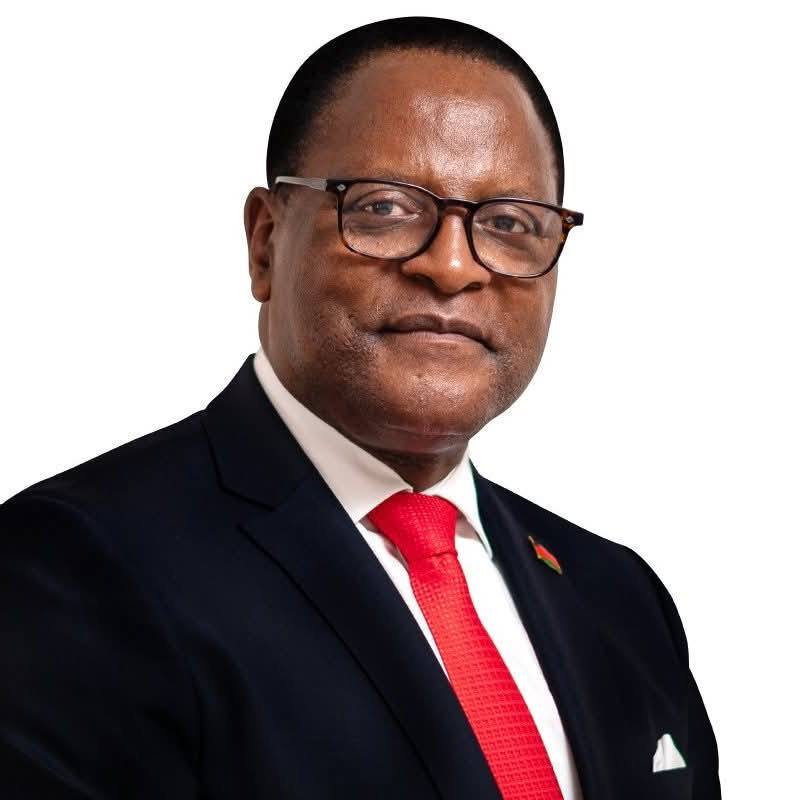
Malawi Congress Party (MCP) president Dr. Lazarus McCarthy Chakwera will see his term as leader of the country’s biggest and oldest party end in 2029. The party constitution forbids him from seeking a third term, unless he chooses to flagrantly violate party rules. This means that the MCP convention will have the critical task of electing a new leader, who will become the party’s torchbearer for the 2030 presidential election.
Who Will Lead MCP After Dr. Chakwera?
The question now is: Who can effectively succeed Dr. Chakwera and lead MCP to victory? Several names have been floated, but each comes with distinct strengths—and glaring weaknesses.
Alex Major has declared himself a contender. Yet, he is widely seen as lacking genuine leadership qualities, often compared to a dog that “barks at everything for attention.” Electing him could prove disastrous for the party, undermining its credibility and cohesion.
MacBride Nkhalamba enjoys some support among rank-and-file members. However, much about him is unknown; his long career abroad and work in international organizations make him a risky choice. MCP members are unlikely to hand leadership to someone whose loyalty and understanding of domestic politics are untested.
Richard Chimwendo Banda is results-oriented, experienced, and climbed the party ladder to become Secretary General. He hails from Dowa in the Central Region, a strategic advantage. Yet, his unpopularity among grassroots members casts doubt on his electability despite his qualifications.
Vitumbiko Mumba is young, energetic, versatile, and brilliant. He embodies dynamism and potential, but his moodiness, arrogance, and pride make him ill-suited for leadership of a historic party that demands humility and servant leadership. His temperament risks alienating members rather than uniting them.
Catherine Gotani Hara is a standout figure: a brilliant political scientist and former Speaker of Parliament, she brought discipline and focus to the National Assembly, proving her capacity for leadership. Yet, being from the Northern Region could be a political obstacle in a party historically dominated by Central and Southern Region influences, despite the fact that MCP was founded in Nkhatabay by Orton Chirwa.
Nancy Tembo is understated but formidable. Married into the Tembo political dynasty, she is civilized, people-centered, and effective, consistently demonstrating leadership without theatrics. Her quiet strength makes her a credible contender for party leadership.
Baba Steven K Malondera, a vibrant young leader driving the MCP youth wing, shows promise. His energy and potential to mobilize youth votes for 2030 make him a rising star, though he still needs to consolidate influence among older party structures.
Simplex Chithyola Banda has held the role of Leader of the Opposition but is often perceived as passive and politically soft, limiting his appeal as a transformative party leader.
Sam Kawale, despite being tainted by past Agriculture Ministry scandals, has strengths that cannot be ignored. His calm, listening approach and Central Region roots could give him an advantage, provided he rebuilds credibility.
These are only a few of the potential leaders, and the list is far from exhaustive. MCP has a deep bench of capable individuals, but the party faces a defining moment in 2029. Choosing the right leader will determine whether MCP remains a dominant force in Malawian politics or falters at a critical juncture.
As the party approaches this historic convention, the question remains: Who truly has the vision, temperament, and credibility to lead MCP into the next era?
The answer will not only shape MCP’s future but could very well determine the trajectory of Malawi’s political landscape for the next decade.