

Parliament Pushes Through Five Key Money Bills to Power 2026/27 Budget
Parliament has swiftly passed five critical money Bills designed to unlock and operationalise the 2026/2027 National Budget, tightening the fiscal framework and expanding government’s revenue base in a decisive legislative push.
The package of laws—passed days after the budget’s approval on March 24, 2026—includes the Supplementary Appropriation Bill (No. 2 of 2026), Taxation (Amendment) Bill (No. 3 of 2026), Customs and Excise (Amendment) Bill (No. 4 of 2026), Value Added Tax (Amendment) Bill (No. 5 of 2026) and the Tax Administration (Amendment) Bill (No. 6 of 2026).
At the centre of the legislative package is the Supplementary Appropriation Bill, which authorises an additional K348.69 billion in government spending for the financial year ending March 31, 2026, signalling increased fiscal pressure and the State’s growing financing needs.
The Taxation (Amendment) Bill introduces an aggressive set of revenue-enhancing measures, widening the tax net to include rental income, casino payouts and listed shares, while also introducing a motor vehicle insurance levy. The law further tightens compliance in the extractives sector by shifting mineral royalty payments to a monthly schedule and clarifying corporate tax thresholds.
In a move aimed at boosting trade efficiency while tightening oversight, the Customs and Excise (Amendment) Bill establishes an Authorised Economic Operator (AEO) programme, designed to reward compliant businesses with simplified customs procedures while strengthening enforcement mechanisms.
The Value Added Tax (Amendment) Bill delivers a mixed impact for businesses and consumers, doubling the VAT registration threshold from K25 million to K50 million, while extending VAT to digital services, a growing but previously under-taxed sector. The law also adjusts exemptions and zero-rated goods, reshaping the consumption tax landscape.
Meanwhile, the Tax Administration (Amendment) Bill introduces sweeping administrative reforms, including electronic service of tax documents, a reduction of the VAT refund claim window to six months, and stiffer penalties for non-compliance, measures aimed at closing loopholes and accelerating revenue collection.
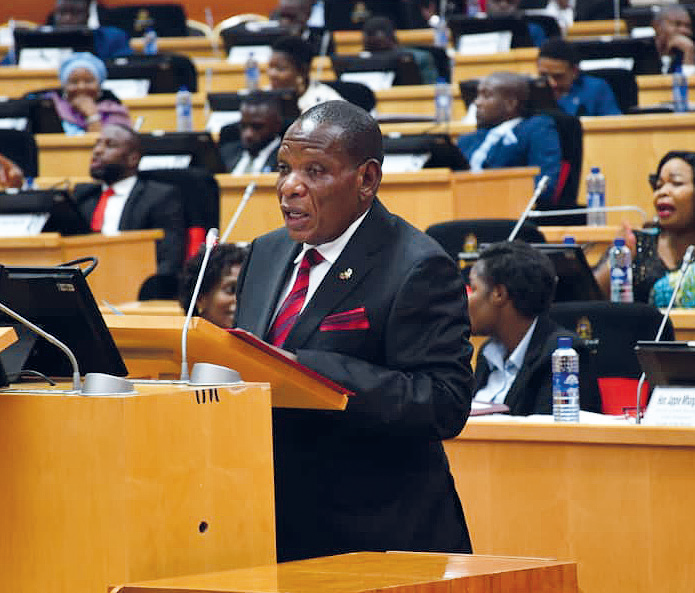
Presenting the Bills, Minister of Finance, Economic Development and Decentralisation Joseph Mwanamvekha said the reforms are central to government’s fiscal strategy.
“These Bills are expected to strengthen revenue mobilisation and support effective implementation of the national budget,” he said.
The passage of the five laws underscores government’s push to stabilise public finances amid mounting expenditure demands, but the expanded tax measures are likely to spark debate over their impact on businesses, consumers and the broader cost of living.
With the legal framework now in place, attention shifts to implementation—and whether the new measures will deliver the much-needed revenue without deepening economic strain.
Follow and Subscribe Nyasa TV :