

Relief at Last: Government Food Programme Rescues Millions from the Grip of Hunger
The Government of Malawi says its National Lean Season Food Insecurity Response Plan has successfully reached all groups of people affected by hunger, bringing relief and renewed hope to millions of struggling families across the country.
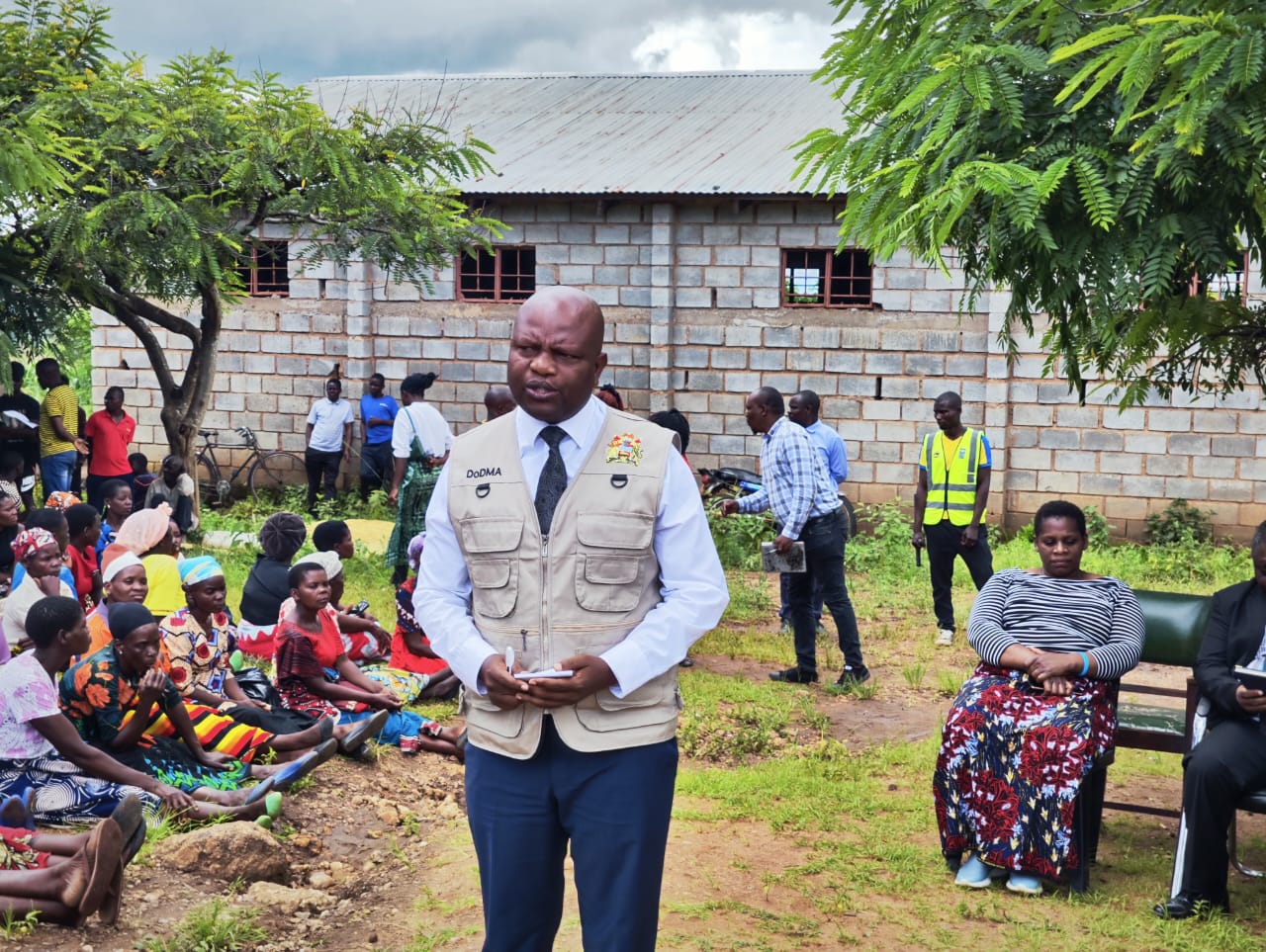
On February 19, 2026, the Department of Disaster Management Affairs (DoDMA) led a high-level monitoring visit to Dowa and Salima districts where maize is being distributed to vulnerable households under the emergency response programme. The delegation, led by DoDMA Commissioner Wilson Moleni, observed first-hand how communities are benefiting from the relief maize purchased through the Malawi Contingent Emergency Response Project (CERP), a financing mechanism supported by the World Bank.
Speaking to hundreds of beneficiaries gathered at Mkukula Headquarters in Dowa, Moleni said the programme is already changing lives in communities that were facing severe food shortages. He described the response as encouraging, noting that many elderly people and vulnerable households expressed deep gratitude after receiving maize that would help them survive the difficult lean season.
“I saw happiness in the faces of the people because today they know they will have food,” Moleni said, adding that despite logistical challenges caused by heavy rains and poor road access in some areas, the distribution programme remains firmly on track.
However, Moleni warned communities against abusing the relief maize by selling it on the market. He said both buyers and sellers of the relief maize are breaking the law and risk facing legal action if they continue the practice.
The national relief programme was launched in November 2025 after President Arthur Peter Mutharika declared a State of Disaster following warnings that more than four million Malawians would require food assistance during the 2025/26 lean season. The programme targets all 28 districts and four cities, with vulnerable families receiving either a 50-kilogram bag of maize or a cash transfer of K90,000.
Government officials say the operation requires about K209 billion to fully implement. So far, about K150 billion has been secured, while authorities continue mobilising resources to close the remaining funding gap.
The intervention comes against a backdrop of worsening food insecurity caused by repeated climate shocks, rising food prices and declining agricultural production. According to national estimates, Malawi produced about 2.86 million metric tonnes of maize in 2025—more than 20 percent below the five-year average—creating a significant national deficit.
Despite the difficult conditions, government says the emergency response has prevented the worst outcomes. Finance Minister Joseph Mwanamvekha recently told Parliament that no deaths linked to hunger have been recorded during the crisis.
For many communities, the maize distribution now represents more than just food assistance—it is a sign that the nation’s emergency systems are working to ensure that no Malawian is left behind during one of the toughest lean seasons in recent years.