

Row over ‘king’ titles as Ngoni heritage groups challenge Malawi govt stance
The Mzimba Heritage Association and Maseko Ngoni Heritage Trust have challenged the government’s position that Malawi’s laws do not recognise or allow the establishment of kingdoms or the conferment of the title of king.
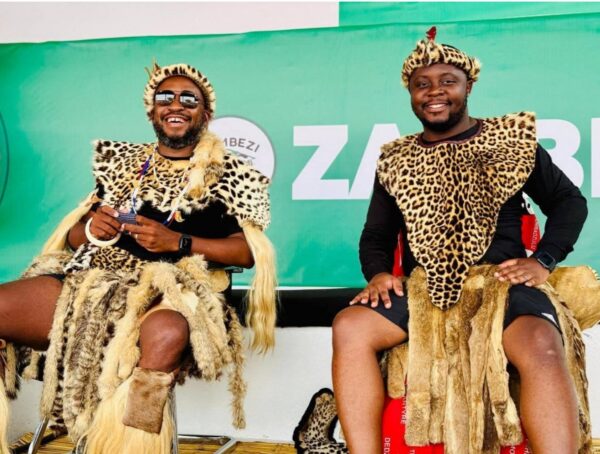
In a joint statement, the organisations defended the use of the titles Inkosi ya Makhosi and King for M’mbelwa V and Gomani V respectively, arguing that the institutions are rooted in the history and customary laws of the Ngoni people.
The statement follows an earlier statement by the Ministry of Local Government and Rural Development, which said Malawi’s laws do not accommodate or permit the creation of kingdoms or the conferment of the title of king.
The ministry’s statement, signed by Principal Secretary Moses Chimphepo, said traditional leaders are recognised under the Chiefs Act as custodians of culture and customary law, but are not rulers of independent territories or kingdoms.
However, the two heritage organisations said the government’s position should be considered alongside the Constitution, customary law and the historical development of traditional institutions.
They cited Section 200 of the Constitution, which recognises customary law provided it is not inconsistent with the Constitution or written law, as well as the Chiefs Act, arguing that entitlement to traditional offices derives from applicable customary law.
“Understanding the stature and role of traditional leadership requires reference to the specific customary laws and historical records unique to each heritage,” they said.
The Ngoni groups said their claim to kingship is rooted in political systems that existed before the creation of modern Malawi.
The Ngoni migrated into present-day Malawi during the 19th century and established organised political and traditional leadership structures under powerful rulers.
The Maseko Ngoni established a political system that became consolidated in parts of central and southern Malawi and extended into present-day Mozambique, while the Zwangendaba Jere Ngoni established a kingdom in Mzimba under the M’mbelwa dynasty.
They added that the M’mbelwa institution remained largely independent of European control until 1904, when Inkosi ya Makhosi M’mbelwa I entered into an agreement with British authorities, paving the way for protectorate administration and indirect rule.
They said that under Ngoni customary law, the senior traditional leader holds the rank of Inkosi ya Makhosi or Ngwenyama, traditionally regarded as senior to other chiefs within the royal hierarchy.
The organisations argued that referring to the two institutions as kingdoms and their senior leaders as kings reflects their historical and customary status, and does not undermine government authority or national unity.
They cited South Africa, Uganda and Ghana as examples where traditional monarchies operate alongside constitutional governments.
Soko, a spokesperson for the organisations, confirmed the statement in an interview but said it was primarily a response to the ministry’s position.
“Our statement is just clarifying what we read in the [Ministry’s statement],” he said.
The organisations said, however, that claims to kingdoms and kingship should be supported by historical evidence and verifiable customary law.
Mr Chimphepo did not respond to calls on what prompted the government’s statement.
Follow and Subscribe Nyasa TV :