

THE MALAWIAN PRESIDENTS THAT WERE NEVER SWORN IN!
Malawi’s political journey since independence in 1964 has not only been shaped by those who reached State House—Hastings Kamuzu Banda, Bakili Muluzi, Bingu wa Mutharika, Joyce Banda, Peter Mutharika, and Lazarus Chakwera—but equally by those who came agonizingly close, yet never took the oath of office.
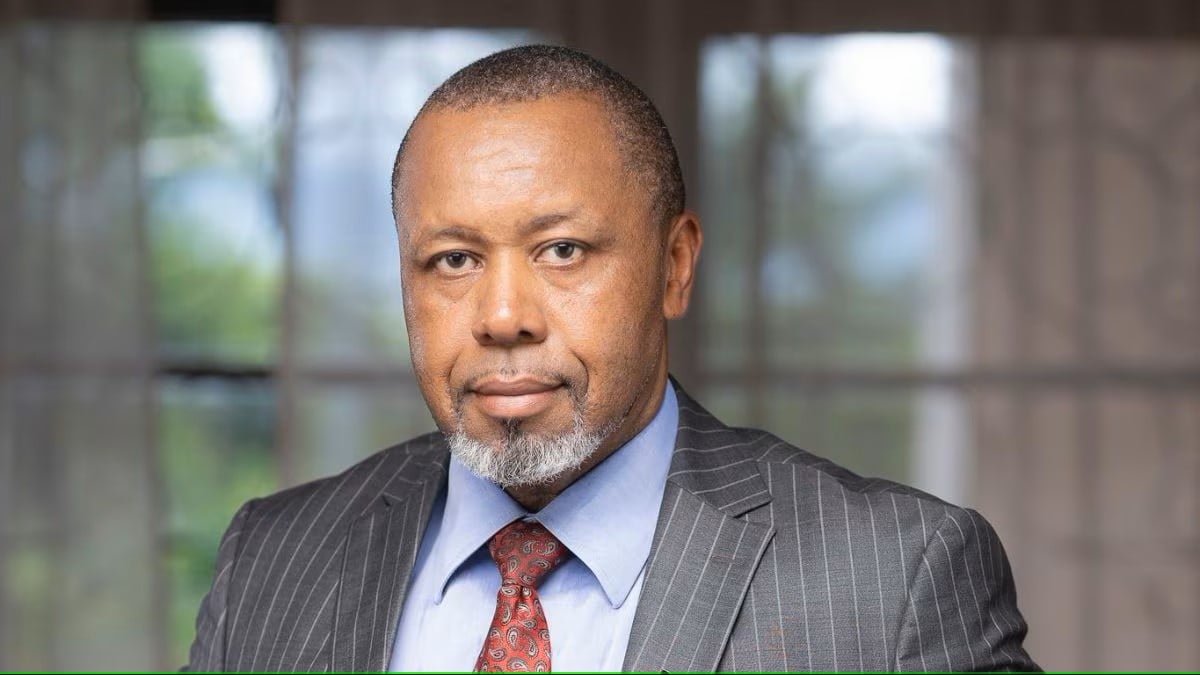
What stands out, unmistakably, is that the presidency in Malawi has rarely been a straight path of destiny. Instead, it has often been shaped by sudden deaths, constitutional barricades, political miscalculations, factional wars, and fragmented alliances. Power, in Malawi, has frequently fallen not to the most destined—but to the most strategically positioned at the right moment.
Even before independence, the pattern had already begun to take shape. Orton Chirwa, a towering nationalist and leader of the Nyasaland African Congress, was widely seen as the natural leader of a free Malawi. Yet internal divisions between 1958 and 1963 reshaped the political landscape, paving the way for the return of Hastings Kamuzu Banda, who ultimately led the country into independence and became its first president. Chirwa, once the obvious choice, was eclipsed by timing, unity politics, and shifting allegiances. From the very birth of the nation, leadership was not inevitable—it was negotiated.
The dawn of multiparty democracy in 1994 brought another wave of “almost presidents.” Figures such as Aleke Banda, Sam Mpasu, Brown Mpinganjira, and James Makhumula—founding architects of the UDF—chose to play kingmakers rather than contenders, rallying behind Bakili Muluzi. In doing so, they secured victory for the party but quietly surrendered their own presidential prospects.
Meanwhile, Chakufwa Chihana—arguably one of the most formidable pro-democracy figures—never reached the presidency despite repeated attempts. His defeats in 1994 and 1999, and later his involvement in the Mgwirizano Coalition in 2004 alongside Gwanda Chakwamba, illustrate a recurring truth: prominence does not always translate into power.
The 2004 elections further exposed how fragmentation can rewrite political destiny. While Bakili Muluzi handpicked Bingu wa Mutharika as his successor, several heavyweights—including Justin Malewezi, Aleke Banda, and Brown Mpinganjira—broke ranks and contested separately. The divided opposition handed Bingu victory with just 36 percent of the vote. Unity was sacrificed, and with it, multiple presidential ambitions.
What followed was even more dramatic. The fallout between Bingu wa Mutharika and Bakili Muluzi led to the formation of the DPP in 2005, reshaping Malawi’s political map. Muluzi’s attempted comeback in 2009—blocked by constitutional term limits—marked one of the clearest examples of how legal frameworks can abruptly end political ambition. His eventual endorsement of John Tembo only underscored the unpredictability of Malawi’s political chessboard.
The 2014 elections delivered yet another “near presidency.” Lazarus Chakwera came within touching distance of power but lost narrowly, while Joyce Banda—then incumbent—fell to third place, effectively collapsing the People’s Party. Internal divisions and strategic missteps, including controversial running mate decisions, proved decisive. It remains one of Malawi’s greatest political “what ifs.”
The story becomes even more compelling with Saulos Klaus Chilima. Once widely viewed as a future president—first within the DPP and later as a central figure in the Tonse Alliance—his trajectory reflects how quickly political momentum can be disrupted. Sidelined within the DPP and later politically constrained within government, Chilima embodied the fragile nature of succession in Malawi’s politics. His path, like many before him, was shaped as much by internal party dynamics as by national support.
Other figures, such as Mark Katsonga Phiri, represent a different kind of near-miss—leaders with intellectual depth and national appeal who never quite built the mass political machinery required to convert credibility into electoral victory. In Malawi, ideas alone have rarely been enough; organization and timing have proven just as critical.
From Orton Chirwa to Gwanda Chakwamba, from Chakufwa Chihana to Saulos Klaus Chilima, Malawi’s history is filled with leaders who appeared destined for the presidency—but were ultimately denied by rivalry, law, miscalculation, or circumstance. In contrast, those who did ascend often did so through unexpected openings—products of timing as much as ambition.
The lesson is both sobering and instructive: in Malawi, the presidency has never been a guaranteed destination. It is a moving target—shaped by alliances, fractured by egos, and decided in moments of uncertainty.
As the nation looks toward 2030, one truth remains unshaken: no one can say with certainty who will rise to the top. In Malawi’s politics, destiny is never declared in advance—it reveals itself in the chaos of the moment.
Perhaps, just perhaps, the next “unexpected president” is already in the making.
Follow and Subscribe Nyasa TV :