

Times scruple Cama report on Malawi maizegate: Kapito blasted as Zambia query Chishimba over ‘false claims’
Consumer Association of Malawi (Cama) and its executive director John Kapito are facing a barrage of criticism from Malawi’s flagship newspaper, The Daily Times over its conclusion that no money was paid in the maize procurement from Zambia saga christening as maizegate and also clearing Minister of Agriculture George Chaponda and Admarc Chief Executive Officer Foster Mulumbe in the import deal.
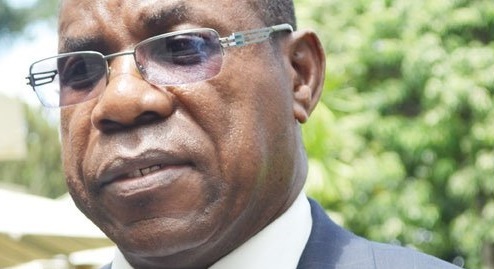
Cama it conducted its own investigation after the commission of inquiry that President Peter Mutharika established to investigate the matter attracted criticism over its composition, with civil society organisations (CSO) asking to be included in the commission.
Also probing the matter is the Parliament Committee on Agriculture, Irrigation and Water Development, and the Anti-Corruption Bureau.
Presenting findings of their so called investigation, CAMA boss Kapito told a news conference in Blantyre that so far money has changed hands from Malawi to Zambia in the maize saga.
Zambia’s Nation newspaper has also published a story on Wednesday January 18, 2017 titled ‘Maizegate scandal explode’ in which it reports that allegations that Malawi paid K26 billion ( $34.5 million) loan obtained from the Eastern and Southern African Development Bank (PTA Bank) to purchase 100, 000 metric tonnes of maize from government of Zambia are “totally untrue”.
But Daily Times in Malawi queried the consumer activist Kapito, saying in its editorial comment that his stand “defies reason.”
“The voice of reason does not come from everyone and everyone who has tried to justify or conceal wrong-doing in the much-publicised maize scandal is doing Malawi great injustice,” the paper said.
Times accused Kapito of abandoning ordinary Malawians by attempting to trivialise the magnitude of the maize scandal.
“It is obvious that Kapito no longer represents the interests of the consumers that he claims to defend,” the paper observed.
It further stated that it is unthinkable that Kapito has leapt to the defence of Minister of Agriculture George Chaponda and Admarc Chief Executive Officer Foster Mulumbe when there is evidence that every effort was made to silence those who have vowed to report the truth.
“Looking at a series of events since the maize scandal was first reported, there have been attempts – most notably by Mulumbe – to silence the voices that questioned the role of Admarc in this deal. He sought protection from the court but thankfully, that was just a futile attempt.
“It is strange that Kapito believes he has an assured voice that can explain the events better.”
Kapito has said he is ready to prove beyond reasonable doubt that no money was paid to the supplier, but the newspaper noted that those suspected to have been involved in the deal are “either feigning ignorance or are uttering sweet nothings that cannot be easily comprehended.”
In its scathing attack to the CAMA boss, the paper’s editorial said Kapito should have reserved the resources “he wasted and instead investigated how ordinary Malawians have been affected by the imposed new maize prices. Should Kapito be reminded that majority of the poor people cannot afford a 50 kg bag of maize?”
The daily said it admires Kapito for siding with consumers in the past “but the route he has now taken is dangerous which is very worrying considering that activists must strive to protect the poor people at all times.”
Kapito, according to the paper, has lost the trust of the consumer and that “it is time he stopped sustaining a living through dubious bargains on behalf of consumers.”
Meanwhile, Zambia’s Daily Nation newspaper reports that the first whistle blower, United Progress Party (UPP) president Savour Chishimba failed to substantiate his claims that money exchanged hands among officials of Zambia private company Kaloswe Commuter, Courier Ltd or Zambia Cooperative Federation (ZFC), a government agency and Malawi government.
“There is us$13million at play but I don’t want to jeopardise the investigations. It looks the price was inflated but I don’t want to pre-empt what the ACC (Anti Corruption Commission – of Zambia) has started doing.
“They were having meetings and money exchanged hands among officials from institutions that have been mentioned,” said Chishimba in quotes reported by Zambia’s Daily Nation on Wednesday.
The paper also reported that Zambian government has blasted Chishimba over “false claims.”
Zambia’s Minister of Agriculture Dora Siliya has said that the Zambian government has nothing to do with the maizegate as the Malawian government did not buy maize from the Food Reserve Agency (FRA) but from individual farmers.
Siliya said the only role the Zambian government played was to issue a permit of clearance, while the Malawian government came and identified a private agent to procure the maize on its behalf.
“We allowed for the export to Malawi because the contract was signed before the ban on exports was effected.
“The contract was signed in June 2016 under a government-government arrangement to help Malawi with the commodity following a drought which only spared Zambia in the Southern Africa Development Community (SADC),” said Siliya in quoted in a report by Zambian Observer.
“The Malawian government identified an agent, the maize suppliers and also negotiated the terms without any input from the Government,” she said.
She said after the Malawian government sought Zambia’s assistance; the Government provided them with a permit to import maize while the maize export ban was still in effect.
Follow and Subscribe Nyasa TV :