

Wiskesi: Malawi a ‘serious and reliable partner’ in global ozone effort
Minister of Natural Resources Patricia Wiskesi says Malawi has registered significant progress in protecting the ozone layer through policy action and compliance with international environmental agreements.
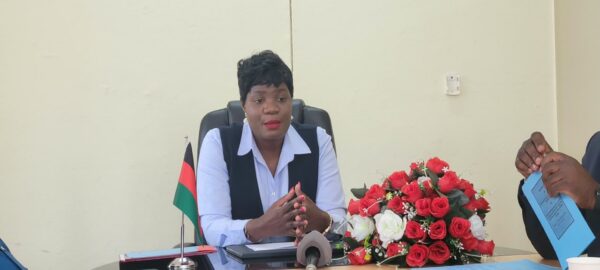
Speaking during a press briefing in Lilongwe to commemorate the International Day for the Preservation of the Ozone Layer, Wiskesi said Malawi has demonstrated its commitment by ratifying the Vienna Convention for the Protection of the Ozone Layer and acceding to the Montreal Protocol and its subsequent amendments.
This year’s commemoration is being held under the global theme “Global Action for a Cooler Planet,” marking ten years since the adoption of the Kigali Amendment to the Montreal Protocol in 2016 and highlighting the link between ozone protection and climate stabilisation.
“For close to four decades, the Montreal Protocol has stood as one of the most successful environmental treaties in human history. Because of this treaty, the ozone layer is healing and is expected to fully recover in the coming decades,” Wiskesi said.
The Kigali Amendment extends the Protocol by mandating the global phase-down of hydrofluorocarbons (HFCs).
Although HFCs do not deplete the ozone layer, they are potent greenhouse gases, and their phase-down is projected to avoid up to 0.5°C of global warming by the end of the century.
Malawi has acceded to the London, Copenhagen, Montreal, Beijing and Kigali Amendments, ratifying the Kigali Amendment in November 2017—ahead of many of its SADC neighbours.
Through the Hydrochlorofluorocarbon Phase-out Management Plan (HPMP), Malawi has trained refrigeration and air-conditioning technicians and customs officials, strengthened its regulatory framework, and put measures in place to prevent the importation of obsolete ozone-depleting equipment.
Wiskesi said the country is now implementing Stage II of the HPMP, running up to 2030, which focuses on accelerating the transition to low global-warming-potential, non-ozone-depleting technologies in the refrigeration, air-conditioning and foam sectors.
In collaboration with the United Nations Environment Programme (UNEP), she said government has completed enabling activities for the implementation of the Kigali Amendment.
“These include a national survey of ozone-depleting substance alternatives and progress on the Kigali HFC Implementation Plan.
“Regulations on ozone-depleting substances are being revised to include HFCs under the existing quota and licensing system,” she said.
Wiskesi acknowledged support from the Multilateral Fund for the Implementation of the Montreal Protocol, UNEP, UNIDO and other implementing agencies.
She called on refrigeration and air-conditioning technicians to adopt good servicing practices, urged importers and industry players to invest in climate-friendly and energy-efficient cooling technologies, and appealed to customs and law enforcement to remain vigilant against illegal imports of banned substances.
“Malawi has shown, through the phase-out of hydrochlorofluorocarbons and the ongoing phase-down of hydrofluorocarbons, that a developing country can be a serious and reliable partner in this global effort,” she said.
UNEP Regional Ozone Coordinator for Africa, Patrick Salifu, delivered a message on behalf of United Nations Secretary-General António Guterres, noting that the next Meeting of the Parties to the Montreal Protocol will take place in Kigali, Rwanda, where countries will mark ten years since the adoption of the Kigali Amendment—the only amendment to the Protocol named after an African city.
Quoting the Secretary-General, Salifu said that as climate change drives global temperatures toward breaching the 1.5°C target of the Paris Agreement, the world urgently needs solutions that deliver results.
He added that the Montreal Protocol has put the ozone layer on a path to recovery, protecting millions of lives and ecosystems from harmful ultraviolet radiation.
Salifu further quoted the Secretary-General as saying that full implementation of the Kigali Amendment could avoid up to 0.5°C of global warming by the end of the century—and twice that if paired with energy-efficient cooling.
He noted that extreme heat is becoming increasingly deadly, even as billions of people still lack access to safe cooling.
“We must close the cooling gap while keeping emissions down. This is why ‘Global Action for a Cooler Planet’ matters. Sustainable cooling is essential for health, development and climate stability.
“I urge all countries that have not yet done so to ratify the Kigali Amendment without delay, and I call on governments and industry to accelerate its implementation. Every fraction of a degree avoided matters,” Salifu quoted Guterres as saying.
In a video message played during the event, UNEP Executive Director Inger Andersen also called for urgent action on sustainable cooling and universal ratification of the Kigali Amendment.
Follow and Subscribe Nyasa TV :