

Malawi to start regulating social media, online news – Macra
The Malawi Communications and Regulatory Authority (MACRA) director general GodfreyItaye has said they will start controlling the use of social media across the country.
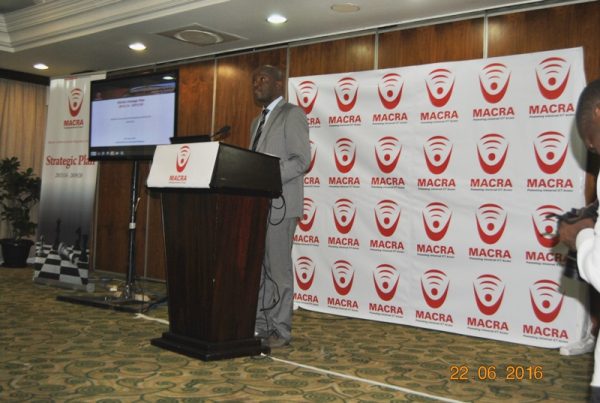
Itaye told a local radio that they are waiting for President Peter Mutharika to give his node to the Electronic Transactions Bill which was passed in parliament to strat regulating the social media including online news publications such as Nyasa Times.
“Once the law has been assented , we will be doing our background work,” Itaye said.
“We need to regulate content on social media and all other platforms that publish stories. People must take responsibility,” Itaye added
If assented into law, for instance online publication and its editors would be compelled to register so that they take responsibility for defamation and character assassination cases.
“Its high time Malawi strats regulation those things,” Itaye said.
Under the new law under Section 89 of Electronic Transactions Ac, it says: “Any person who uses a computer for making any request, suggestion or proposal which is obscene, lewd, lascivious or indecent, commits an offence know as cyber harrassment and shall upon conviction, be liable to a fine of K2,000,000.00 and to imprisonment for five years”
Under the Electronic Transactions Bill, the DPP led government is seeking to crack down on content of the internet including social media platforms such as Facebook, Instragram and Twitter.
The Bill seeks to tighten control of bloggers, online media, especially news websites, by making online news editors and social media commentators of such content liable for any publications which might threaten public order and national security.
But Jimmy Kainja—a social media communication expert—says while some people have displayed wrong intentions with social media, the technology is the best tool for people-centred communication.
“One thing that must be clear from the onset is that social media is only a tool used by people—what’s on social media reflects the people that use it.
“The society is composed of both good and evil people; it’s inevitable that you are going to get the same thing on social media. The media—social or traditional—have always had this symbiotic relationship with the society,” Kainja was quoted in The Nation recently.
He pointed out that social media has opened a discursive space where ordinary citizens can talk about issues that matter to them—overturning the traditional top-down forms of communication.
Kainja, nonetheless, admitsted that while social media has enhanced democratic governance elsewhere, the platforms have locally been hijacked by people with malicious intentions.
“One can find so many negative examples on how the social media has affected people’s live. Talk about cyber-bullying, spreading false rumours (sometimes malicious). People’s lives have been ruined via social media, we cannot dispute these facts. .”
However, another social media expert, Levi Kabwato, contends it is not easy to enforce morality on social media as posts are at the discretion of users.
“Social media are a mere reflection of what society is saying or doing at any particular moment. Previously, these thoughts were kept away from us because we had no way of accessing them. Nowadays, sharing information, regardless of content, has become the norm. We want other people to know what’s going on within and around us, and usually, we want to take credit for being the first ones with such information,” he argued.
Kabwato argues it was difficult to define ethics of sharing information.
Follow and Subscribe Nyasa TV :