

Peace Commission Dissolved, Public Raises Legal Concerns
The chairperson of the Inter-University Network for Peace, Unity and Development (INPUD), Master Dicks Mfune, has criticised the Malawi Government for dissolving the Malawi Peace and Unity Commission (Mpuc). He says the move breaks the law that created the commission.
But the Principal Secretary for Local Government, Unity and Culture, Dr Elizabeth Gomani-Chindebvu, disagreed. She said Mpuc is a statutory institution and that the government order to dissolve statutory boards also applied to it.
Mfune said government made a serious mistake.
He explained that Mpuc is not an ordinary board. It was created by an Act of Parliament, just like the Malawi Human Rights Commission (MHRC) and the Malawi Electoral Commission (MEC). Such commissions have fixed terms and cannot be dissolved at will.
According to the Peace and Unity Act, commissioners are appointed by the President and serve four-year terms, which can only be renewed once. The law only allows a commissioner to be removed if they are incompetent or incapable—and only after a proper investigation.
Mfune warned that dissolving the commission in this way threatens the country’s peace system because the commission plays a key role in resolving national conflicts.
Governance expert Andrew Kaponya from the Malawi University of Business and Applied Sciences (Mubas) also raised concerns. He said the problem shows weaknesses in Malawi’s governance system.
He explained that although the law gives commissioners four years in office, the current group was dissolved before their term ended. This, he said, shows that presidential powers can override the law.
Kaponya said Malawi needs to review the wide powers given to the President because new governments often replace officials with people who support them politically.
He also said the law is silent on what should happen if a commission is dissolved before its term ends, which leaves room for abuse.
After the dissolution order on October 7, 2025, the Ministry of Local Government wrote to the Controller of Statutory Corporations asking whether Mpuc was affected by the order.
The ministry explained that Mpuc is not a commercial parastatal but a peace-building body.
In response, Deputy Comptroller Christopher Mzenga said on October 30, 2025, that the dissolution applied to all statutory institutions. He said the goal was to reform and strengthen governance.
Dr Gomani-Chindebvu later said Mpuc is not a constitutional body like MEC and MHRC, even though it follows the Constitution’s principles.
However, she did not explain why legal procedures for removing commissioners were ignored.
The commission was dissolved just two years after former President Lazarus Chakwera appointed 11 commissioners, who were approved by Parliament.
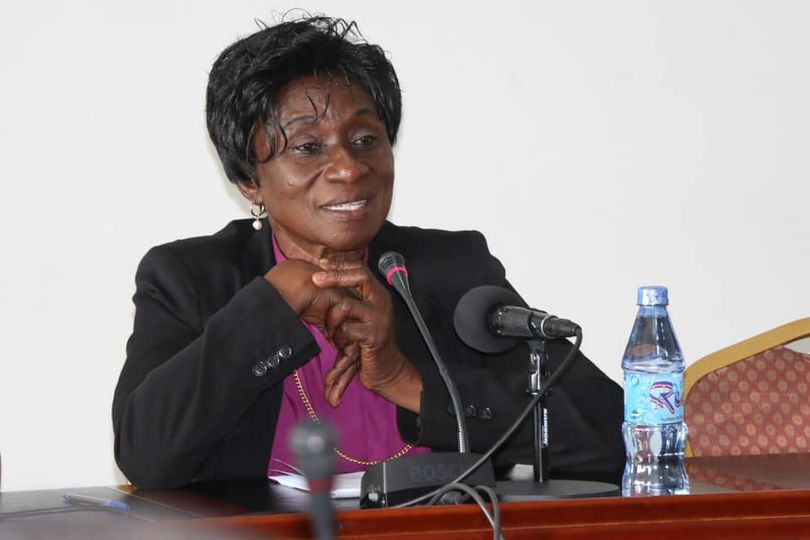
At the time of dissolution, Bishop Mary Nkosi was the chairperson. She said the commissioners were waiting to hear from government on what would happen next.
The commissioners included:
- Reverend Zacc Kawalala and Sheikh Dr Ali Makalani – Faith groups
- Bishop Mary Nkosi and Paramount Chief Kyungu – Traditional leaders
- Dr Francis Mkandawire – Business community
- Simon Munde – People with disabilities
- Mwandida Theu – Youth representative
- Emma Kaliya – Civil society
Ex-officio members included the Solicitor General and top government secretaries.
The Malawi Law Society was asked to comment but had not responded by the time of publication.
Follow and Subscribe Nyasa TV :