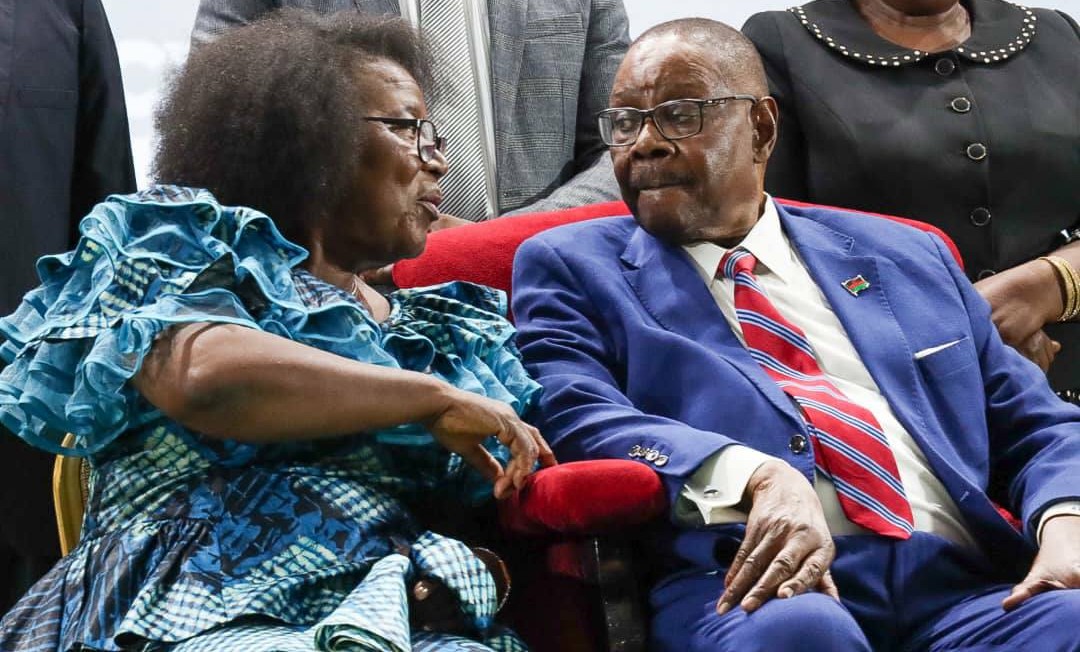
University of Malawi political science associate professor Boniface Dulani has warned that the recent stripping of delegated functions from First Vice-President Jane Ansah may reveal more than routine administrative reshuffling—it could signal serious internal tensions within the ruling Democratic Progressive Party (DPP).
apm_jane-ansah
Barely four months into office, President Peter Mutharika has removed Ansah from two key departments, leaving her without clearly defined duties. On January 10, 2026, the Office of the President and Cabinet (OPC) announced that Ansah would no longer oversee the Department of Disaster Management Affairs, and on January 23, the Department of Public Sector Reforms Management was also moved from her office to OPC.
No official explanation has been offered, though the decisions coincided with controversy over Ansah’s private trip to the United Kingdom in December 2025. Initial statements indicated the President had approved her trip with a reduced delegation, but a later State House post claimed that Ansah had assured the use of personal funds.
Dulani argues this is not just a personal spat. “Before being picked as running mate in the September 16, 2025 elections, Ansah never held any position in the DPP rank and file. Some within the party may feel the Vice-Presidency is not hers to occupy,” he said.
He added that leaving the VP without immediate reassignment of duties is troubling. “The President may have other roles he wants to assign, but the delay in giving her new responsibilities is a clear sign that the relationship is strained,” Dulani said.
In response to the situation, Vice-President Ansah said she was constrained by the nature of her office. Speaking at an installation ceremony in her home area, she said:
“I cannot question why the President has removed two departments from my office to the Office of the President and Cabinet because I enjoy delegated powers.”
Ansah confirmed that she continues to report for duties and attend other engagements while awaiting new delegated responsibilities. Her office spokesperson, Richard Mveriwa, said:
“We expect that there will be new delegated roles. The Vice-President continues to serve the nation as per her constitutional mandate.”
Meanwhile, OPC director of communications Focus Maganga emphasized that such administrative adjustments are routine and should not be interpreted as tension. He said in a written statement:
“The Vice-Presidency is, by its nature, a delegated office. From time to time, the President may, at his discretion, reassign or adjust responsibilities to enhance efficiency and effectiveness. Such adjustments are normal governance measures aimed at ensuring tangible and measurable progress.”
Political analyst Ernest Thindwa noted that without a clear explanation from State House, public speculation will continue. He pointed out that Malawi has a long history of presidents struggling to work smoothly with their vice-presidents, citing examples from Bakili Muluzi and Justin Malewezi, Bingu wa Mutharika and Cassim Chilumpha, Joyce Banda and Khumbo Kachali, as well as Chakwera and Saulos Chilima.
Dulani warned that Malawians should not dismiss the current developments as mere housekeeping. “The stripping of delegated powers is a political signal. It reflects internal party dynamics, frustrations over perceived miscommunication, and possibly a power struggle that could affect governance,” he said.
As history seems to rhyme with the past, the unfolding Mutharika-Ansah scenario highlights a recurrent pattern of vice-presidential sidelining in Malawi, leaving the nation to watch closely how this familiar tune will play out—and who ultimately will set the rhythm.