

AGRA, Partners Promote Post-Harvest Technologies to Reduce Food Losses
The Alliance for a Green Revolution in Africa (AGRA) and its partners are scaling up the use of post-harvest technologies among smallholder farmers in Malawi as part of efforts to reduce food losses, strengthen food security, and improve rural livelihoods.
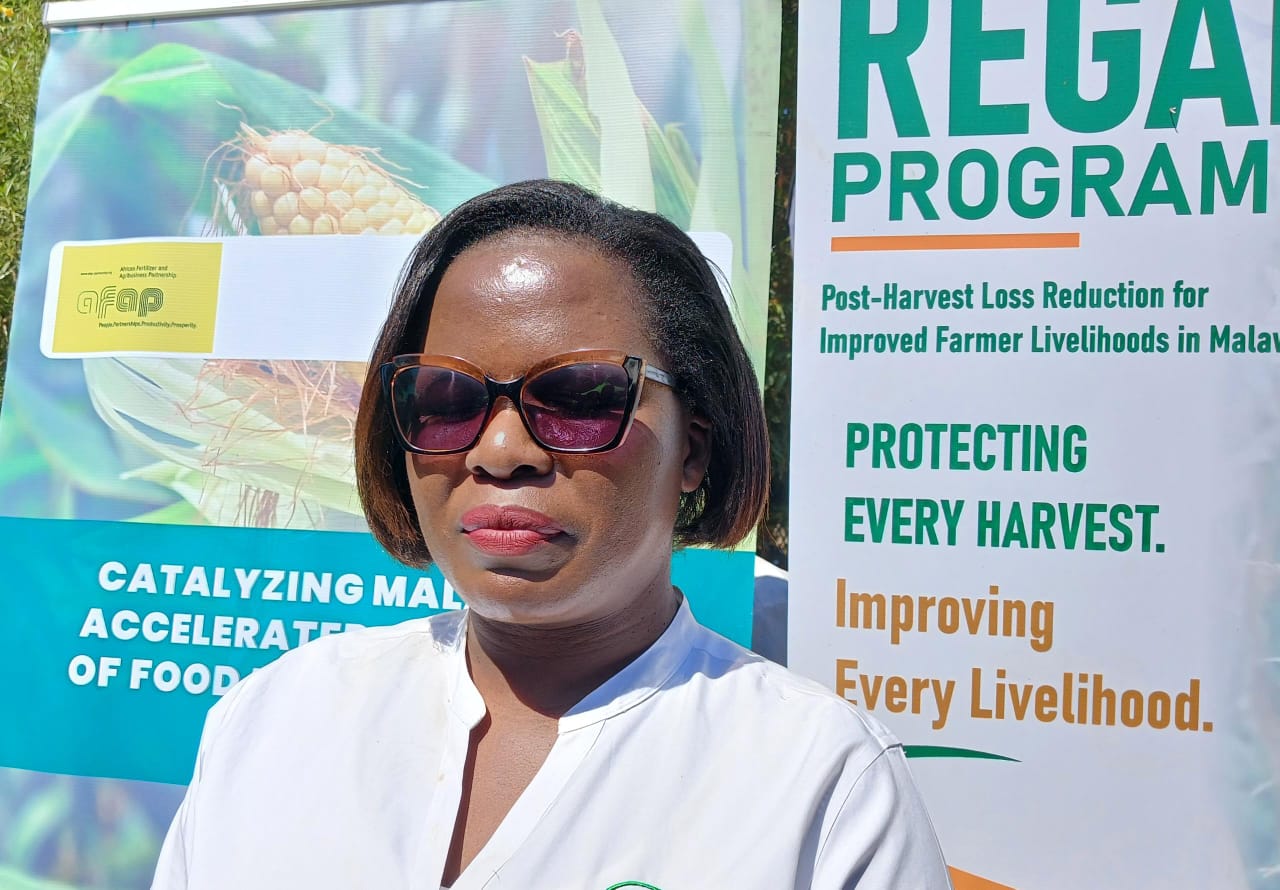
Speaking during a field visit to Thawale Extension Planning Area (EPA) in Lilongwe, AGRA Country Director Eluphy Nyirenda said the Regain Programme was established to strengthen food systems, boost agricultural productivity, and address the significant losses farmers experience after harvest.
Nyirenda said studies show that smallholder farmers lose up to 30 percent of their produce due to poor storage facilities, inadequate drying methods, limited access to post-harvest technologies, and climate-related shocks.
She explained that the programme seeks to enhance climate resilience and adaptive capacity among farmers through the promotion of food loss reduction technologies.
“The programme promotes the use of hermetic storage bags, shellers, threshers, and tarpaulins for safe drying and storage of produce to reduce post-harvest losses and improve livelihoods,” said Nyirenda.
According to Nyirenda, the technologies have been well received by farmers, particularly shellers and threshers, which significantly reduce the labour and time required to process maize.
“There has been a high adoption rate of these technologies because farmers appreciate the shellers and threshers, which greatly reduce the time required to shell maize. Farmers are also able to store maize in PICS bags without applying chemicals,” she said.
Lilongwe West District Agriculture Extension Methodologies Officer Agnes Lungu said the Ministry of Agriculture remains committed to equipping farmers with knowledge and technologies that improve post-harvest management.
She commended AGRA and the National Smallholder Farmers’ Association of Malawi (NASFAM) for implementing the Regain Programme, saying the initiative is helping farmers reduce losses, improve market access, and adopt climate-smart agricultural practices.
Lungu added that farmers are also benefiting from subsidised prices for shellers and threshers, making the technologies more accessible.
NASFAM Regain Programme Coordinator Stewart Paul Mapemba described the response from farmers as encouraging, saying many are embracing the technologies to improve productivity and profitability.
“The adoption of food loss reduction technologies is helping farmers preserve more produce, increase household incomes, strengthen food security, and build resilience to climate-related challenges,” said Mapemba.
He said the programme is currently being implemented in six districts and relies heavily on media platforms to disseminate information to farming communities.
“We are using the media as a key tool to reach farmers across the country, while community radio stations are producing and broadcasting weekly programmes to raise awareness about the initiative,” he said.
One of the lead farmers from Thawale EPA, Brenda Batoni, thanked NASFAM, AGRA, and the government for introducing the technologies, saying they have reduced the time spent processing crops and allowed farmers to focus on other productive activities.
“The technologies have made our work easier and more efficient. We now spend less time shelling maize and have more time to engage in other development activities,” she said.
The Regain Programme is a multi-country initiative aimed at enhancing climate resilience and adaptive capacity among smallholder farmers.
In Malawi, the programme is funded by AGRA and implemented by NASFAM and Opportunity International Malawi in Lilongwe, Mchinji, Mzimba South, and Nkhotakota districts in partnership with the Ministry of Agriculture and other stakeholders.
The initiative is expected to play a key role in reducing food losses, improving household food security, and strengthening the resilience of farming communities against the growing impacts of climate change.
Follow and Subscribe Nyasa TV :