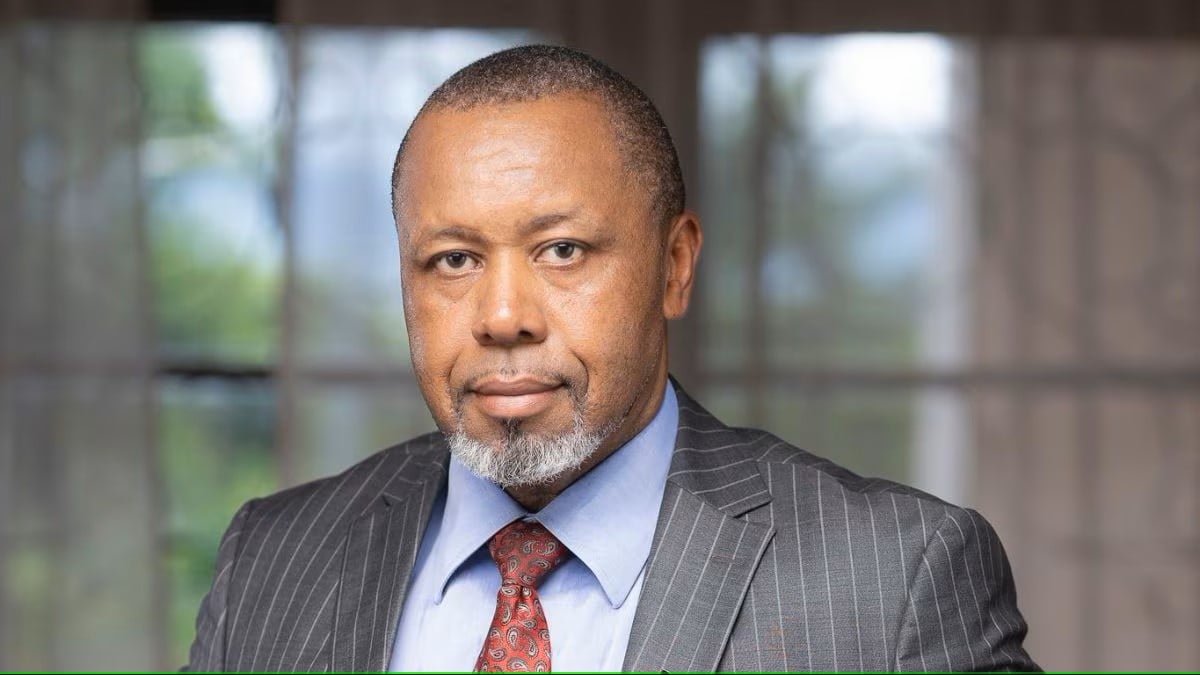
The death of Vice-President Saulos Chilima in June 2024 left Malawi’s political landscape shaken and riddled with unanswered questions. Among the most compelling is this: had he lived, would Chilima have stood with his former boss Peter Mutharika of the Democratic Progressive Party (DPP), or maintained his 2020 pact with President Lazarus Chakwera of the Malawi Congress Party (MCP)? It is a question that cuts to the heart of Malawi’s shifting alliances, its anti-corruption battles, and the strategic arithmetic of power ahead of the 2025 elections.
Late Chilima: Between Chakwera and Mutharika, who would he have backed?
Chilima’s Break with Mutharika: A Defining Divorce
In 2018, Chilima staged one of the boldest political exits in Malawi’s modern history. Quitting the DPP, he accused its leadership of corruption, nepotism, and state capture, vowing that anyone who amassed wealth illegally “would not be spared.” This rupture was not personal squabbling—it was an ideological stand that birthed the United Transformation Movement (UTM). It defined his political identity. To return to Mutharika’s fold would have meant erasing the very foundation of his reformist brand.
Moreover, the break was not amicable. Mutharika eventually dismissed Chilima from cabinet, cementing the split. That history casts a long shadow over any imagined reunion.
Chakwera Partnership: A Proven Path to Power
Fast forward to 2020. After Malawi’s Constitutional Court annulled the 2019 elections, Chilima made the historic choice to partner with Chakwera under the Tonse Alliance. The result was emphatic: a 59% to 40% landslide victory against Mutharika, uniting North, Center, and South in one of the most sweeping mandates in Malawian electoral history.
For Chilima, this was more than a tactical win. It was proof that his reformist energy could complement Chakwera’s political base, providing him a viable route to the highest office. In contrast, aligning with Mutharika again would have meant returning as a junior partner to a leader he had once rejected. Politically, it made little sense.
The Rift with Chakwera: Temporary or Fatal?
Critics point to the 2022 suspension of delegated duties after Chilima was linked to the Sattar corruption scandal as evidence that the Tonse marriage had collapsed. But the case was thrown out in May 2024, clearing his name and reopening the door to reconciliation.
Yes, the suspension hurt his pride and stalled his visibility, but with the legal burden lifted, Chilima had a chance to renegotiate his role in Tonse—demanding clear timelines, power-sharing guarantees, or even a 2025 ticket framework. The reset was not only possible, it was politically advantageous.
Electability and Coalition Math
Numbers matter. The 2020 Tonse landslide showed that a Chakwera–Chilima alliance could mobilize the broadest coalition, stretching across Malawi’s three regions. By contrast, Mutharika’s DPP had been reduced to a largely Southern base, scoring only 40% in 2020. For a politician as calculating as Chilima, the Tonse equation offered a stronger, broader path to State House.
Furthermore, Chilima’s anti-corruption image would have been badly compromised if he had rejoined Mutharika, the very figure he had once denounced for corruption and patronage.
UTM’s Exit After His Death: Not His Choice
It is true that in July 2024, under new leadership, the UTM announced it was quitting Tonse. But that decision came after Chilima’s death and reflects successor grievances, not Chilima’s own strategy. When alive, his last and most consequential political play was to ally with Chakwera and win power in 2020. That precedent carries more weight than posthumous recalculations.
Conclusion: Chakwera, Not Mutharika
When weighed against the evidence, one conclusion emerges clearly: if Chilima were alive today, he would have chosen Chakwera over Mutharika. His 2018 break with the DPP was too principled, too sharp, to allow for a credible reunion. His 2020 alliance with Chakwera was both electorally successful and strategically logical. And with the corruption case cleared, he stood poised to reassert himself within Tonse, not defect to a DPP he had already rejected.
Chilima may have bargained hard, demanded guarantees, or even flirted with independence. But if the choice narrowed to Chakwera versus Mutharika, the facts and figures leave little doubt: Chakwera was the likelier political home for Chilima’s unfinished project.