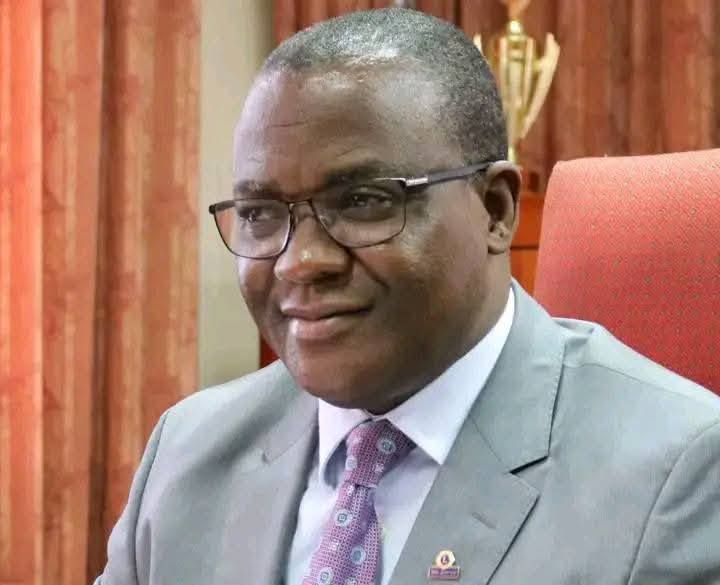
The High Court’s decision to discontinue two major corruption cases involving former Reserve Bank of Malawi (RBM) governor Dalitso Kabambe has raised serious questions about the independence of Malawi’s justice system, especially given the political timing of the move.
Mathanga
Just months after Henry Mathanga was appointed Deputy Governor of the Reserve Bank and Cliff Chiunda confirmed as Secretary to the Treasury, the very cases in which they were accused of serious financial crimes were abruptly discontinued. To many observers, this does not look like coincidence. It looks like power reshaping justice.
In two separate orders dated February 4, 2026, High Court Judge Redson Kapindu confirmed that criminal proceedings in Criminal Case No. 3 of 2025 and Criminal Case No. 19 of 2023 had been discontinued following certificates issued by the Director of Public Prosecutions (DPP). The accused were Dalitso Kabambe, Henry Mathanga and Cliff Kenneth Chiunda. These were not minor cases. They were among the biggest financial crime prosecutions in Malawi’s history, touching the core of how public money is handled at the highest level of the state.
In the first case, Kabambe and Mathanga were accused of abusing public office and laundering money linked to an alleged K14.79 billion payment to FDH Bank. The State alleged they conspired to authorise an arbitrary and unlawful payment, disguised as income from foreign exchange swap transactions, to the advantage of a private bank and to the prejudice of government.
In the second case, all three were accused of unlawfully using $350 million, about K350 billion in public funds, without parliamentary approval and deliberately hiding the Afreximbank facility from RBM annual reports and submissions to the International Monetary Fund. They were also facing charges related to money laundering and making misleading statements. These are allegations that go to the heart of economic governance, public accountability and national credibility.
Technically, the court says the discontinuance does not amount to an acquittal and that the State can re-arrest and re-charge them within six months. But in political reality, such cases rarely return. Once powerful figures are promoted and politically protected, the justice system almost never circles back. The law may allow revival, but power usually kills memory.
What makes the decision even more disturbing is that the DPP did not act independently. Court documents show that he acted on the direct instruction of the Attorney General. The DPP admitted that he sought guidance under the Constitution and was told by the Attorney General to discontinue the cases against all the accused persons.
This means the country’s top prosecutor dropped some of the biggest corruption cases not because of lack of evidence, not because of public interest, but because the Executive arm of government told him to. That is not prosecutorial independence. That is executive capture of criminal justice.
Equally alarming is the silence of DPP Fostino Maere. When asked to explain the decision, he did not address the substance of the matter or defend the public interest. He simply referred queries to the Ministry of Justice’s public relations office. A DPP who cannot personally explain why billion-kwacha corruption cases have collapsed has effectively reduced his office to a political department. Silence in such a moment is not neutrality. It is submission.
The optics are devastating. Mathanga is promoted, and the charges vanish. Chiunda is confirmed, and the charges vanish. The Attorney General gives the order, and the prosecutions collapse. The DPP goes quiet, and the public is left in the dark. The message is simple and dangerous: in Malawi today, political elevation can erase criminal accountability.
While the court merely applied the law on discontinuance, the deeper question remains unavoidable. Are Malawi’s courts now being used to sanitise political decisions? When prosecutions collapse immediately after strategic appointments, the public is entitled to ask whether justice is still blind or whether it now knows exactly who holds power.
This is no longer just about Kabambe, Mathanga or Chiunda. It is about whether corruption cases in Malawi are genuine or just temporary performances. It is about whether the Constitution still means what it says about independent prosecution. It is about whether the fight against corruption is real or merely selective.If cases involving K350 billion can disappear without a credible public explanation, then anti-corruption in Malawi is no longer policy.
It is theatre, carefully scripted, and quietly cancelled when the actors get promoted.