

Breaking the Silence on Malawi’s Prisons: Stakeholders Mark Menstrual Hygiene Day at Kachere Prison
Malawi’s commemoration of Menstrual Hygiene Day this year turned attention to a group often left out of national debate—women and girls in prison.
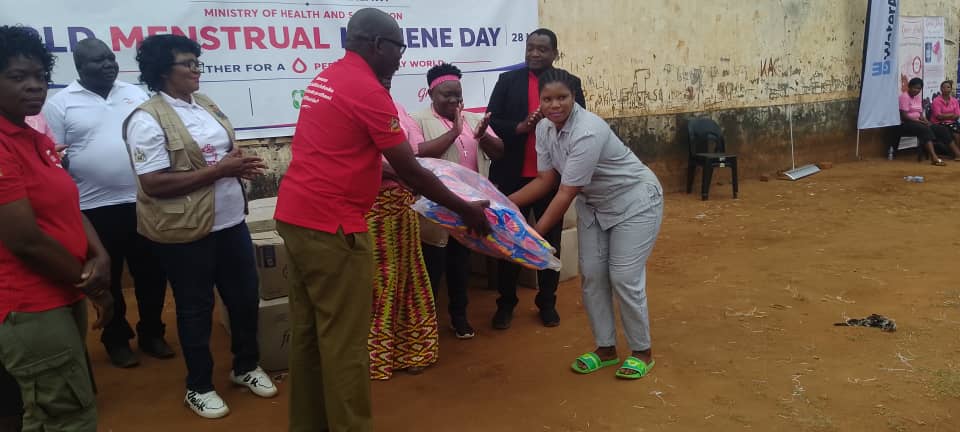
At Kachere Prison, government officials, UNICEF and inmates gathered in a rare joint engagement aimed at confronting the stigma, cost, and infrastructure gaps that continue to turn menstruation into a barrier to dignity, health, and education.
The discussions laid bare both progress made and the long road ahead in ensuring menstrual health for all women and girls in Malawi.
Speaking during interviews on the sidelines of the event, Presidential Initiative on Maternal Health and Safe Motherhood representative Ethel Kapyepye, UNICEF Chief of Water, Sanitation and Hygiene James Robertson, and inmate representative Rhoda Chataika highlighted the scale of the challenge and the urgency of closing existing gaps.
For Kapyepye, the day is fundamentally about shifting cultural attitudes.
“We are commemorating menstrual day, which is menstrual hygiene day culturally, and as a country, normally when girls are in menstruation, there are cultural issues that make sure there is stigma, so we want to make sure that we break the silence on that stigma,” she said.
She stressed that the broader goal is to ensure girls and women can access menstrual products easily and live without shame or restriction during their periods.
UNICEF’s Robertson framed menstrual hygiene as a core development issue tied to dignity, health, and inclusion. He noted that an estimated 250,000 girls in Malawi begin menstruation each year, underscoring the scale of need.
“They need to have information about what happens, how to deal with it, how to manage it, and UNICEF wants to support that, to give them dignity, health, and safety in schools and in growing up to grow into functional, happy, productive members of society,” Robertson said.
Government, in collaboration with partners, has been promoting both disposable and reusable menstrual products while also pushing for improved water and sanitation facilities in schools.
Kapyepye said efforts are underway to make menstrual products more available and affordable, alongside investments in changing rooms in primary schools to allow girls to manage their periods privately and hygienically.
“These initiatives, like not all schools have all those facilities, and even these pads are not available to the rural communities, and also to communities that are in prison,” she said.
That gap informed the decision to hold this year’s national commemoration at Kachere Prison, a symbolic move aimed at ensuring women and girls in correctional facilities are not excluded from menstrual health interventions.
UNICEF echoed this inclusive approach, saying it continues to work with the Ministries of Health and Education to strengthen water, sanitation, and hygiene services in schools and communities.
“We aim to make sure that standards and mechanisms are in place for adolescent girls to access menstrual hygiene products and facilities, privacy to change and manage with dignity,” Robertson said.
Despite these interventions, officials acknowledged that major barriers persist.
Cost remains one of the biggest challenges. Disposable sanitary pads remain expensive and are often unavailable in rural communities. While reusable pads offer a cheaper alternative, they depend heavily on access to clean water and proper sanitation—resources still lacking in many schools and health facilities.
“There are many challenges, not least the cost of accessing products. Disposable products are expensive and obviously not accessible in rural areas so easily,” Robertson said.
He added that inadequate water and sanitation infrastructure continues to undermine progress across schools, communities, and health facilities.
Kapyepye echoed the concern, noting that existing initiatives are unevenly implemented, with rural communities and institutions such as prisons still falling behind.
For women in prison, she implied, the challenge is even more acute—where limited resources and restricted mobility make menstrual hygiene not just a health issue, but a daily struggle for dignity.
Follow and Subscribe Nyasa TV :