The High Court of Malawi in Lilongwe has stopped the eviction of former official hostess Cecilia Tamanda Kadzamira from Tichitenji Farm, giving her more time to fight her case and seek justice through the courts.
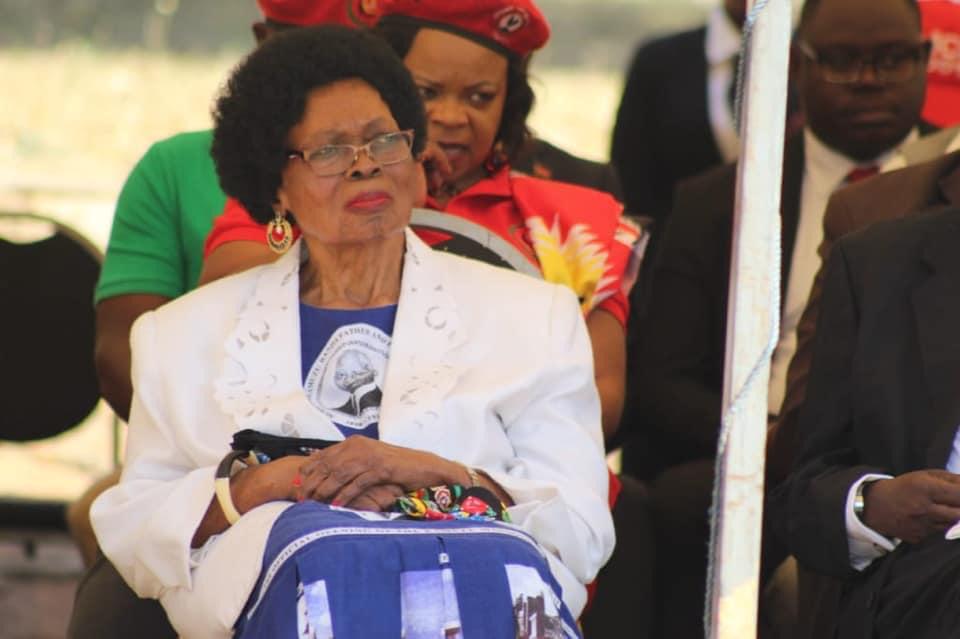
Mama Cecelia Tamanda Kadzamira
In an order dated 6 January 2026, High Court Judge Simeon Mdeza suspended an earlier judgment made on 30 December 2025 which had allowed her immediate eviction. The court ordered that Kadzamira should not be removed from the land until her appeal is fully heard and decided.
This decision means the court has agreed that there are serious questions in the case that need to be looked at again before anything final is done.
The earlier judgment had declared the Kaphwiti Banda family as the lawful owners of Tichitenji Farm and cleared the way for Kadzamira’s eviction. However, Kadzamira quickly went back to court, arguing that the decision did not fully consider important facts, especially the history of the land and how ownership changed during the one-party era.
After studying her application, sworn statement and legal arguments, the court agreed that enforcing the eviction before hearing the appeal could cause serious and permanent harm.
“The enforcement of the judgment of this Court dated 30 December 2025 is suspended, and the defendants are restrained from evicting the claimant from Tichitenji Farm until the appeal is completed,” reads part of the court order.
Legal experts say the stay shows the court accepts that the earlier ruling may have relied too much on paper registration and not enough on how the land was actually taken over and used during the time of former president Dr Hastings Kamuzu Banda.
In the earlier ruling, Judge Mdeza had said the Kaphwiti Banda family’s lease was registered first and had never been cancelled, making it stronger under the Deeds Registration Act. The court also dismissed Kadzamira’s claims of trespass.
However, in her appeal, Kadzamira argues that land matters from the one-party era cannot be decided by registration dates alone. She says the land was later taken over by the State and given to her by Kamuzu Banda, something she believes the court must carefully examine.
Lawyers say this stay allows the court to properly look at whether those historical actions were legal and what they mean today.
One of the lawyers for the Kaphwiti Banda family, Wapona Kita, said the stay was granted ex parte, meaning the court heard only Kadzamira’s side.
“We do not yet know the reasons. We will study the court file and decide on the next steps,” he said.
Legal commentators explain that such temporary orders are common in eviction cases, especially where eviction would cause irreversible damage before an appeal is heard. They stress that the stay does not mean Kadzamira has won, but only that the court wants to avoid injustice while the appeal is ongoing.
The land dispute dates back to 1968, when records show the Kaphwiti Banda family acquired Tichitenji Farm in Traditional Authority Kawere, Mchinji.
Later, after falling out with the one-party government and going into exile, Kamuzu Banda returned and took over the farm. Kadzamira says the late president later gave the land to her, a claim that is now at the centre of the appeal.
For now, the court’s decision means Cecilia Kadzamira stays on the land, and the case continues through the legal process.
Many legal observers say this is a calm, careful and fair step, allowing the courts to correct possible mistakes and ensure that justice is fully done—especially in a case deeply linked to Malawi’s political and historical past.
Follow and Subscribe Nyasa TV :
Follow us in Twitter
8 replies on “Court Stops Cecilia Kadzamira Eviction, Gives Her Chance to Seek Justice”
The Kadzamira family stole alot of property from the people through the dictator Kamuzu Banda. Give the Kapwiti Banda their property. Kusakhutitsidwa eisheee
JUSTICE WILL EVER REMAIN A REALITY EVEN DONE BY A PAUPER. I SALUTE THE COURT
EDICTS IN FAVOUR OF THE FORMER HOSTESS MAMA KADZAMIRA
There is so much land in Malawi, vast tracts of land. Why do you want to torment such as old woman? She was given that farm by the late Dr Kamuzu Banda. Even verbal or written authorisation, Presidents wield such powers. Why contest this now? Leave it, it will bring bad luck to you after Kadzimira passes on, ghosts will be everywhere at that farm. I am Zimbabwean and my full name is Never Zinyama, my watsapp +263733410247, email [email protected]. Anyone who is interested in this shameful matter, let’s discuss. It was Dr Banda’s choice, let’s respect the dead.
This is a warning to political readers to do the right things when you’re in power, Don’t take power for granted
Achoke malowo si awo MCP inkangolanda Malo anthu ankazitenga kuti alindiphamvu ankachita chilichonse ankafuna ngati anapanga dzikoli ndi iwowo kapena achambwiye awo ndiizi ankaziyamba achina chakwera ndi chimwendo
Facts:
1. So Kaphiwiti Banda was granted a lease of the estate by the Government.
2. Kamuzu Banda, in his capacity as Minister of Lands cancelled the lease.
3. Kamuzu Banda, in his capacity as President of the Republic of Malawi and MCP president became a tyrant who did not tolerate dissent, hence terrorising anybody who dared to show the slightest sign of disobeying or disagreeing with him, resulting in many people fleeing the country. So did Kaphiwiti Banda.
4. Then Kamuzu Banda, in his capacity as Minister of Lands, got wiser and cancelled the lease given to Kaphwiti Banda.
5. Having unilaterally cancelled the lease, it pleased Kamuzu Banda, in his capacity as Minister of lands, to grant a new lease to Mama Kadzamira, of the “Mama and I” fame. The official hostess, who was the closest person to Kamuzu Banda, lived with him in the same house and was by his side all the time.
6. The Kaphwiti Banda family, on return from forced exile, want their estate back, which Kamuzu Banda had since given to his closest companion.
7. And the argument is that the Kaphwiti Bandas can not get the estate back because Kamuzu Banda, the Minister of Lands, cancelled their lease and awarded a new lease to Mama Kadzamira, who was the closest companion to the Minister of Lands, Kamuzu Banda, himself.
8. Do I see a serious conflict of interest in this story that goes to the core of the grant of the new lease?
9. Was it possible for Kaphiwiti Banda to challenge the Kamuzu decision, at the time it was made, and remain alive and in good health capable of living a dignified life within the country?
10. Let genuine justice be done indeed, by looking at the prevailing facts and circumstances and not the paper trail.
🙏
This just shows how one party system caused harm to its citizens, it will be unfair if the court decide mama kadzamira wins the case when in true sense those title deeds carry more weight. A land acquired with no proper procedures or shortcuts that invalid……..There is God out there and judgement too.
SO THE FORMER PRESIDENT TOOK SOMEONES LAND AND GAVE IT TO THE WOMAN THEY CALL OFFICIAL SECRETARY
THIS WORLD OF DICTATORS!!


The Kadzamira family stole alot of property from the people through the dictator Kamuzu Banda. Give the Kapwiti Banda their property. Kusakhutitsidwa eisheee
JUSTICE WILL EVER REMAIN A REALITY EVEN DONE BY A PAUPER. I SALUTE THE COURT
EDICTS IN FAVOUR OF THE FORMER HOSTESS MAMA KADZAMIRA
There is so much land in Malawi, vast tracts of land. Why do you want to torment such as old woman? She was given that farm by the late Dr Kamuzu Banda. Even verbal or written authorisation, Presidents wield such powers. Why contest this now? Leave it, it will bring bad luck to you after Kadzimira passes on, ghosts will be everywhere at that farm. I am Zimbabwean and my full name is Never Zinyama, my watsapp +263733410247, email [email protected]. Anyone who is interested in this shameful matter, let’s discuss. It was Dr Banda’s choice, let’s respect the dead.
This is a warning to political readers to do the right things when you’re in power, Don’t take power for granted
Achoke malowo si awo MCP inkangolanda Malo anthu ankazitenga kuti alindiphamvu ankachita chilichonse ankafuna ngati anapanga dzikoli ndi iwowo kapena achambwiye awo ndiizi ankaziyamba achina chakwera ndi chimwendo
Facts:
1. So Kaphiwiti Banda was granted a lease of the estate by the Government.
2. Kamuzu Banda, in his capacity as Minister of Lands cancelled the lease.
3. Kamuzu Banda, in his capacity as President of the Republic of Malawi and MCP president became a tyrant who did not tolerate dissent, hence terrorising anybody who dared to show the slightest sign of disobeying or disagreeing with him, resulting in many people fleeing the country. So did Kaphiwiti Banda.
4. Then Kamuzu Banda, in his capacity as Minister of Lands, got wiser and cancelled the lease given to Kaphwiti Banda.
5. Having unilaterally cancelled the lease, it pleased Kamuzu Banda, in his capacity as Minister of lands, to grant a new lease to Mama Kadzamira, of the “Mama and I” fame. The official hostess, who was the closest person to Kamuzu Banda, lived with him in the same house and was by his side all the time.
6. The Kaphwiti Banda family, on return from forced exile, want their estate back, which Kamuzu Banda had since given to his closest companion.
7. And the argument is that the Kaphwiti Bandas can not get the estate back because Kamuzu Banda, the Minister of Lands, cancelled their lease and awarded a new lease to Mama Kadzamira, who was the closest companion to the Minister of Lands, Kamuzu Banda, himself.
8. Do I see a serious conflict of interest in this story that goes to the core of the grant of the new lease?
9. Was it possible for Kaphiwiti Banda to challenge the Kamuzu decision, at the time it was made, and remain alive and in good health capable of living a dignified life within the country?
10. Let genuine justice be done indeed, by looking at the prevailing facts and circumstances and not the paper trail.
🙏
This just shows how one party system caused harm to its citizens, it will be unfair if the court decide mama kadzamira wins the case when in true sense those title deeds carry more weight. A land acquired with no proper procedures or shortcuts that invalid……..There is God out there and judgement too.
SO THE FORMER PRESIDENT TOOK SOMEONES LAND AND GAVE IT TO THE WOMAN THEY CALL OFFICIAL SECRETARY
THIS WORLD OF DICTATORS!!