

Decision to cut out suppliers, transporters in fertiliser subsidy irks Malawi businesspersons
Some local entrepreneurs and the Indigenous Businesspersons Association of Malawi (IBAM) have spoken against government’s decision not to involve suppliers in this year’s Farm Input Subsidy (Fisp) programme, saying the move will escalate corrupt practices and benefit politically-connected individuals.

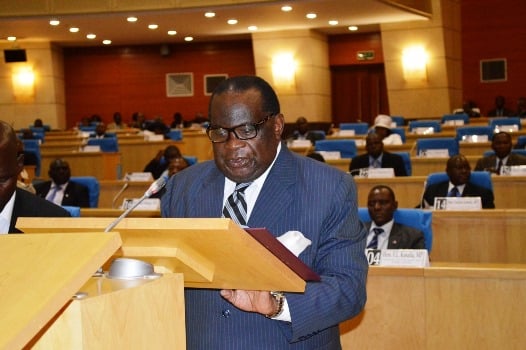
Instead of calling for suppliers and transporters to tender for the supply of Fisp fertilizer and seed, in the 2015/16 growing season, there will be no suppliers and farmers will be dealing with the dealers directly, according to Ministry of Finance spokesperson Nations Msowoya.
This means that government will not be inviting bids from companies to supply subsidized farm inputs and transport them to various selling points nationwide.
Msowoya recently told local media that government was spending a lot of money to pay suppliers and transporters, thereby incurring huge operational costs.
“Government was subcontracting companies to supply fertilizer and pay them for the fertilizer that has been supplied. This has been stopped.
“This time all dealers will be able to handle fertilizer subsidy coupons. What would be needed is for the beneficiaries to take their coupons to the dealers,” said Msowoya.
But one local entrepreneur, who asked for anonymity, observed that this arrangement will benefit unscrupulous traders and politically-connected individuals.
He said with arrangement some targeted beneficiaries, mainly in remote areas will hardly access the subsidized farm inputs as most agro-dealers are based in trading centeres unlike Admarc selling points.
“The idea sounds good, but targeted farmers will not benefit from this programme. Not all agro-dealers have the capacity to stock and supply the farm inputs and this will only enrich unscrupulous traders.
On his part IBAM president Mike Mlombwa also doubted if the this year’s programme–minus suppliers–will achieve its intended purpose.
According to him, the farm inputs will not be evenly distributed across the country as some agro-dealers have an edge over others, especially politically-linked.
Mlombwa further observed that the “decision to take out suppliers was not done in the best interest of Malawians, but elite few individuals with political connections”.
“We are not against the arrangement, but should have just improved where things did not go right? How do you expect the programme to be a success without the suppliers and transporters?
“It has always been our wish to support and advance government endeavors for the betterment of all Malawians, but we are rarely consulted,” said Mlombwa.
However, sources claimed that the suppliers’ list has been controversial and marred with accusations of manipulation as well as award of contracts to politically-linked individuals.
This new arrangement, according to inside sources, will help Treasury save around k19 million from the actual Fisp expenditure of K59.7 billion financial year.
Farmers will buy the subsidized inputs directly from agro-dealers using their coupons and K500, which is the redemption price.
Under the arrangement, government will also drastically cut down on transport costs incurred through companies moving the inputs to various points nationwide.
Minister of Finance, Economic Planning and Development Goodall Gondwe told Parliament that government intend to limit the cost of Fisp to K40 billion.
Gondwe said government’s direct involvement in the procurement, storage and distribution of the inputs meant that it had to bear the impact of the exchange rate fluctuations since contracts with suppliers are drawn in the US dollar terms.
Despite the drastic reduction, government will still provide 150,000 metric tonnes of fertilizer and improved seed quantities to the 1.5 million beneficiary households.
Follow and Subscribe Nyasa TV :
No NO and big NO ! If I can recal when I was 16 i used to see seeds and Fertilizer depo in the villages where farmers buy their farm inputs at a near buy depoz that’s how to help local farmers in the villages where they walk a long distance to get their needs. If local farmers get their Farm inputs in time that is they got more time to prepare their gardens whereby they will be able to plant their seeds with early rains.If farmers have enough food in village = more food in cities and towns where many people are now Living .KEEP DELIVERING farm inputs in time
MAMA INE KOMA MULIMIYO AMUFIKA FERTIZER ?
In the previous arrangement more thieves shared the loot. In the current arrangement few highly placed thieves will get it all. Both ways, the local person does not feature! Stop the noise or stop the program!
bravo govt mwina sitigulanso michenga chaka chino
Mitengo yogulira feteleza wotsika mtengowu akuti ayikweza. NPK-K2,500, Urea ndi K1,500. Iwalani za K500.
Mr mlombwa is it in the interest of indigenous people or is it in the interest of your pocket please clarify.
Pls Mr GG y don’t u engage ur cabinet and try to make Fertilizer loans as it was at one Party system we use to farmer more crops ,pls give Farmers loan to grow ur economy
Kuli kudya ndalama ma vendor masquarading as ma agrodealer makamaka a ndale…
kotoo ine mulli
MWENYE AZALEMERA SOPANOTU. IFE HARD TO DEFEAT AZAMANGANSO LUMBA WINA PA CHICHIRI SOPANO. MUTHU WAKUDA OPUSATU!
Lobos stupid I want fertilizer to be expensive based on what idiots continue crying !!!!
A move well calculated because transporters were stealing fertilizers in large volume ie the truck missing only to be found in Tsangano all fertilizers sold and driver at large. Government lost a lot of money through this dubious transporters.
My advise to Government is they must analyse the situation and come up with the best to benefit the local farmer at the remotest point.
Nothing for Malawians MCP ibwere basi ilamulile awa ndi ankhanza
Boma la chi lomwe ndi chonchi. What Malawians do you expect from these lomwes.
The bidding arrangement was open to corruption and thats the one that benefited a few connected individuals. This entrepreneur is talking rubbish and obviously does not know how the program operates.
High time we stopped this FISP thing. It is a way of thieving from the tax payers now and not for promoting food security any more. Let us invest in development of irrigation systems across the country from North down to South. We need to start utilising the lake better by pumping water from there to all the districts for irrigation purposes.
This is a good move although my point would be to abolish the whole subsidy programme.
I hate FISP. It only benefits few corrupt and greedy individuals. Why can’t the Government target the real farmers regardless of their financial muscle?
unami welewo
These subsidies should be just universal so that the price of fertiliser is less for everyone.