

DPP power struggle intensifies as Mutharika reportedly pushes Vice-President Ansah to resign amid fears over succession
A deepening power struggle is unfolding within Malawi’s ruling Democratic Progressive Party (DPP), with multiple senior sources indicating that President Arthur Peter Mutharika has demanded the immediate resignation of his Vice-President, Jane Ansah, in what insiders describe as a calculated move to control presidential succession.
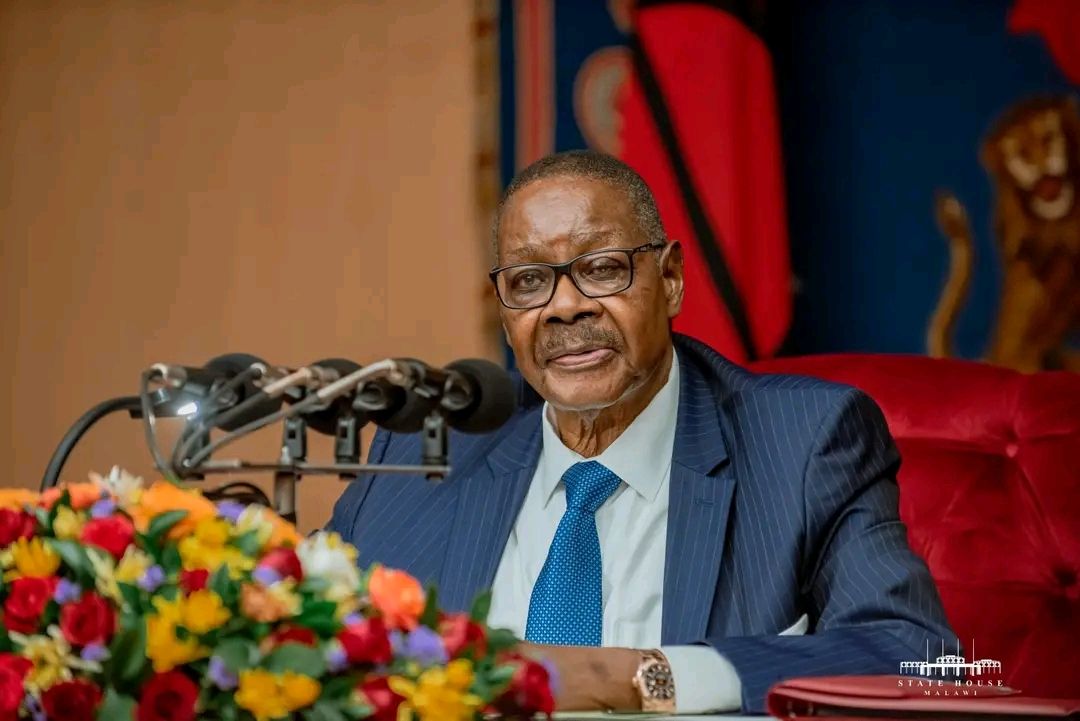
According to well-placed sources, the demand is not an isolated decision but part of a broader and more troubling strategy by a tight-knit inner circle of the President’s most trusted allies.
This group is said to have quietly formed an informal governing structure, assumed influence over critical executive decisions, and is actively working to consolidate power while blocking any constitutional succession pathway that falls outside their control.
The trigger cited publicly is Dr Ansah’s December 2025 trip to the United Kingdom, where she attended her husband’s birthday in Nottingham. Government spokesperson Shadrick Namalomba confirmed on 24 December 2025 that approximately MWK168 million (about US$100,000) in public funds had been approved for the trip involving the Vice-President and five officials. However, a subsequent presidential statement suggested the visit was privately funded, exposing contradictions that have fueled political tension.
But insiders insist the trip is merely a pretext.
“This is about succession, not travel,” one senior DPP source said. “There is a growing belief within the party that, given his age, the President may not complete his term to 2030.”
Under Malawi’s Constitution, specifically Section 83, the Vice-President automatically assumes office if the President dies or becomes incapacitated. It is this provision that is now at the centre of the political storm.
Sources say factions within Mutharika’s inner circle are pushing to remove Dr Ansah precisely to block her from ascending to the presidency under that constitutional arrangement.
In recent months, actions taken against the Vice-President’s office appear to support this narrative. In January 2026, the Department of Disaster Management Affairs—one of the most critical portfolios under her office—was abruptly transferred to the Office of the President and Cabinet. Shortly after, the Department of Public Sector Reforms was also removed. Sources further indicate that her security detail has been significantly reduced, in what is seen as a deliberate effort to weaken her institutional standing.
Despite the reported pressure, the Constitution does not grant the President authority to force a sitting Vice-President to resign. As a result, sources say discussions are now taking place within senior DPP ranks on whether grounds for impeachment can be manufactured and pursued through Parliament.
Malawi has faced a similar constitutional crisis before. In 2012, following the sudden death of President Bingu wa Mutharika, members of his inner circle attempted to block then Vice-President Joyce Banda from taking over. Despite these efforts, the Constitution prevailed, and Banda was sworn in as President.
That episode left a lasting imprint on Malawi’s political elite, reinforcing fears that a Vice-President outside the ruling faction’s control could inherit power and dismantle existing power structures.
The current tensions are not isolated to the First Vice-President. Second Vice-President Enoch Chihana is also under sustained political attack from within the same inner circle.
At a rally in Rumphi, DPP Northern Region Vice-President Jappie Mhango publicly belittled Chihana, stating that he holds no ministerial position and would have to rely on others for development in his constituency, adding that “a stepchild can never become chief.” Separately, Northern Region Governor Christopher Mzomera Ngwira declared that Chihana’s tenure would not last, accusing him of opposing the President.
However, the constitutional positions of the two Vice-Presidents differ significantly. While Dr Ansah, as First Vice-President, was elected alongside the President and can only be removed through impeachment, the Second Vice-President is appointed under Section 80(5) and serves at the President’s discretion.
Even so, the pattern is clear.
One Vice-President is being stripped of authority, pressured to resign, threatened with impeachment, and weakened institutionally. The other is being publicly undermined and politically isolated. Though the mechanisms differ, the objective appears unified: to neutralize both offices as potential centres of independent power.
The situation mirrors developments elsewhere in the region. In Zimbabwe, President Emmerson Mnangagwa moved preemptively to eliminate automatic vice-presidential succession by amending the Constitution before a running mate clause could take effect in 2023. The amendment ensured Vice-Presidents are appointed—and dismissed—at the President’s discretion, removing any automatic claim to power.
Back in Malawi, sources warn that if Dr Ansah refuses to step down, impeachment proceedings may be the next move.
Underlying the manoeuvres is a growing sense of urgency within the President’s inner circle. At 86, and having reportedly travelled to South Africa multiple times for medical treatment since returning to office, concerns over Mutharika’s health are quietly shaping political calculations.
For those closest to power, the stakes are existential.
If Dr Ansah assumes the presidency under constitutional succession, insiders fear it would mark the collapse of their influence, as she would likely install her own leadership network—just as Joyce Banda did in 2012.
What is unfolding, therefore, is not just a political disagreement, but a high-stakes battle over the future control of state power—one that once again exposes the fragility of Malawi’s constitutional order when confronted by elite political interests.
Follow and Subscribe Nyasa TV :