

DPP’s challenge: convincing Malawians life is getting better
A year ago, the Democratic Progressive Party (DPP) returned to power on a tide of public expectation. Voters wanted relief from economic hardship, an end to shortages, lower prices and a sense that government understood the pressures facing ordinary households.
One year on, the political argument has become clearer.
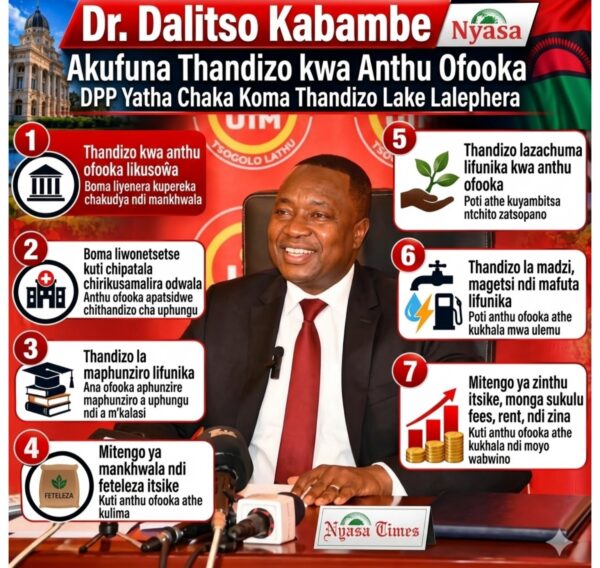
In a lengthy assessment of the administration’s performance, UTM leader Dr Dalitso Kabambe contends that the government has largely failed to meet those expectations. His criticism ranges from the economy and corruption to governance and public services.
The DPP would counter that many of the problems Malawi faces were inherited and cannot be fixed overnight. Few serious observers would dispute that. The economy remains fragile, public debt is high, foreign exchange shortages persist and public services face longstanding structural challenges.
But politics is rarely judged against inheritance. It is judged against hope.
For many Malawians, the key question is straightforward: does life feel easier than it did a year ago?
That is where the government faces its biggest challenge. Households continue to wrestle with rising costs. Businesses complain of difficult trading conditions. Farmers remain concerned about the price of inputs. Fuel, forex and power supply continue to feature prominently in public debate.
The opposition’s argument is that the administration has not just struggled with economic delivery but has also failed to convince citizens that governance standards are improving. Allegations of corruption, disputes over appointments and concerns about institutional independence have all contributed to a broader debate about accountability.
Yet there is another way of viewing the government’s first year.
The DPP is not being judged against perfection. It is being judged against progress. Most voters do not expect every promise to be fulfilled within twelve months. They do, however, expect evidence that difficult decisions are being taken and that the country is moving in the right direction.
That is the political reality confronting the administration as it begins its second year.
The next four years remain open. Governments have recovered from disappointing starts before. Equally, first-year warning signs can harden into defining political narratives.
For now, the DPP’s challenge is less about defending its record and more about demonstrating momentum. The election victory secured power. Sustained improvements in the economy and public services will determine whether it keeps public confidence.
Because in the end, voters tend to ask fewer questions about what governments inherited and more about what has changed since they arrived.
Follow and Subscribe Nyasa TV :