

From Policy to Capital: How Malawi Is Positioning Itself as Africa’s Next Mining Frontier
At a time when African leaders are calling for unity, value addition, and greater control over the continent’s mineral wealth, Malawi is quietly positioning itself as one of the region’s emerging mining frontiers, with local financial institutions stepping in to help bridge the capital gap.
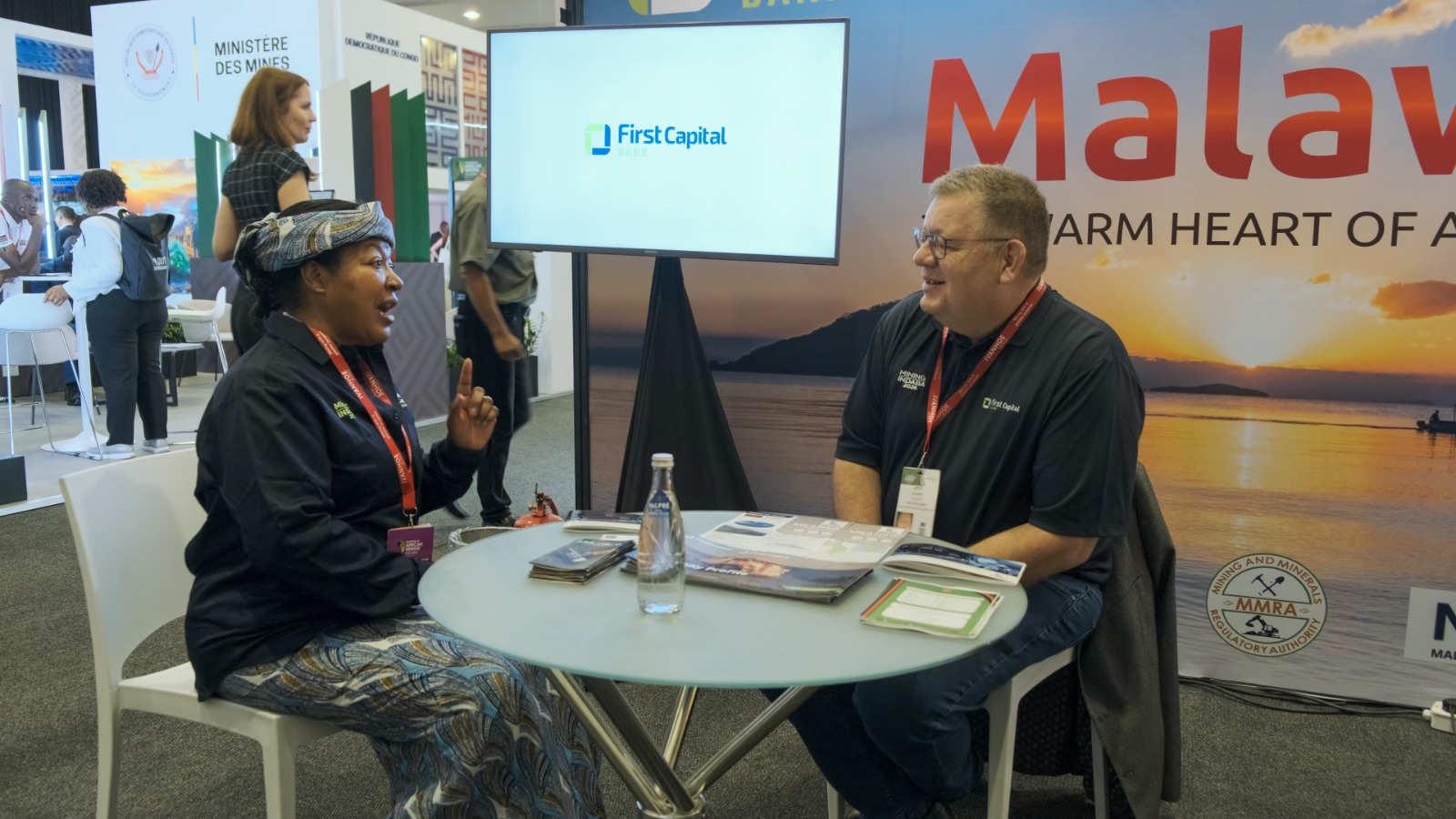
At the 2026 African Mining Indaba in Cape Town, attended by more than 200 international journalists and global investors, Malawi’s message was clear: mining is no longer a peripheral sector but central to the country’s economic diversification strategy.
Minister of Mining and Energy Dr. Jean Mathanga said Malawi is aligning itself with broader continental efforts to harmonise legal and regulatory frameworks, promote beneficiation, and move beyond raw mineral exports.
“Malawi is actively engaging with other African ministries to promote value addition and create a more coherent and investor-friendly mining environment,” Mathanga said on the sidelines of the conference.
The Indaba’s theme, Stronger Together Through Partnerships, resonated strongly with Malawi’s delegation, particularly as African leaders, including South Africa’s Minister Gwede Mantashe and Zambia’s President Hakainde Hichilema, called for greater cooperation to ensure the continent retains more value from its mineral wealth.
But policy reform alone does not unlock mining potential. Financing does.
One of the key dynamics shaping Malawi’s presence at Indaba was its strategic partnership with First Capital Bank (FCB), through its regional holding company FMB Capital Holdings.
In a high-level engagement between FMB Capital Holdings Group Managing Director Jaco Viljoen and Minister Mathanga, discussions focused on how public–private collaboration can help translate mining potential into investable projects.
For emerging mining jurisdictions like Malawi, the challenge is not only attracting investors but making projects bankable.
Regional banks such as FCB are increasingly positioning themselves as intermediaries capable of understanding both local risk and international capital expectations. Unlike global institutions that may view frontier markets conservatively, regional banks often have deeper on-the-ground knowledge of regulatory environments, supply chains, and local industry ecosystems.
Malawi’s mining strategy extends beyond extraction. Officials emphasised exploration, project development, supplier support, and beneficiation as key pillars.
For FCB, that creates opportunity across the value chain, from supporting local suppliers servicing mining operations to structuring financing solutions for larger projects.
Minister Mathanga publicly acknowledged that FCB’s partnership had strengthened Malawi’s pavilion presence and helped draw significant investor interest during the first days of the Indaba.
The partnership reflects a broader continental shift: African capital increasingly playing a role in financing African resources.
Across Southern Africa, mining remains one of the most capital-intensive sectors. Infrastructure gaps, climate pressures, and limited access to affordable capital continue to constrain growth.
Yet Malawi’s approach suggests a recalibration, positioning mining not merely as a source of exports, but as a driver of industrial development.
By working through regional financial institutions, the country aims to reduce dependence on external actors while maintaining openness to global investors.
The question now is execution. If regulatory reforms hold, regional cooperation deepens, and capital flows follow policy signals, Malawi could emerge as one of Africa’s next investable mining destinations.
For now, at African Mining Indaba 2026, the country is making its case backed not only by government ambition, but by financial sector alignment.
In the meantime, the Government of Malawi and the First Capital Bank (FCB) have agreed to strengthen partnership to unlock mining investment at the indaba.
Malawi’s participation at the African Mining Indaba 2026 gained further momentum on the third day of the conference as government deepened its engagement with private sector partners to accelerate mining investment.
A key highlight was a strategic meeting between Minister of Mining and Energy Dr. Jean Mathanga and FCB Group Managing Director Jaco Viljoen, focusing on how public–private collaboration can attract investors and support suppliers within Malawi’s growing mining sector.
Dr. Mathanga commended FCB for partnering with the ministry, noting that the Bank’s support had strengthened Malawi’s pavilion presence and drawn considerable interest from investors attending the Indaba.
“Unlocking Malawi’s mining potential remains a key priority for government.
Partnerships with the private sector are critical in ensuring that our reforms translate into real investment and job creation,” she said.
The indaba, held under the theme Stronger Together: Progress Through Partnerships, has emphasised unity among African nations in managing mineral resources.
Earlier, Dr. Mathanga backed calls by African leaders for stronger regional cooperation through platforms such as SADC and the African Union Mining Ministers Forum.
She reiterated that Malawi is committed to harmonising regulatory frameworks, promoting value addition and beneficiation, and moving beyond raw exports toward local processing and industrial development.
First Capital Bank, through its holding company FMB Capital Holdings, is supporting Malawi’s participation at the event and engaging with investors across the five countries in which the Group operates.
Day 2 discussions at the Indaba focused on how investment, technology, skills development and partnerships can unlock long-term value across Africa’s mining sector.
As Malawi positions mining as a key pillar of economic diversification, collaboration between government and financial institutions is expected to play a crucial role in transforming mineral potential into tangible development outcomes.
Follow and Subscribe Nyasa TV :