

IMF’s ECF unlocks US$240 million more
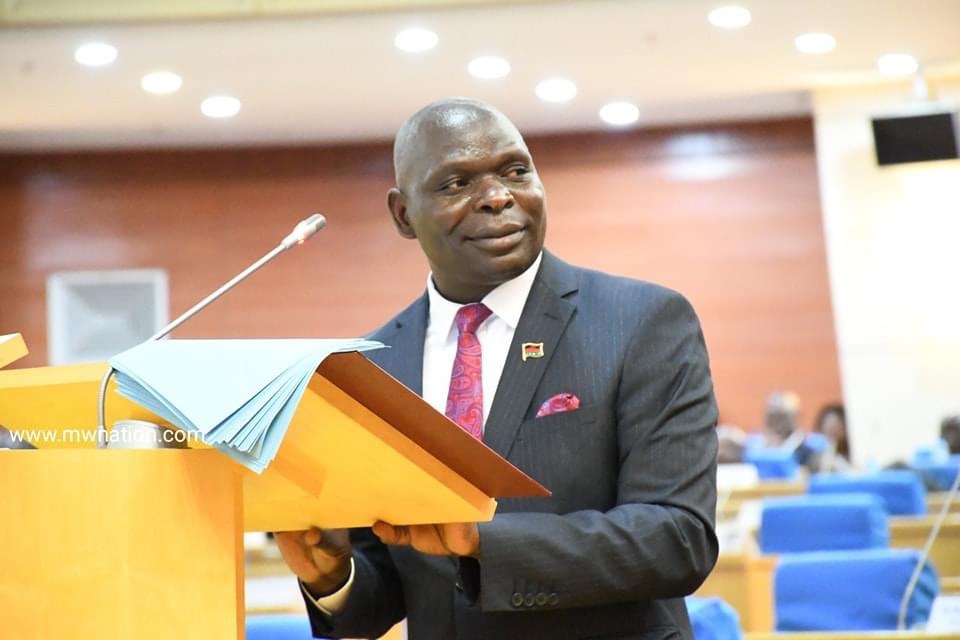
In his presentation in Parliament of the 2023/24 revised national budget Minister of Finance Simplex Chinthyola Banda said the International Monetary Fund (IMF) approval of the extended credit facility (ECF) for Malawi will unlock more than US$240 million (almost MK404 billion).
The 2023/24 revised national budget has oozed more optimism and hope following various measures that Government has put in place to cushion Malawians on the shocks of the recent devaluation of the Kwacha.
The new ECF in itself is worth about US$174 million and is expected to bolster the country’s Balance of Payments (BoP)- a record of transactions between Malawi and the rest of the world.
Presenting the revised budget, the Finance Minister brought more sweeter news to Malawians, announcing a flurry of more expected inflows to be injected into the economy on the back of the new IMF programme.
The resources are a first of its kind to be disbursed to President Lazarus Chakwera’s administration since the plunder of resources that occurred in 2013, popularly christened Cashgate.
For instance, Chithyola Banda says Malawi will receive US$80 million direct budget support from World Bank, which is currently ranked the country’s largest multilateral creditor through its development arm, the International Development Association (IDA).
The country is also set to get US$30 million from the African Development Bank (AfDB) as well as 60 million euros from the European Union (EU).
According to the Minister, the country is also set to benefit from the recent austerity measures that President Chakwera announced recently including the suspension of foreign trips as well as the slashing of benefits for monsters and other senior government officials.
He said, for example, about MK4.2 billion will be saved from the cutting of the said benefits and that the money will be rechannelled towards productive sectors of the economy — such as the mega farms programmes which is one of the flagship campaign promises by President Chakwera administration.
As a cushion, Chithyola Banda says the provision of wages and salaries has been revised upwards by MK80 billion from its approved MK900 billion to MK938 billion, stressing that such a provision is meant to cushion civil servants from the recent Kwacha realignment which saw the local currency being devalued by 44%.
One of the substantial benefits of Malawi’s qualification for the extended credit facility (ECF) programme from the International Monetary Fund (IMF), is the unlocking of foreign investments, with several development partners already committing substantial financial facilities.
In his comprehensive presentation on Monday in Parliament, the Minister of Finance outlined the 2023-24 mid-year revised budget framework, revealing significant adjustments to both revenues and expenditures.
The Minister made the presentation under the title ‘Time for Reflection to Recover, Develop, and Protect our Economy’ — emphasizing the need for collective action to address emerging fiscal challenges.
The mid-year review indicates a positive revision in total revenues and grants, increasing from MK2.55 trillion to MK3.05 trillion. Simultaneously, total expenditure saw an upward adjustment from MK3.79 trillion to MK4.33 trillion.
Chintyola Banda attributed these changes to budget performance during the first half of the fiscal year and anticipated projections for the second half.
“Government will continue enhancing the system in financial reporting, bank reconciliation, recording of Government commitments and payment efficiency through a stable Electronic Funds Transfer (EFT) platform.
“Furthermore, through the department of Accountant General, the Government will continue rolling out additional system functionalities such as contract management, revenue management, asset management and project systems,” he said.
Highlighting the projections for the second half of the 2023/24 financial year, the Minister noted that total revenue and grants are expected to reach K1.60 trillion, which includes MK1.23 trillion from domestic revenue and MK372.54 billion from grants.
The projected total expenditure for the same period is MK2.31 trillion, with recurrent expenditure at MK1.79 trillion and development expenditure at MK513.41 billion.
Breaking down the recurrent expenditure, wages and salaries account for MK543.61 billion, interest payments for MK561.19 billion, goods and services for MK291.91 billion, grants (transfers) for MK178.22 billion, and social benefits for MK156.81 billion.
Development expenditure is projected at MK513.41 billion, comprising MK353.24 billion for foreign-financed expenditures (Part I) and MK160.17 billion for locally financed expenditures.
Despite the positive revenue outlook, the Minister acknowledged a projected deficit of K709.13 billion for the second half of the fiscal year and to address this, the government plans to borrow from both foreign and domestic markets.
During the mid-year, total revenue and grants amounted to MK1.45 trillion, surpassing the midyear projection of MK1.25 trillion while domestic revenues were estimated at MK1.18 trillion, with tax revenue accounting for MK1.03 trillion and non-tax revenue at MK151.8 billion.
Total grants disbursed in the first half reached MK273.40 billion, prompting an upward revision of projected grants for the fiscal year to MK645.94 billion.
On the expenditure side, rising inflation and significant debt maturities during the first half led to total expenditure of MK2.02 trillion, with recurrent expenditure at MK1.45 trillion and development expenditure at MK567.24 billion.
Recurrent expenditure saw an underperformance of MK122.99 billion, mainly due to reduced spending on goods and services and social benefits.
Development spending during the first half amounted to MK567.24 billion, with foreign-financed projects overperforming by 50.6% and domestically financed projects by 4.6%.
The overall balance (deficit) in the first half was MK569.79 billion against a projected MK737.82 billion.
Chithyola Banda acknowledged the impact of currency adjustments on the budget and urged prompt adoption of the proposed budget review to support Malawians.
He outlined measures by the Reserve Bank of Malawi to counter the effects of the exchange rate correction, emphasizing a tight monetary policy and vigilant inflation monitoring.
Follow and Subscribe Nyasa TV :
Nkhope ya anduna a finance ndende ya mu drama ya pamajiga,… aka Gadabwali… tangovomeleza kuti tikuonelayi ndi sewelo la tikufelanji powered Ngunde 🤣🤣