

Ivory Kingpin Re-arrested in South Africa as Questions Mount Over Dropped Lin Yunhua Corruption Case
As public scrutiny intensifies over the Director of Public Prosecutions’ (DPP) controversial decision to discontinue a high-profile wildlife-linked corruption case against convicted wildlife trafficker Lin Yunhua, authorities in South Africa have reportedly re-arrested one of Malawi’s most wanted ivory trafficking suspects.
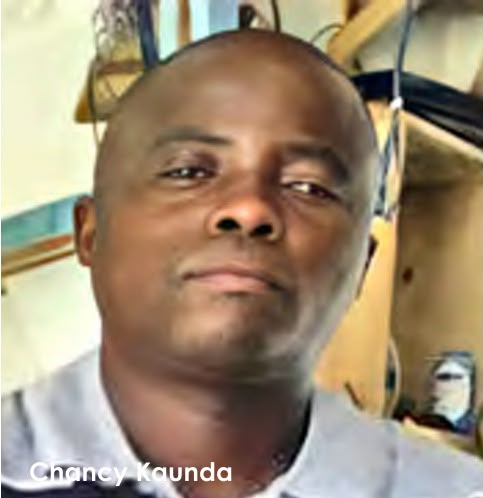
Forty-six-year-old Chancy Kaunda, a notorious figure in regional wildlife trafficking networks, has been on the run for years. Investigators believe he served as a key facilitator for an Asian-led smuggling syndicate, coordinating the transportation of large quantities of illicit ivory across Eastern and Southern Africa between 2002 and 2013.
Court records seen by Nyasa Times reveal that Chancy and his brother, Patrick Kaunda, were first arrested in Mzuzu on 23 May 2013 after authorities intercepted a truck carrying 781 elephant tusks weighing 2,640 kilograms. The truck, registration number KA 4849, had entered Malawi from Dar es Salaam, Tanzania, through the Songwe Border Post.
During investigations, Chancy reportedly confessed that he and his brother had been hired by two Chinese nationals, locally known as brothers Steve Wang and Peter Wang, to transport the massive ivory consignment.
The brothers were re-arrested in Malawi on 21 November 2017 over their role in the smuggling operation. In 2019, they were convicted and each ordered to pay a fine of MK5 million or serve eight years’ imprisonment with hard labour.
Although they paid the fines, the Malawi Supreme Court in April 2020 overturned that sentence, ruling that the two men must instead serve the eight-year prison terms. Before they could be committed to prison, the brothers disappeared and have remained fugitives ever since.
Malawi Police subsequently enlisted the assistance of INTERPOL after investigations traced Chancy Kaunda to South Africa.
Confirming the latest development, Director of the Department of National Parks and Wildlife (DNPW), Brighton Kunchedwa, said Kaunda was arrested following extensive surveillance by INTERPOL, which tracked his movements and established his place of residence.
“It is true that Chancy Kaunda has been arrested in South Africa after years on the run. This is very exciting news for us as a country because it demonstrates Malawi’s commitment to fighting wildlife crime and ensuring that offenders are brought to justice,” said Kunchedwa.
He said the arrest sends a strong warning to wildlife traffickers that they cannot evade justice forever.
Kunchedwa added that government authorities are now working to have Kaunda returned to Malawi to serve the prison sentence that has remained outstanding since the Supreme Court ruling.
“My understanding is that the Malawi Police Service will work closely with their counterparts in South Africa and through INTERPOL processes to facilitate his return to Malawi, where he will be recommitted to prison to serve his sentence,” he said.
The Kaunda brothers are also wanted by Tanzanian authorities over the seizure of 347 ivory tusks weighing 1,084.9 kilograms in Dar es Salaam on 4 July 2013. Tanzanian investigators suspect the pair of organising and financing the smuggling of ivory from Tanzania between January 2008 and June 2013.
Investigators have also linked the brothers to several of the world’s largest ivory trafficking operations.
Among the most significant was the 2002 seizure of 6.2 tonnes of ivory in Singapore. The shipment, which originated in Malawi, had been transported from Durban after being falsely declared as stone sculptures. Investigators believe the ivory had been smuggled overland from Malawi to Beira, Mozambique, by Chancy Kaunda before being loaded onto a vessel destined for South Africa.
Authorities determined that the ivory originated from Zambia, Mozambique, Tanzania and Malawi. Shipping documents identified the consignor as Peter Wang of Seng Luck Trading in Lilongwe, operating through what investigators later described as a shell company.
Intelligence reports further suggest that Chancy worked closely with the Wang brothers and facilitated at least 14 ivory shipments using the Malawi-Mozambique-Beira corridor to destinations in Asia—including Indonesia, Malaysia and Singapore—between 2010 and 2015.
Peter Wang is reported to have since died. His brother, Steve Wang, was traced by investigative journalists to a luxury residence in Phnom Penh, Cambodia, where he is said to be living with his Cambodian wife, allegedly off proceeds accumulated during years of involvement in the illegal wildlife trade.
According to investigators, the shipments were routinely disguised as precious and semi-precious stones or timber products to evade customs detection.
Kaunda’s re-arrest comes at a time when Malawi’s commitment to tackling wildlife crime is under renewed scrutiny following the DPP’s decision to discontinue the corruption case involving convicted Chinese wildlife trafficker Lin Yunhua.
Investigators have previously alleged that Lin Yunhua inherited much of the illicit wildlife trafficking network following the decline of the Wang brothers’ operations, raising fresh concerns that powerful transnational trafficking syndicates continue to operate despite years of arrests, prosecutions and convictions.
The re-arrest of Chancy Kaunda is therefore expected to reignite debate over whether Malawi is making meaningful progress in dismantling international wildlife trafficking syndicates—or whether some of the region’s most influential ivory kingpins continue to benefit from protection, corruption and weak enforcement.
Follow and Subscribe Nyasa TV :