

Malawi’s Scorchers are an industry, not a miracle
- The President is right that the Scorchers have united Malawi as politics never could. What we do with that unity — and with the industry these women have just walked us into — is the test now.
President Arthur Peter Mutharika said something this week that deserves to outlast the tournament that prompted it. The Scorchers, he observed, had achieved what politicians across the generations have not: they had united the country. That is worth resisting the urge to dismiss as courtesy. It is a serious statement, and it is true — and a head of state naming it plainly, rather than claiming the moment for himself, is the right instinct at the right time.
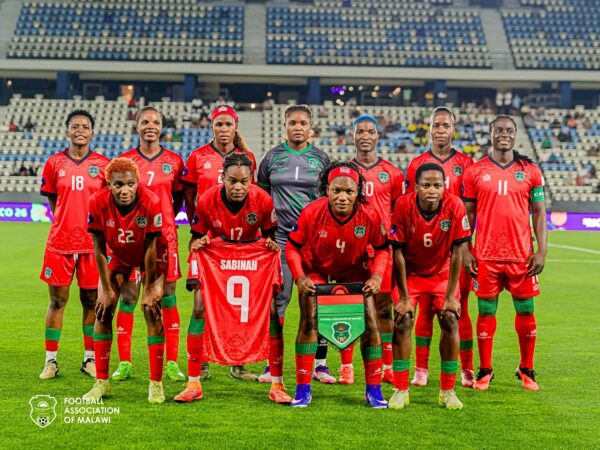
Consider what the unity actually is. In a nation where the fault lines of region, party and patronage run through almost every public question, a group of young women has, for a few extraordinary weeks, dissolved them.
In Lilongwe and Blantyre, in Mzuzu and the villages, in the diaspora in London and Johannesburg, Malawians who agree on nothing else have found themselves rising from the same seat at the same moment.
Nobody was instructed to feel it; no ministry convened it; no campaign paid for it. It arrived unbidden, on merit, around a shared source of pride — which is precisely why it carries an authority no political programme can buy. The scoreboard is the most honest institution in the country, and for once the whole country trusts the result.
Take that unity seriously, and it leads straight to the harder question the celebration is hiding. If sport can do this, sport is not a diversion from the nation’s serious business — it is some of the most serious business we have.
And once you accept that, you are obliged to ask what else this asset can do for Malawi, and why we keep letting its value walk out the door.
Tonight the Scorchers contest the final of the Women’s Africa Cup of Nations in Rabat, against Cameroon, having arrived in Morocco as debutants and the lowest-ranked side in the tournament, 153rd in the world.
They beat ten-time champions Nigeria in their opening match, then dispatched Egypt, Ghana and Algeria, becoming the first debutants to reach a WAFCON final since the tournament’s inaugural edition in 1998.
Along the way, they secured what no Malawian senior side — men’s or women’s — had ever managed: qualification for a FIFA World Cup, Brazil 2027.
I write this having spent a decade working at the meeting point of sport, governance and investment, watching one pattern repeat across three continents: African excellence, produced at home and captured abroad.
The industry Malawi is treating as a fairy tale
Start with scale, because sentiment obscures it. Football is not a national pastime with a commercial afterthought attached; it is one of the largest cultural industries on earth.
European football alone generated a record €38 billion in revenue in 2023/24, with the big five leagues contributing more than €20 billion of it. FIFA sold out all sixteen global sponsorship slots for the 2026 World Cup before a ball was kicked, and will distribute close to $900 million to participating nations. This is the market Malawi has just qualified to enter.
The women’s game, long dismissed as a charitable cause rather than a commercial one, is now its fastest-moving segment. Global women’s sport revenue is projected to cross $3 billion in 2026, with football accounting for roughly 35 per cent of that, according to Deloitte, after revenues in women’s elite sport rose 248 per cent between 2022 and 2025.
Analysts describe a market where the commercial white space is larger than the industry itself yet realises: in surveyed markets, three-quarters of women’s clubs still play without a kit sponsor.
Translated plainly — the assets are undervalued, the buyers are circling, and the countries that move first will set the terms. Malawi has just produced, on the most-watched stage in its history, two of the most bankable forwards in the African women’s game. The market has noticed. The question is whether Malawi has.
Leg drain: the same extraction, a different currency
I have argued elsewhere that Africa is not resource-poor but negotiation-poor. Nowhere is this clearer than in football, and it is no longer merely an opinion.
Economists at the World Bank and the University of Bologna have given the phenomenon a name — “leg drain” — and a number: footballing talent redirected out of the continent is worth more than €20 billion globally, with Africa consistently on the losing side of the ledger. DR Congo’s World Cup squad, they calculate, is valued at €128 million; retained and properly developed at home, it might have commanded €355 million.
The mechanics are those of any extractive economy. More than 500 African players are signed to clubs in Europe’s top five leagues, generating billions in transfer fees, wages and broadcast value.
Yet the African clubs and academies that produced them capture almost none of it. Egypt’s Al Ahly has won a record eleven CAF Champions League titles and still runs on a fraction of a mid-table European club’s budget; when its graduates are sold, the compensation barely covers a few months of the academy that made them.
Continent-wide, CAF recorded thousands of outward transfers for a net profit of just $58.5 million, with the real margins accruing to offshore agents and foreign intermediaries.
This is the same drain, in a different currency, that already carries Malawi’s gemstones and critical minerals abroad half-finished. A gifted girl from Lilongwe, Thyolo or Mzimba is treated by the global market exactly as an unpolished stone is: a raw input to be valued elsewhere.
The talent is Malawian, grown on Malawian pitches. The coaching, sports science, medical care, elite competition, broadcast rights and branding that convert that talent into money are captured beyond our borders. We produce the asset. Others price it. The Scorchers are not a miracle that happened to Malawi. They are evidence of an asset base Malawi has never learned to monetise.
What sports diplomacy actually looks like
The remedy is neither charity nor luck. It is deliberate statecraft, and the template already exists, built by a country our size. Rwanda understood a decade ago that a shirt sponsorship can do the work of an embassy. Its “Visit Rwanda” partnerships with Arsenal and Paris Saint-Germain placed a small, landlocked, post-conflict nation’s brand on the sleeves of two of the most-watched clubs on earth.
By the time the eight-year Arsenal deal concluded in 2025/26, Rwanda pointed to tourism arrivals of 1.3 million and tourism revenues of $650 million — a 47 per cent rise over the life of the partnership — and had already moved its spend to a $26-million-a-year deal with Aston Villa.
Intellectual honesty demands the caveat that press releases omit: independent analysts dispute how much of that growth the football deals actually caused, noting Rwanda’s tourism was climbing steeply before 2018. That sharpens the lesson rather than softening it.
Sponsorship did not create Rwanda’s tourism economy; it amplified and premium-positioned a trajectory the country was already building through infrastructure, air connectivity and open visa policy. The shirt is a multiplier, not a substitute. It rewards a country already doing the unglamorous work behind it, and exposes one that isn’t.
The instrument is nonetheless available to Malawi — I know, because I have used it. In January 2023 I originated and helped deliver a partnership that placed the “Malawi, The Warm Heart of Africa” tourism brand on the first-team shirts of Spanish club CD Leganés, unveiled before a fixture at the Estadio Butarque in Madrid and carried onto a European pitch before a worldwide audience: a Malawian application of the Rwandan idea, at a fraction of the cost of conventional promotion. I later arranged a coaching attachment at Queens Park Rangers in London for a Malawian coach, so expertise flowed the other way, homeward, where it compounds.
I raise this not for the credit but for the principle: initiatives of this kind are national assets, not political ones. They are how a small country with a strong story and a modest budget makes itself seen — patiently, commercially, on platforms the world is already watching.
The value is in retention, not applause
A serious response to tonight will not end with a bonus and a photograph at State House, welcome as the K245 million pledged by NBS Bank is. A bonus is consumption; the task is investment. Value capture in football is not mysterious — it is the same discipline that separates a mineral exporter from a manufacturer.
It means treating the women’s game as national infrastructure: a domestic league worth broadcasting and therefore worth sponsoring; academies that hold talent at home long enough for Malawian institutions to share in its eventual sale, rather than waving it off for training-compensation pittance; a football federation run on the same ruthless meritocracy the players demand of themselves; and commercial and legal representation for our athletes structured so the margin on Malawian talent stays closer to Malawi.
It also means treating Brazil 2027 as a standing invitation, not a holiday. A World Cup appearance is a fixed asset with a definite lifespan — a window in which the country’s name will travel, unpaid, alongside the biggest brands in sport, before a global audience approaching six billion.
A country that plans for that window converts it into tourism campaigns, investment roadshows, diaspora engagement and trade positioning. A country that doesn’t will enjoy the football and wonder afterwards where the money went — as it has wondered before with everything else it exports raw.
The choice the final has forced
Sport is the rare connector that crosses language, border and creed, and it can be harnessed deliberately — for tourism, for investment, for the empowerment of women and the young, for the plain business of making a country legible and attractive to a world that otherwise overlooks it.
Done well, it is among the cheapest and most effective forms of statecraft a poor country possesses. Done carelessly, it is a factory that exports its finest products raw and imports the nostalgia later.
Whether or not the Scorchers lift the trophy in Rabat tonight, they have already settled the only argument that matters. Malawi is not short of talent, courage, or the capacity to compete with anyone alive.
It is short, still, of the will to build the platforms that let its own people capture the value of what they are. That is not a footballing failure. It is a policy choice — and unlike a penalty shoot-out, it is entirely within our control.
Tonight, though, one thing needs no strategy. Tonight the whole country is on the same side.
- James Woods is a Malawian diplomat, strategic adviser and geopolitical intelligence professional who works at the intersection of sport, governance, resources and investment. He is an alumnus of the London School of Economics and the University of Oxford, and a Tutu Fellow of the African Leadership Institute.