

Merit, loyalty, or citizenship? What Malawi’s new envoys reveal about its foreign service
When Parliament’s Public Appointments Committee (PAC) convened in Lilongwe in the first week of June to vet President Peter Mutharika’s new diplomatic corps, the most consequential sentence of the entire exercise was not spoken by a nominee. It was spoken by a civil servant.
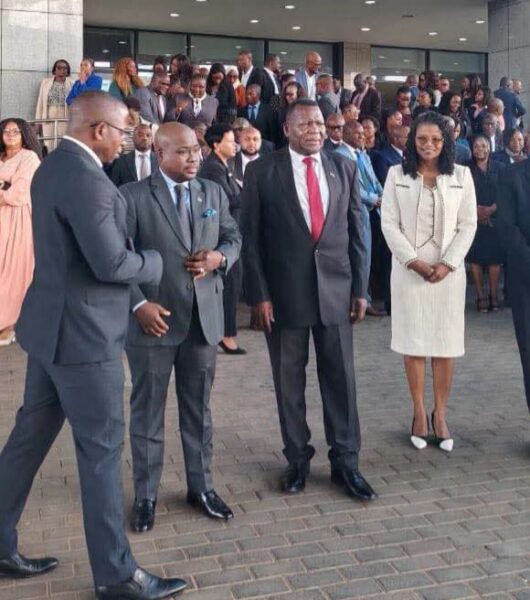
Briefing the committee, the Principal Secretary in the Ministry of Foreign Affairs and International Cooperation, Chauncy Simwaka, confirmed that the law currently requires diplomatic appointees only to be Malawian citizens, without prescribing academic or professional qualifications.
The reform he flagged in the same breath is revealing about where the gap lies: the ministry, he said, is reviewing the Foreign Service Act to introduce qualification requirements specifically for ambassadors and high commissioners, the politically appointed heads of mission.
Career foreign-service officers below that tier — counsellors, first secretaries and attachés — are recruited through the civil service, which does apply qualifications. It is the top political appointments that the statute subjects to a citizenship test alone.
That distinction reframes the debate over Malawi’s roughly two dozen missions and the ambassadors, high commissioners and consuls-general now heading abroad.
The question is not merely whether particular appointees are strong or weak. It is whether a system that, at the head-of-mission level, sets the legal bar at nationality alone can reliably produce the calibre of representation a cash-strapped, aid-dependent economy urgently needs — at precisely the moment the country insists it wants “economic diplomacy” rather than ceremonial presence.
A second ministry official, deputy chief of protocol Mapopa Kaunda, reportedly told the committee much the same: that people are appointed heads of mission essentially for being Malawian.
WHY THESE APPOINTMENTS MATTER MORE THAN USUAL
Diplomatic postings are easy to caricature as sinecures — comfortable exile for the politically deserving. But for a country in Malawi’s position, missions abroad are among the few instruments the state has to change its economic trajectory.
An embassy that works is a channel for foreign direct investment, a broker for trade access, a magnet for tourism receipts, and an advocate in the multilateral forums where debt relief, climate finance and market preferences are decided.
An embassy that does not work is a monthly drain on scarce foreign exchange.
Malawian commentators have made exactly this point about the current batch. Social commentator Moses Mkandawire argued that missions should be judged on their ability to attract investment, expand trade and secure development partnerships, warning that the system too often exists to satisfy the political establishment while the country bleeds economically.
International relations analyst George Chaima questioned whether the missions deliver meaningful economic returns at all, contending that appointments have too frequently rewarded political loyalty over national priorities.
Even a former envoy, John Chikago, who served in South Africa and Japan, cautioned that a posting is not tourism, and that government should first define what it wants from a country before sending anyone there.
This is the standard against which the 2026 cohort should be measured. The criteria that matter for a senior diplomat are reasonably objective: relevant academic and professional qualifications; prior diplomatic or foreign-policy experience; public-sector leadership; international exposure; a record in economic diplomacy and investment promotion; multilateral engagement; strategic communications skill; and demonstrated management ability — all weighed against the specific demands of the specific post.
The stakes are sharpened by the scale of the exercise. The Mutharika administration has cut the diplomatic establishment from 193 posts to 139, a reduction the government frames as austerity, projected to save taxpayers some K7.4 billion a year in allowances and housing alone — real money in a country contending with foreign-exchange shortages, debt and medicine stock-outs.
Trimming the network only raises the bar on who fills the remaining seats: fewer missions means each appointment carries more weight, and less room for passengers.
A first, telling observation is that the list itself has moved. The appointments released by government in May were revised by the time nominees appeared before PAC in June: Belgium, Qatar, Kuwait and other posts show different names or reassigned envoys between the two versions.
Fluidity of this kind, in the space of weeks and after public announcement, is itself a signal of how personalised the process remains.
THE APPOINTMENTS THE EVIDENCE SUPPORTS
Several names in this cohort stand out because their public records genuinely align with their briefs.
Edward Yakobe Sawerengera, returning as ambassador to Washington, is among the cohort’s most experienced hands. His public record shows an agriculture qualification from the University of Malawi (Bunda College) and an MBA from the Strathclyde Graduate Business School in Scotland, followed by roughly two decades at the Agricultural Development and Marketing Corporation, where he rose to deputy chief executive.
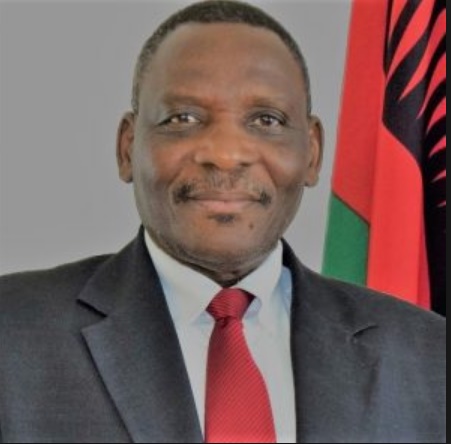
He later led the National Food Reserve Agency and the Malawi Social Action Fund, and served as Director General of State Residences — effectively chief of staff under President Bingu wa Mutharika.
Crucially, this is his second tour in Washington: he first presented credentials there in September 2016, concurrently accredited to Canada, Mexico and the Bahamas.
For the most important economic relationship in Malawi’s portfolio, that combination of managerial seniority, prior accreditation and institutional memory is a defensible fit, though not an uncomplicated one.
Sawerengera’s first Washington posting ended in an unusually public standoff: recalled by the Chakwera administration, he was accused in late 2021 of obstructing his own recall, a charge he strenuously denied, and was given a firm deadline to depart.
Reappointing him is a calculated bet that his experience outweighs that history — at least a coherent bet, which cannot be said of every posting here.
Khwauli Msiska, ambassador to Ethiopia and Permanent Representative to the African Union in Addis Ababa, has already presented his credentials — to the AU Commission Chairperson on 25 June, and to the UN Economic Commission for Africa days later.
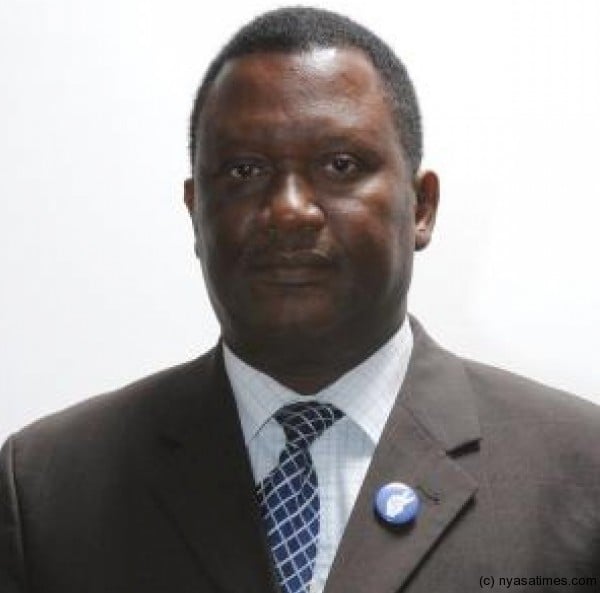
In receiving him, the AU Commission publicly referenced his “distinguished diplomatic career” and “wealth of experience.” Addis Ababa is not a bilateral backwater; it is Malawi’s seat at continental decision-making, where Agenda 2063, the African Continental Free Trade Area and continental peace-and-security questions are negotiated.
An appointee whom the AU itself frames as a career diplomat, rather than a political placement, is the kind of signal the foreign service should want to send. On multilateral engagement, the criterion that matters most for this post, the fit appears strong.
The Brasília mission brings a different profile again in James Woods-Nkhutabasa, whose record is weighted as much toward the private sector as toward government, and whose seniority reads at the level of a head of mission.
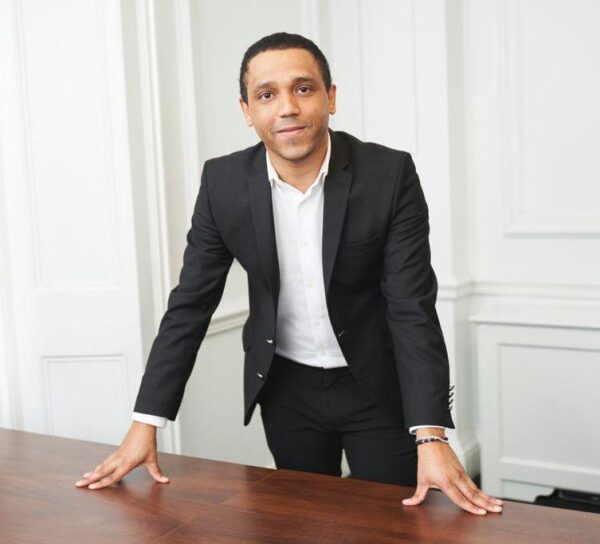
He began at the Mo Ibrahim Foundation between 2011 and 2013, work that included delivering the Ibrahim Prize for Achievement in African Leadership; served from 2014 to 2020 as Country Director and Adviser at Invest Africa, the pan-African trade-and-investment platform; and has since held senior roles at Surestream Petroleum, as a consultant for Ras al Khaimah Gas, at the strategic-communications firm Farrant Group, and as a senior adviser to the Washington-based consultancy KRL International, work reported to include communications advisory to African governments and heads of state across the continent.
He is also a partner and director at Rainbow Sports Global. In government, he served as Head of Chancery at Malawi’s mission to the European Union, accredited bilaterally to Belgium, France, Italy, Luxembourg, the Netherlands, Monaco and Andorra, and to multilateral bodies including the European Commission, the European Investment Bank, the ACP Group, IFAD, FAO and UNESCO.
James Woods holds an Executive MBA from the University of Oxford and a master’s from the London School of Economics, and in 2022 was selected for the Archbishop Tutu Leadership Fellowship, the African Leadership Institute’s flagship programme run with the University of Oxford.
Measured against every one of the objective criteria — academic grounding, diplomatic service at chancery level, multilateral exposure, and economic-diplomacy and strategic-communications experience — his is among the strongest records in this cohort, of a depth more often associated with the head of a mission than a position beneath it.
What these cases share is a documented, verifiable professional history relevant to where the individual is going. That is the benchmark.
Others with good profiles include Robert Dafter Salama, the incoming high commissioner to Pretoria; Dora Mangulama, named to head Malawi’s consular presence in Dubai; and Sam Alufandika, the incoming high commissioner to Morocco.

These individual questions of fit sit within a broader and long-standing critique: that a majority of diplomatic postings, across successive administrations, have gone to the politically connected rather than the demonstrably qualified.
Critics have described Malawi’s embassies as having been turned into “feeding troughs” for the relations and cronies of the powerful, a charge that cuts across party lines. It was levelled at the Mutharika government in a widely circulated 2016 open letter cataloguing ministers’ sons, daughters and spouses posted abroad, and it was put to President Chakwera on the BBC’s HARDtalk over the mooted posting of his own daughter to Brussels, then London.
The vice is bipartisan, which is precisely why it is structural rather than the property of any one leader.
That the concern attaches to this cohort specifically, and not merely to history, is evident from the vetting itself. One nominee, the former broadcasting chief Aubrey Sumbuleta, was abruptly pulled from the diplomatic list mid-process without public explanation, even as others proceeded — a withdrawal that left unanswered whether fresh information had surfaced or internal vetting had raised concerns.
Government has sought to answer the competence critique in part through preparation: the new envoys underwent a diplomatic orientation in late June covering protocol, international cooperation and foreign-policy priorities, and the minister responsible expressed confidence they would serve with professionalism and integrity.
Whether a week’s orientation offsets a lifetime’s absence of relevant experience, in the cases where that is the concern, is the open question.
MALAWI AGAINST THE BENCHMARK
Set beside international practice, Malawi’s structural problem comes into focus. Even patronage-heavy systems such as the United States, where roughly a third of ambassadorships are political, pair political appointees with a professional foreign-service backbone and, increasingly, with published competency expectations.
Regional peers against which Malawi is often measured have leaned toward envoys with demonstrable commercial or technical records, precisely because they treat missions as investment-generation units.
Malawi’s own government appears to recognise the gap. Simwaka told PAC that the ministry is reviewing the Foreign Service Act and intends to propose amendments introducing clearer qualification requirements, alongside a formal performance-appraisal system for diplomats so that recalls are not “left to subjective judgement.”
Lawmakers on the committee pushed in the same direction, observing that the complexity of diplomatic work may demand stricter standards.
That these reforms are being discussed is welcome. That they are being discussed after the appointments were made, and while the law still asks only for citizenship, is the crux of the problem.
WHAT THE COHORT SIGNALS
The 2026 appointments are not a uniform failure, and it would be dishonest to present them as one. In Sawerengera and Msiska, Malawi has sent experienced figures to two of its most important posts, and the AU’s public reception of Msiska suggests the continental seat is in capable hands.
In Woods it has an appointee whose diplomatic, commercial and multilateral record is, by the public evidence, genuinely of senior calibre and a considerable asset for Malawi. The cohort also includes appointees whose relevance is plausible even where their records are thin.
But the dominant signal is structural, not personal. When the qualifying standard for a head of mission is nationality alone, the quality of any given ambassadorial appointment depends less on a rigorous process than on the appointing authority’s individual judgement — the very discretion Simwaka now says should be constrained.
The result is a corps in which genuine strengths and unexplained or politically freighted choices sit side by side, and in which the public is often unable to tell, from the record, which is which. For a country that says it wants economic diplomacy over political expediency, that opacity — and the recurrence of figures from a discredited electoral process — is the real liability.
The test now shifts from appointment to performance. If the ministry follows through on a Foreign Service Act with real qualification criteria and a functioning appraisal system, this cohort could be the last assembled under the citizenship-only rule.
If it does not, the questions raised in that Lilongwe committee room in June will simply be asked again of the next batch, and the next, while the missions keep drawing foreign exchange the country can ill afford to spend on representation that cannot be shown to pay its way.
Follow and Subscribe Nyasa TV :