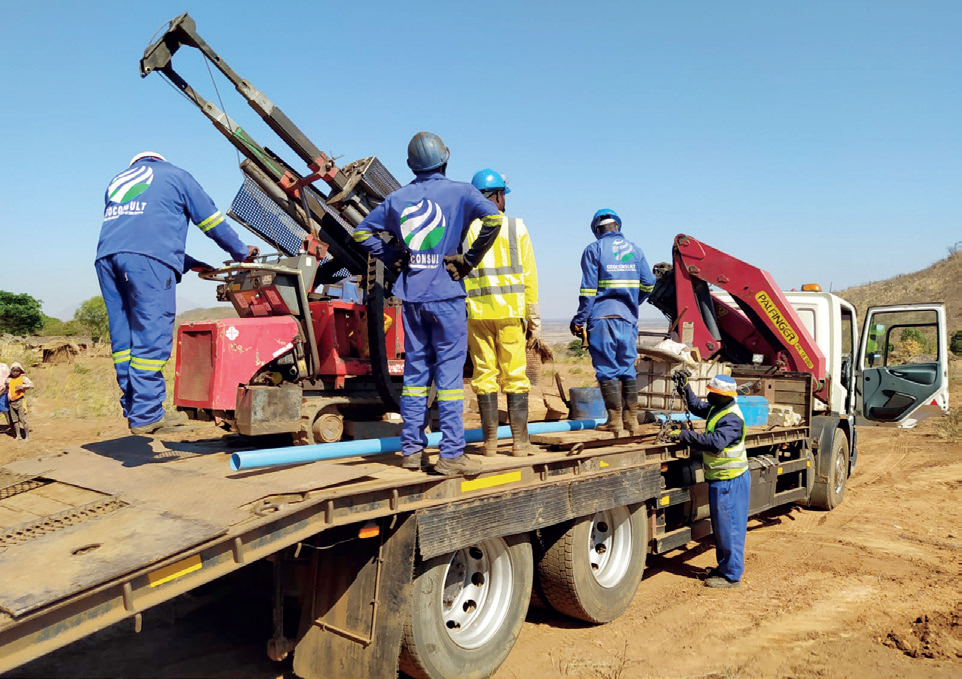
Malawi’s mining sector is projected to generate a staggering $43 billion over the next 14 years, but growing concern is emerging that the country’s districts and ordinary citizens could once again be left watching wealth leave their land while poverty remains firmly rooted in their communities.
Rutile mining at Kasiya in Lilongwe
The warning comes amid renewed calls for government to urgently reform the mining sector’s governance systems, with experts arguing that the current framework sidelines district councils and weakens decentralisation.
At the centre of the debate is the massive Kanyika Mining Project in Mzimba District, which is expected to generate up to $114 million in annual revenue once fully operational. Yet Balaka District Council officials and governance experts say local councils currently receive little to nothing directly from mining proceeds, even when the extraction is happening within their jurisdictions.
Critics say this exposes a dangerous contradiction in Malawi’s mining agenda: billions are expected to flow from the country’s minerals, but communities hosting the projects continue to struggle with poor roads, weak health services, underfunded schools and deep poverty.
Malawi Economic Justice Network (MEJN) Executive Director Bertha Phiri has now called for sweeping reforms to Malawi’s mining governance laws to ensure district councils play a central role in the entire mining value chain.
“There is need for decentralisation of functions and district councils should get part of the revenue,” Phiri said.
She argued that mining reforms must go beyond licensing and taxation, insisting that transparency, accountability and local participation should become mandatory in all mining contracts.
Phiri also pushed for mandatory disclosure of mining agreements and environmental stewardship powers to be devolved to local councils so communities can directly monitor mining activities affecting their land and livelihoods.
Mining policy expert Grain Malunga warned that Malawi risks missing out on meaningful local benefits if district councils remain unprepared and underpowered.
He said one of the country’s biggest failures has been overlooking local content policies, which are meant to ensure mining companies use local labour, local materials and local technologies wherever possible.
“Local content is crucial when it comes to localisation of mining benefits, but it requires preparedness,” Malunga said.
According to Balaka District Commissioner Bibu Yusuf Mdala, the district expects to collect K586.6 million in local revenue during the current financial year against a total expenditure plan of K55.8 billion — a massive gap that leaves councils heavily dependent on central government and donors.
The situation has intensified criticism of the current revenue-sharing framework, where host districts reportedly only benefit through Community Development Agreements (CDAs), which provide a mere 0.45 percent of annual mining revenue.
Governance expert Henry Chingaipe previously supported the creation of a Sovereign Wealth Fund, but stressed that strict controls must be put in place to ensure mining proceeds genuinely benefit communities through investments in infrastructure, education, research and mining development.
Meanwhile, the Malawi Mining Regulatory Authority had not responded to questions over calls for a comprehensive review of the country’s mining laws by press time.
As Malawi stands on the edge of a mining boom worth tens of billions of dollars, pressure is now mounting on authorities to answer one painful question: will the nation finally benefit from its mineral wealth — or will communities continue sitting on riches they cannot touch?