

Mutharika’s aide courts PAC as Dec 13 protests gets more support from Malawi faith groups
The Public Affairs Committee (PAC) nationwide demonstrations set for December 13 to push government of President Peter Mutharika on the enactment of the Electoral Reforms Bills, including the provision of 50+1 proposal of electing the President to replace the much-maligned First-Past-the-Post , has received overwhelming support from more faith groups.
The Evangelical Association of Malawi (EAM) has joined the Episcopal Conference of Malawi (ECM), a group of Catholic Bishops, Malawi Council of Churches (MCC), the Anglican Diocese of Northern Region to persuade their flock to participate in the protests.
The Church of Central Africa Presbyterian (CCAP) in the Livingstonia Synod and Nkhoma Synond have also asked its faithful to join the protests in solidarity with PAC.
The Evangelicals like other faith groups, expressed concern with the non-submission of critical bills on electoral reforms to Parliament.
EAM said it “strongly recommend that the best way to resolve these differences is through open, honest and sincere engagement.,” between the stakeholders, accusing government of Democratic Progressive Party (DPP) of showing no interest on discussions on matters of national interest.
The marches, which will be held under the theme: “We demand Transformative Leadership: Now is the time to reclaim Our Destiny”, demand Parliament to table the controversial Electoral Reforms Bills whose major highlight is the 50+1 win requirement in future presidential elections.
The planned peaceful marches will be held in the cities of Blantyre, Lilongwe, Zomba and Mzuzu.
Last week, PAC presented a petition to Parliament, asking the Legislature to table the Bills.
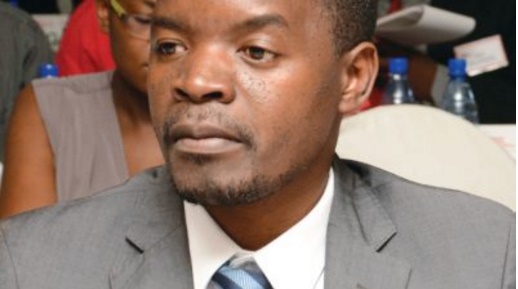
Meanwhile, presidential aide Mabvuto Bamusi engaged PAC officials in a bid to pacify the situation and derail the marches, saying the meeting was part of an interface between government and the watchdog.
He was delegated by President Mutharika to lure the clergy to call off the protests should government table the bills.
Bamusi, who Presidential adviser on civil society (CSOs) said Mutharika’s government “respects the demands made by the religious bodies” on the inclusion of 50+1 provision and gave “the highest assurance” that the process to table in Parliament the bills will start before long.
He said: “Government does believe in conflicts with PAC. It considers the religious grouping and the entire faith groups as friends and partners in development.
Executive director of PAC Robert Phiri said Bamusi hinted that government would start presenting the bills “sometime this week” but quasi-religious organisation will proceed with the peaceful marches “unless otherwise stated by the PAC board of governance.”
But Minister of Civic Education, Culture and Community Development Grace Chiumia has said that Mutharika administration does not support the electoral reforms.
She also accused PAC of being a “bunch of confusionist clergy.”
The Law Commission recommended the following Bills collectively called Electoral Reforms Bills: Constitution (Amendment), Electoral Commission (Amendment), Presidential and Parliamentary Elections Act (PPEA) and Local Government Elections Act, Assumption of the Office of President (Transitional Arrangement) and Referendum.
The most contentious of the Bills relate to the amendment of Section 80 (2) of the Constitution and Section 96 (5) of the PPE Act to provide for a change of the electoral system from a simple majority to a majority of more than 50 percent in the presidential race.
The Electoral Commission (Amendment) Bill as proposed by the Special Law Commission recommended the enactment of the Elections Management Fund to ensure Malawi Electoral Commission (MEC) is financially autonomous.
It also proposed changes in the appointment of the MEC chairperson as well as composition of the commissioners.
The Referendum Bill, on the other hand, aims to introduce legislation on how to conduct a referendum as one does not exist currently.
The Assumption of the Office of President (Transitional Arrangement) proposes amendment to the Constitution to allow that swearing in of President and Vice-President be done after 30 days not within 30 days as prescribed in Section 81 (3) of the Constitution.
Follow and Subscribe Nyasa TV :