

‘No 2nd round’ in Malawi tight presidential election: Afrobarometer survey shows regional preferences persist
Governance expert has said if Afrobarometer survey is anything to go by, the forthcoming fresh presidential election will not have a second round in an expected tight race between incumbent President Peter Mutharika and his main challenger Lazarus Chakwera and that a majority will be obtained to avoid run-off.
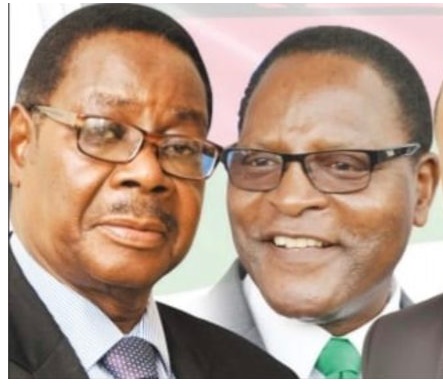
For the first time, a presidential candidate must win more than 50 percent of the vote to avoid a run-off.
Makhumbo Munthali, who is also a member of the Political Scientists Association of Malawi, told Nyasa Times on Friday that with interpretation of “majority” in the presidential election to mean 50 percent-plus-one vote not just more votes and only two key parties and one presidential pretender who can get less than 1% there will be a majority elected winner.
“In fact. There will be no second round,” he observed.
Malawi Electoral Commission (MEC) confirmed three candidates for the fresh presidential election, namely President Mutharika of the governing Democratic Progressive Party (DPP) and United Democratic Front (UDF) Alliance; Chakwera of Malawi Congress Party (MCP), who is leading the Tonse Alliance with eight other political parties.
The other candidate is Mbakuwaku Movement for Development (MMD) president Peter Kuwani who amassed 20 369 votes in the disputed May 21 2019 Tripartite Elections.
Afrobarometer, non-partisan pan-African research network, in its analysis dated May 20 2020 titled Malawians’ Voting Intentions Point to a Closely Contested Presidential Election, says Chakwera of MCP would poll 44 percent because of the Tonse Alliance against 34 percent for the DPP-UDF Alliance.
In the survey, the report shows Malawians’ voting intentions continued to show strong regional patterns.
The DPP led in the populous Southern Region with 59 percent support while the MCP predominated in the Central Region with 55 percent of the respondents while the North was more heavily contested with MCP 46 percent approval followed by UTM Party at 32 percent and DPP on third position with 14 percent.
In his analysis, governance commentator Munthali told Nyasa Times: “ Mindful of possible changing political dynamics following the alliances, going through the Afrabarometer findings and subsequent analysis one clearly sees that the MCP-UTM alliance has more chances of winning the fresh election as compared to DPP-UDF alliance. “
He pointed out that DPP and MCP have clearly shown to be a neck to neck competition as of December 2019.
However, he said it is the value that their alliance partners are adding which will make the difference.
“It is a fact that UDF popularity has significantly decreased, and I would predict UDF not adding more than 4% to DPP-UDF alliance. This is partly the fact that those in UDF stronghold Eastern region had indicated to vote for DPP. In other words, by the time DPP was getting into an alliance with UDF it had already swallowed UDF.
“So I don’t expect much value addition from UDF to the alliance. However, on the other hand while UTM popularity has slightly decreased from 15% (according to the last IPOR study) to 12%, but looking at the areas where UTM boasts of some dominance it would be difficult to see such percentage opting not to vote for MCP-UTM alliance. If anything, the UTM would be adding at least 12% to MCP-UTM alliance, in this case helping the Tonse alliance win.”
In terms of predictions of who will win the election, Munthali said UTM is adding more value to MCP-UTM alliance as compared to UDF doing the same to DPP.
“I would give DPP-UDF alliance a range of 37%- 47% while the MCP-UTM alliance a range of 53% to 63%,” he said.
About 22 percent of the respondents did not declare a voting intention or said they would not vote, according to the survey.
Follow and Subscribe Nyasa TV :