

OPINION | Gangata’s Tough Stand Could Be the Reset Malawi Football Has Needed for Years
There comes a point in every broken system when someone must finally step forward, confront the disorder, and say: enough.
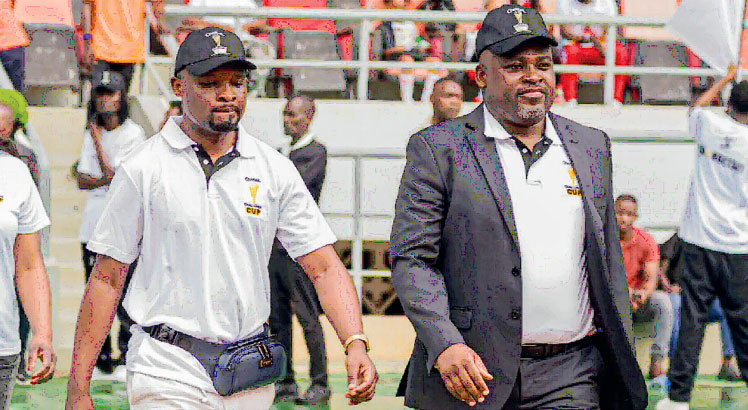
For years, Malawi football has functioned like a house without a headmaster—marked by confusion, recurring power struggles, public disagreements, accusations of favoritism, and administrative disorder. Instead of a unified sporting structure, the game has often resembled competing factions fighting for control, while football itself is left to suffer.
That is why Alfred Gangata’s intervention this week deserves attention—not criticism.
For perhaps the first time in a long while, a government official has openly challenged the culture of indiscipline, poor coordination, and institutional confusion that continues to undermine Malawi football.
And he did so without wrapping it in diplomatic softness.
When Gangata reportedly admitted he felt he had been made to “look like a fool” after failed attempts to mediate the stand-off between the Football Association of Malawi (FAM) and the Super League of Malawi (SULOM), the emotional tone may have grabbed headlines. But the real issue runs deeper than the words themselves.
What he exposed is a long-standing culture of dysfunction—where football institutions operate without accountability, communication routinely breaks down, and personal and institutional rivalries increasingly overshadow the development of the game.
That situation cannot continue.
Football is too important to Malawi.
It is not just entertainment. It is a national unifier, a source of identity, a pathway for youth employment, a platform for investment, and a key contributor to the country’s international sporting image.
But no football system can grow in an environment defined by mistrust, ego clashes, and fragmented leadership.
No serious football nation develops under such conditions.
The uncomfortable truth is that Malawi football has long needed stronger discipline, clearer governance structures, and leadership that prioritises the game above personalities and internal alliances.
In that context, Gangata’s decision to summon all key stakeholders—FAM, SULOM, the Sports Council, and the Women’s Football Association—was significant.
It signalled a shift: government will no longer remain a passive observer while football institutions clash publicly and damage the sport’s reputation.
Even more importantly, his move to temporarily suspend disciplinary processes against SULOM in favour of dialogue reflected a practical understanding of leadership. Real leadership is not about escalating conflict—it is about restoring order before systems collapse under pressure.
Gangata also raised questions many Malawians have quietly asked for years.
Why does football administration repeatedly turn to government for financial support, despite receiving substantial funding from FIFA and CAF?
Why do foreign trips often involve oversized delegations while grassroots football remains underdeveloped?
Why do some stakeholders feel excluded from decision-making within the system?
These are not attacks on football. They are accountability questions.
And accountability is not the enemy of progress—it is its foundation.
In successful football nations, reform began when administrators accepted that the game cannot be run as a closed network of insiders. It must be governed through transparency, professionalism, inclusion, and respect for structures.
That includes respecting communication channels, strengthening governance, and ensuring that all branches of the game—including women’s football—are meaningfully involved in decision-making.
The concerns raised by the Women’s Football Association were especially telling.
When chairperson Adelaide Migogo reportedly indicated that she had been sidelined in key decisions affecting the women’s game, it exposed a deeper structural weakness that cannot be ignored.
A football system cannot claim progress while segments of the game feel excluded from governance.
Growth requires inclusion.
Progress requires structure.
And sustainability requires leadership willing to confront uncomfortable truths.
Of course, Gangata’s intervention will not fix Malawi football overnight.
Real reform is never easy.
Resistance will come. Internal politics will surface. And those benefiting from the current disorder will likely resist tighter accountability.
But if the minister maintains consistency, fairness, and resolve, this moment could mark the beginning of something Malawi football has long lacked: administrative seriousness.
Because talent alone does not build a football nation.
Passion alone is not enough.
Strong football systems are built on discipline, structure, accountability, and leadership that prioritises the game above all else.
That is why Gangata’s tough stance matters.
Not because it makes headlines.
But because it signals that, finally, someone is willing to demand order in a system that has operated for too long in disorder.
And if Malawi football is to grow into a respected, competitive, and commercially viable institution, then this shift is not optional.
It is necessary.
Follow and Subscribe Nyasa TV :