

OPINION: Leaked ESCOM Letter — Why Malawians Need Facts, Not Haste
The circulation of a purported government letter authorising a “No Objection” for ESCOM to proceed with the procurement of transformers and wooden poles has sparked a predictable storm across Malawi’s political and social media landscape.
For some, the document is already being treated as conclusive proof of corruption, political interference, and backdoor deals. Yet a closer examination of the facts suggests a more nuanced reality. If Malawi is serious about accountability, it must resist the temptation to convict on suspicion and instead demand evidence.
At its core, the leaked communication appears to grant the Electricity Supply Corporation of Malawi (ESCOM) administrative clearance to proceed with procurement processes for critical electricity distribution infrastructure. Such “No Objection” letters are not unusual within Malawi’s public procurement framework.
Under the Public Procurement and Disposal of Assets Act (PPDA), procuring entities are often required to obtain approval from relevant authorities before concluding high-value contracts. The existence of a “No Objection” letter, therefore, is not in itself evidence of wrongdoing. It does not constitute a contract award, authorise payment, or prove that any individual benefited improperly.
Equally important is what the document does not reveal.
The letter contains no contract values, no pricing details, no list of bidders, no evaluation scores, and no indication that procurement rules were violated. Claims of corruption, fraud, or procurement irregularities require far more than a single leaked document. They require access to tender records, evaluation reports, PPDA approvals, audit trails, and contract documentation.
Without such evidence, the letter remains a piece of a larger puzzle—not the final picture.
A respected Malawian legal scholar, speaking on condition of anonymity, argues that the greater governance concern may actually be the leak itself.
“Effective public administration depends on professionalism, confidentiality, institutional trust, and respect for due process,” the scholar observed. “When isolated documents are leaked without the accompanying records that provide context, they risk creating misleading narratives and encouraging speculation rather than informed public debate.”
A prominent legal practitioner echoed similar concerns, noting that Malawi has witnessed this pattern repeatedly. Partial documents emerge online, public outrage escalates, political narratives harden, and by the time all the facts become available, damage to institutional credibility has already been done.
That damage is particularly significant when it involves ESCOM, an institution already struggling to maintain public confidence.
The procurement of transformers and wooden poles is not a trivial matter. These are essential components of Malawi’s electricity distribution network. For years, ESCOM has battled aging infrastructure, transformer failures, vandalism, and chronic power disruptions.
Delays in procuring such equipment have real consequences: prolonged blackouts, interrupted business operations, reduced industrial productivity, and compromised service delivery for households across the country.
Viewed from that perspective, the “No Objection” letter could just as easily be interpreted as an attempt to expedite critical procurement processes that are often slowed by bureaucratic procedures.
Whether that urgency came at the expense of procurement regulations is a legitimate question. But it is precisely the question that institutions such as the PPDA, the Anti-Corruption Bureau (ACB), internal auditors, and parliamentary oversight committees are mandated to answer.
Malawi already possesses mechanisms designed to investigate such concerns. The PPDA exists to assess compliance with procurement laws. The ACB is empowered to investigate allegations of corruption. Parliament’s Public Accounts Committee provides political oversight. Internal audit units exist to identify procedural weaknesses.
The challenge is not the absence of institutions. The challenge is allowing those institutions to function before conclusions are reached.
Renowned governance scholar Professor Fedex Houverghton argues that this moment presents an important test of Malawi’s democratic maturity.
“Good governance demands not only vigilance but also fairness and adherence to due process,” he said. “We must resist the temptation to substitute suspicion for evidence and speculation for fact. The mature response is to seek full context, allow competent institutions to establish facts, and permit due process to take its course.”
Replacing formal investigations with social media verdicts weakens accountability rather than strengthening it. It shifts attention away from evidence and toward outrage. It encourages trial by public opinion instead of fact-based scrutiny.
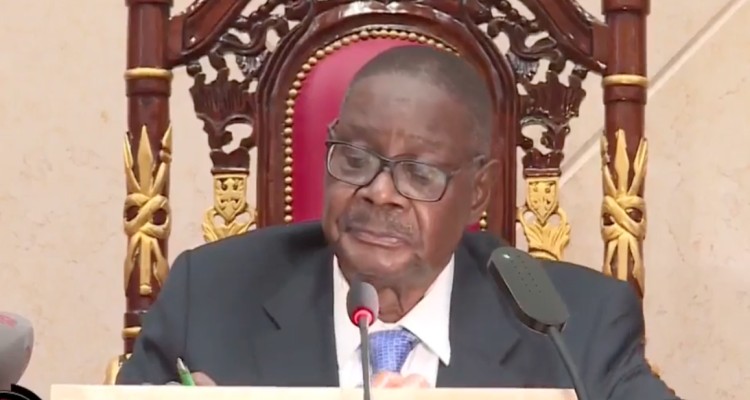
It would also be unfair to hastily attribute corrupt motives to President Peter Mutharika—or any public official—without credible evidence. Throughout his political career, Mutharika has publicly spoken against corruption and advocated for transparency in public resource management. While no leader should be exempt from scrutiny, accusations must be grounded in verifiable facts rather than political assumptions or circumstantial interpretations.
The critical questions remain procedural, not personal:
Was the procurement conducted in accordance with PPDA regulations? Were bidding procedures followed? Was due diligence performed? Did ESCOM’s internal controls operate as required? Did oversight bodies approve the process based on lawful considerations?
These are questions that investigators, auditors, and oversight institutions are equipped to answer—not leaked screenshots circulating on social media.
Ultimately, Malawi’s democracy is strongest when citizens demand transparency and institutions respond through lawful and credible processes. If the leaked ESCOM letter raises legitimate concerns, then the appropriate response is clear: the PPDA should publish its findings, the ACB should clarify whether investigations are underway, and Parliament should seek explanations from responsible authorities.
Transparency achieved through proper investigation builds lasting public trust. Transparency driven by selective leaks often generates more heat than light.
As Professor Houverghton aptly observes:
“A nation that punishes first and investigates later ends up with fear instead of accountability. A nation that investigates first and punishes based on facts ends up with stronger institutions.”
The leaked ESCOM letter warrants scrutiny. It warrants questions. It warrants investigation.
What it does not warrant is a rush to judgment.
Until all the facts are available, Malawi’s response should be guided by vigilance, patience, and an unwavering commitment to evidence-based accountability.
Follow and Subscribe Nyasa TV :