

PMI Addresses Credibility Concerns On Harm Reduction Research
Philip Morris International (PMI) has said that the credibility issue on Harm Reduction research done or funded by the industry is why we must be particularly mindful to ensure that we apply the right science through robust methodologies and best practices on the market.
Overtime, the Harm Reduction research funded by the tobacco industry has been met with skepticism, with many accusing industry players of manipulation to hide the risks of smoke-free products, creating a credibility gap.
Tomoko Iida, PMI Director of Scientific Engagement for Southern & South East Asia, the Commonwealth of Independent States, and the Middle East and African regions, noted in an interview that research findings are shared transparently, whether they are in favour of the industry or not, and that this level of openness should inspire confidence among stakeholders.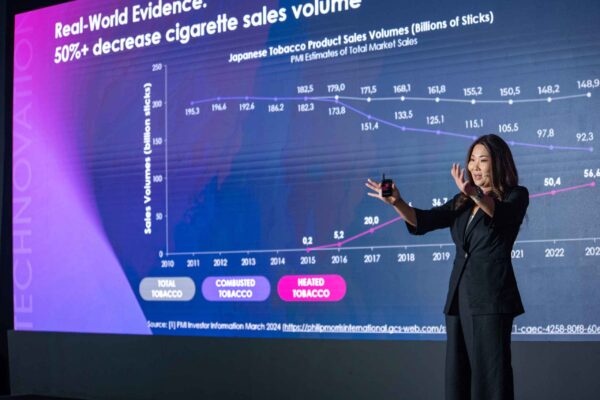
“This is my everyday job. People always ask me, ‘but these are studies funded by you so how can we trust you?’ So from our end we do our best to apply the science in a robust and transparent manner. There is always going to be skepticism and that is why we encourage other stakeholders and governments to do independent studies and research,” said Iida.
She indicated that there have been several independent studies done by governments including Germany and Japan, with their analysis being similar to what the industry has found. There are actually indications that there has been a significant reduction in cigarette sales in Japan between 2016 and 2023. There has also been a rise in the use of heated tobacco products in Japan, suggesting that smokers have switched to safer alternatives.
In Germany, government research on Tobacco Harm Reduction has been influenced by a national strategy aiming for a tobacco-free Germany by 2040, which includes a focus on minimising the risks from tobacco and nicotine addiction. Germany has also tasked its Ministry of Health with preparing and approving revisions to treatment recommendations that include Harm Reduction principles for nicotine addiction.
Iida said that from the independent studies that do not have industry input, stakeholders have so far been convinced that the princples of science applied to Tobacco Harm Reduction strategies are correct.
“The most important one for me is the United States’ Food and Drug Agency (FDA), as this is one of the most strict regulatory agencies when it comes to food, drugs and other substances. They have reviewed all our science and they have actually concluded that the availablility of these products contributes positively to the promotion of public health,” said Iida.
Ms Iida indicated that this was a clear sign that, although stakeholders are skeptical about the industry science, it is credible because independent research has produced the same results.
When asked to talk about the difference in risk between combustible cigarettes and heated tobacco products, Iida explained that research shows the primary cause of smoking-related diseases is burning the tobacco leaf, which then produces harmful chemicals. She explained that approximately 6000 different kinds of chemicals are released when tobacco is burned, and about 100 of these are harmful with some of them causing cancer.
She noted that the risk of heated tobacco is 90 to 95 percent reduced as compared to cigarettes. This is a huge benefit for smokers who switch, and the idea is not for non-smokers to start smoking, but for smokers who cannot quit to have better and safer alternatives.
“The primary cause of smoking-related diseases is the combustion or burning of tobacco. That is why we are producing less harmful alternatives that will provide the same satiation as cigarettes to those who cannot quit,” she said.
For PMI, innovation and technological advancements have brought about the development of less harmful alternatives to smoking such as heated tobacco products, e-cigarettes and nicotine pouches for adults smokers who cannot quit. They say that tobacco control policies therefore need to catch up, as current policies in many regions were originally designed decades ago to combat combustible tobacco-use and are not fully addressing today’s smoking issues.
PMI says that many countries that allow access to and provide information about safer smoking alternatives are experiencing unprecedented declines in smoking prevalence, a situation that improves public health.
Follow and Subscribe Nyasa TV :