

Shake‑up or set‑up? Promotions fuel talk of political patronage
When Willy Kambwandira speaks about public sector reform, he does so with the steady insistence of someone who has watched Malawi’s bureaucracy bend under political weight for far too long.
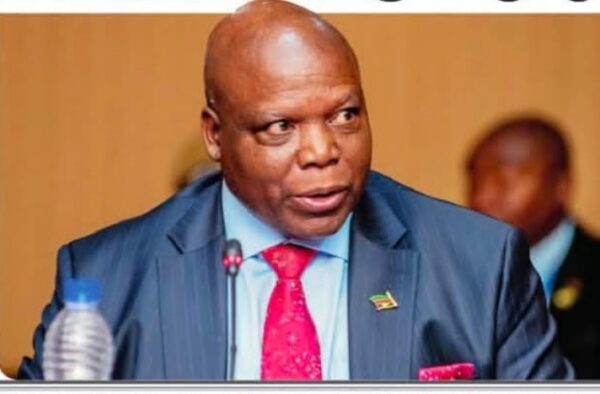
So when news emerged that government had promoted 310 senior civil servants since October — a sweeping reorganisation of directors and deputy directors across ministries and departments — his response was immediate and pointed.
Promotions of this scale, he argued, must be anchored in merit, transparency and institutional need, not expediency.
Kambwandira’s cautionary tone has become the opening note in a debate that now stretches far beyond the numbers. It touches on deeper questions about how the state rebuilds competence, how leadership is cultivated, and how political power interacts with the machinery of government.
A Bureaucracy Long in Waiting
For years, Malawi’s public service has been marked by acting positions, prolonged vacancies and a leadership pipeline that often stalled before reaching senior ranks.
Ministries have operated with directors doubling roles, deputy directors covering gaps, and institutional memory thinning as experienced officers retired without clear successors.
It is against this backdrop that the government’s promotions — 127 directors (Grade C) and 183 deputy directors (Grade D) — must be understood.
Officials describe the move as a long‑delayed correction, a deliberate attempt to stabilise leadership structures that have been drifting for too long.
Chief Secretary Justin Saidi has framed the reshuffle as a strategic intervention.
In his telling, the promotions are not a political flourish but a structural necessity: a way to motivate career officers, reward competence, and rebuild the continuity that allows ministries to function with confidence rather than improvisation.
Saidi’s emphasis on internal progression is notable. For years, civil servants have complained that senior posts were increasingly filled by external appointees — often politically connected, sometimes inexperienced, and rarely embedded in the institutional cultures they were meant to lead.
The new approach, he argues, is intended to reverse that trend.
The Transparency Question
Yet even as government positions the promotions as a technocratic fix, civil society organisations have raised concerns about timing, cost and process.
Kambwandira’s warning — that promotions must be strictly merit‑based — reflects a broader anxiety about how decisions are made within the state.
The promotions come at a politically sensitive moment, with the administration seeking to consolidate its governance agenda while navigating public expectations around accountability.
In such a climate, even well‑intentioned reforms can attract suspicion.
Critics ask:
- Were clear criteria used?
- Were performance assessments conducted
- Were ministries consulted meaningfully?
- And crucially, can the public see the rationale behind each elevation?
These questions do not necessarily imply wrongdoing. Rather, they reflect a growing insistence that public institutions must operate with visible fairness, especially when decisions involve senior leadership.
A System Under Reconstruction
Supporters of the reshuffle argue that the civil service has reached a point where incremental fixes are no longer enough.
They describe ministries struggling with decision bottlenecks, departments unable to plan beyond short cycles, and agencies operating without the leadership continuity needed for long‑term policy execution.
From this perspective, the promotions represent an attempt to rebuild the architecture of the state — to ensure that leadership gaps do not become structural weaknesses.
There is also a generational dimension. Many of the newly promoted officers have spent years in mid‑level roles, waiting for opportunities that never materialised.
Their elevation signals a shift toward recognising internal expertise rather than importing leadership from outside.
The Political Undertone
Still, the political undertone is impossible to ignore. Any major reshuffle in the civil service inevitably intersects with questions of power: who gains influence, who loses it, and how the balance of authority shifts within ministries.
Sceptics argue that the promotions could consolidate loyalty within the bureaucracy at a moment when the administration needs stability.
Supporters counter that strengthening internal leadership is precisely what a reform‑minded government should do.
The truth may lie somewhere in between.
Structural reform and political calculation often coexist, each shaping the other in ways that are difficult to disentangle.
What Comes Next
The long‑term impact of the promotions will depend on what follows. If the newly elevated officers are empowered to lead with independence, competence and accountability, the reshuffle could mark a turning point for Malawi’s public service.
If, however, the process remains opaque or becomes entangled in political expectations, the moment may be remembered as a missed opportunity.
For now, the debate continues — reflective, cautious, and deeply aware that the future of the civil service is inseparable from the future of the state itself.
Follow and Subscribe Nyasa TV :