

Treasury Suspends Funding for Government Contracts Signed Between 2023 and 2025
In one of the most far-reaching fiscal accountability measures in recent years, the Ministry of Finance, Economic Planning and Decentralisation has frozen payments on government contracts signed over a two-year period, raising fresh questions about how billions of kwacha in public resources may have been committed.
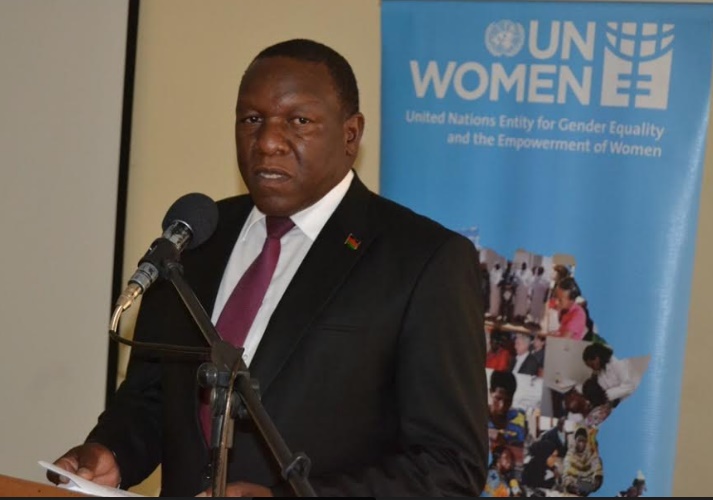
The directive, issued by Secretary to the Treasury Cliff Chiunda, orders a comprehensive review of all public contracts, agreements, guarantees, consents and employment-related contracts signed between September 1, 2023 and September 1, 2025.
Until the review is completed, government ministries, departments and agencies (MDAs) will not receive funding for works and services linked to the affected contracts.
The move signals growing concern within Treasury over the potential financial burden created by contracts entered into during the period under review and marks one of the strongest attempts yet to scrutinise commitments that could be costing taxpayers billions of kwacha.
In a memo dated May 29, 2026, Chiunda directed controlling officers and heads of departments to submit detailed information on all affected contracts, including original contract values, addendums, justifications for cost escalations and evidence that procurement procedures were properly followed.
“Funding will not be provided for the works and services related to these contracts until the review process is completed,” the memo states.
The National Audit Office and the Office of the Attorney General have been tasked with examining the contracts, with all MDAs expected to submit the required information by June 20.
The significance of the exercise lies not merely in reviewing paperwork but in uncovering potential liabilities that may have quietly accumulated over the years.
Public finance experts say many of Malawi’s most costly fiscal shocks have often originated from contracts signed without adequate scrutiny, only for government to discover later that it is legally bound to honour expensive obligations.
Public finance management expert Dalitso Kubalasa described the review as a critical safeguard for public resources.
“Most of the fiscal shocks Malawi faces, including the sudden accumulation of arrears and court-ordered payments, usually stem from a contract quietly signed with a guarantee or consent clause,” he said.
“When these agreements are reviewed properly, we are not just checking for legal mistakes. We are protecting money meant for hospitals, roads, schools and inclusive development.”
Economists argue that the exercise could expose contracts that carry inflated costs, weak legal protections or unfavourable conditions that place long-term pressure on government finances.
Scotland-based Malawian economist Velli Nyirongo said the review could help government identify contracts exposing the State to unnecessary risks and liabilities.
“In many countries, poorly negotiated contracts and weak oversight have resulted in significant financial losses, costly disputes and unexpected obligations,” he said.
The review comes at a time when government is under increasing pressure to tighten expenditure and improve public financial management amid mounting debt and constrained fiscal space.
Corporate governance expert Jimmy Lipunga observed that the exercise could provide government with a clearer picture of contingent liabilities attached to contracts and guarantees that ultimately become obligations of the State.
“This may be in the context of computing the national debt. Under the Public Finance Management Act, it is Treasury’s responsibility to monitor debt levels and programme payments accordingly,” he said.
The contract review follows another major accountability initiative launched shortly after the return of President Arthur Peter Mutharika and the Democratic Progressive Party administration: a nationwide audit of public servants aimed at identifying irregularities in the government payroll.
That audit was triggered by a dramatic increase in the public sector wage bill, which rose from K479.6 billion in the 2021/22 financial year to a projected K1.6 trillion in the 2025/26 financial year, consuming a substantial share of government resources.
Legal experts have, however, cautioned that while government has the authority to review contracts, any decision to vary, suspend or terminate legally awarded agreements must be backed by evidence and follow due process.
Private practice lawyer Benedicto Kondowe warned that failure to follow the law could expose government to costly lawsuits and compensation claims.
“The key consideration is that any decision must follow due process and be supported by evidence to avoid exposing the State to legal liability,” he said.
For many observers, the payment freeze represents more than a routine audit exercise. It is a signal that Treasury is increasingly concerned about hidden obligations, contract inflation and potential procurement irregularities that may have accumulated over the years.
The coming weeks could reveal whether the review uncovers genuine fiscal risks or merely confirms that public contracts were awarded and managed in accordance with the law. Either way, the exercise is likely to shine a spotlight on billions of kwacha in government commitments that have largely escaped public scrutiny.
Follow and Subscribe Nyasa TV :
This should also to do with councils in shortest period after funding to avoid such irregularities
Those responsible officers who will be found with negligence should be answerable as small interprenuers like us have been burdened without payments while keeping contract for nothing