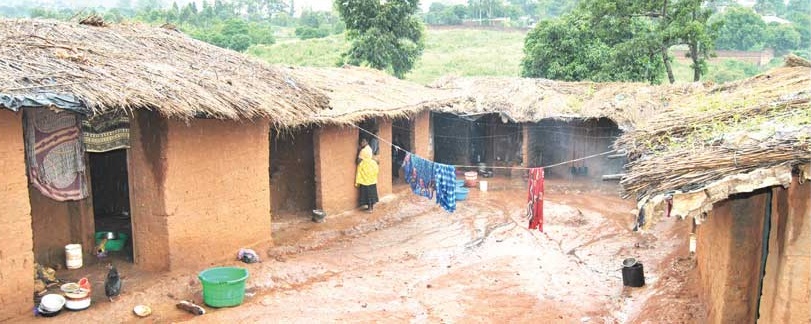
A new United Nations Development Programme (UNDP) report has painted a grim picture of life in Malawi, revealing that nearly six in every 10 Malawians are trapped in multidimensional poverty — a level of deprivation so severe that millions are living without adequate food, clean water, electricity, education and healthcare.
Poverty levels extreme in Malawi
According to the 2025 Human Development Report titled “A Matter of Choice: People and Possibilities in the Age of AI,” about 55.9 percent of Malawi’s population is living in multidimensional poverty, translating to approximately 10.8 million people enduring overlapping hardships that continue to cripple the country’s economic and social progress.
Unlike traditional poverty measurements that focus only on income, the Global Multidimensional Poverty Index (MPI) used in the report examines how people are deprived across several areas at the same time — including nutrition, child mortality, years of schooling, school attendance, sanitation, drinking water, electricity, housing and access to basic assets.
Malawi recorded an MPI score of 0.231 based on the 2019/2020 survey data, one of the clearest indicators yet of the country’s deep-rooted structural poverty crisis.
For millions of ordinary Malawians, the statistics reflect a harsh daily reality: children going to school hungry, families living in houses without electricity, communities surviving without clean water or proper sanitation, and patients struggling to access healthcare services.
The report defines a person as multidimensionally poor when they are deprived in at least one-third of the ten key indicators measured.
This means poverty in Malawi is no longer just about lack of money — it is about entire households being locked out of the minimum conditions required for human dignity and productivity.
The report further warns that the poverty crisis is increasingly colliding with the digital age.
According to UNDP, poor households with little education are also the least connected to the internet and digital technology, effectively excluding millions from modern economic opportunities as the world rapidly shifts toward digital commerce, online services and artificial intelligence-driven economies.
In practical terms, this means many Malawians are being left behind not only in agriculture and industry, but also in the new digital economy that is shaping future jobs and wealth creation globally.
The report also exposes the weakness of Malawi’s productive economy.
With Gross National Income (GNI) per capita standing at just 1,634 US dollars in purchasing power parity terms, the country’s labour force remains severely constrained by poor health, limited education and inadequate infrastructure.
Economists say such conditions make it almost impossible to achieve meaningful economic transformation because productivity cannot rise when the majority of citizens lack the basic tools needed to participate effectively in the economy.
Malawi’s ranking of 172 out of 193 countries on the Human Development Index (HDI) further highlights the scale of the national crisis.
The ranking places Malawi among the world’s least developed countries despite years of economic recovery plans, donor support and long-term development strategies.
Economist Marvin Banda described the findings as evidence of a much deeper economic breakdown that threatens the country’s long-term future.
“An economy cannot grow meaningfully when its labour force is hungry, undereducated and disconnected from productive infrastructure. We cannot continue celebrating marginal GDP growth figures while the majority of citizens live outside the minimum conditions required for productivity,” Banda said.
He warned that unless Malawi undertakes radical policy reforms, the country risks failing to achieve the ambitions of Malawi 2063, the national development agenda aimed at transforming Malawi into a self-reliant industrialised economy.
Malawi School of Government economist Francis Thauzeni said the report confirms that a large proportion of Malawians remain trapped in absolute poverty and continue struggling to access basic social services.
He said the findings should force policymakers to urgently rethink priorities in healthcare, education, infrastructure and social protection if the country is to reverse the worsening poverty trend.
The report ultimately presents a stark warning: Malawi’s development challenge is no longer theoretical or distant. It is visible in the daily lives of millions of citizens who remain excluded from the most basic conditions needed to survive, compete and prosper in a rapidly changing world.