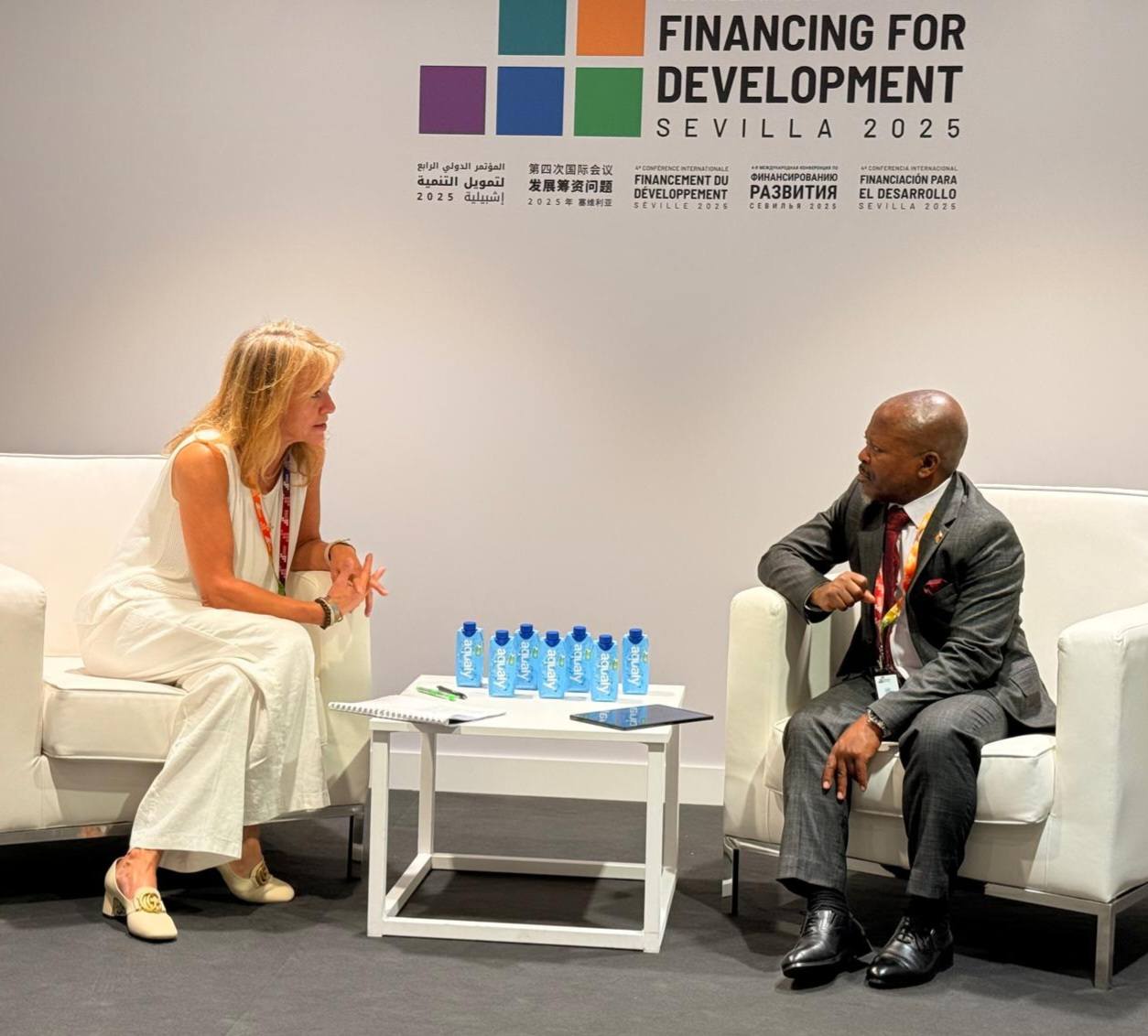
Vice President Michael Biswick Usi has finalized high-impact diplomatic and policy engagement at the 4th International Conference on Financing for Development (FfD4) in Seville, Spain. Leading a high-level delegation on behalf of President Lazarus McCarthy Chakwera, Usi made a compelling case for reimagining global financing systems—boldly urging international partners to move from rhetoric to action, and from pledges to tangible support for nations like Malawi.
Usi in Spain
A Voice for the Vulnerable
Under the conference theme “Financing the Future,” Usi’s addresses—both at the plenary and in side events—centered on a recurring message: Malawi, and many nations like it, are disproportionately affected by global shocks, yet continue to be sidelined in global financial structures. He called for a radical shift that would see vulnerability to shocks—like climate change and economic instability—used as a basis for access to concessional financing.
“It’s no longer enough to name the challenges,” Usi declared at a Commonwealth side event. “The time has come to deliver real, practical solutions.”
Reforming the Financial Architecture
Usi didn’t mince words when he urged reforms in the mandates of multilateral development banks, credit rating systems, and fair access to liquidity for developing nations. In plenary sessions, he argued passionately for:
Debt relief and restructuring for nations overwhelmed by repayment burdens.
Highly concessional loans tailored to LDC realities.
Enhanced representation of developing countries in financial decision-making spaces.
Increased transparency in climate financing mechanisms.
His candour, according to EU officials present at the conference, “cut through the diplomatic fog” that usually clouds such forums.
Bilateral Boost: Iceland, Norway, Luxembourg Step Up
Amid growing concerns over donor fatigue and reduced aid, Usi used the sidelines of the conference to rally support from traditional allies—and even woo new ones. In bilateral meetings with officials from Norway, Iceland, and Luxembourg, the Vice President secured reaffirmations of support in key sectors like:
Health
Education
Governance
Luxembourg, which previously channelled aid through the EU, expressed interest in establishing direct cooperation with Malawi—an encouraging development as the country seeks to diversify its donor base.
Human Capital First: A Plea to Development Financiers
At a high-level roundtable co-hosted by the Gates Foundation and DEVEX, Usi brought a domestic lens to a global issue—calling for targeted financing in health and human capital development.
“No development will be sustainable if our people are sick and dying young,” he said. “Human capital is the bedrock of progress.”
He cited the long-standing success of Malawi’s HIV programmes, backed by the Global Fund, as evidence that smart, targeted investments in health can yield national dividends.
Climate Financing: Enough Talk, Let’s Move
One of the most compelling moments of Usi’s tour came during climate financing discussions. He strongly condemned the endless cycles of “talk-shop” COP meetings that, in his words, leave Malawi “with no real benefit despite bearing the brunt of climate shocks.”
“Fancy global statements are not always useful. We need to diagnose our problems and act with precision. The people in the Global South need solutions—not slogans,” he said.
His remarks struck a chord with several EU delegates, including an EU Commissioner who praised Usi for “telling it like it is.”
Commonwealth, Gates Foundation, EU – Will They Deliver?
Usi’s time in Spain wasn’t just about Malawi—it was about amplifying the collective frustration of many Least Developed Countries. Whether the international community will rise to the occasion remains to be seen. But one thing is clear: Malawi’s Vice President made sure no one left Seville unaware of the urgency.
Why It Matters for Malawi
Usi’s engagements in Spain carry long-term implications. If his proposals are adopted:
Debt service burdens could ease, allowing Malawi to redirect funds toward development.
New financing windows could open up for climate-resilient agriculture, healthcare, and education.
Stronger bilateral ties could cushion the country from aid withdrawals and policy shocks.
In a post-COVID, climate-volatile world, Vice President Usi’s performance on the global stage was more than diplomacy—it was a demand for justice in global development finance.
The Road Ahead
As the world digests the outcomes of FfD4, Malawi will need to follow up with action—translating Usi’s compelling vision into grounded policies, well-prepared project pipelines, and clear development priorities. The Vice President has set the stage. Now, the country must rise to the challenge.
“The journey from Seville begins now. Not with more meetings—but with bold, local action backed by fair, global finance.”