

World Bank credits Malawi with fiscal discipline as Mwanamvekha hails ‘candid’ report
The World Bank has praised the Malawi government for demonstrating stronger financial discipline, saying public finances are finally showing signs of improvement after years of double-digit deficits.
In its latest Malawi Economic Monitor, the Bank describes the shift as an initial step toward fiscal consolidation following a prolonged period of overspending.
According to the report, the overall budget deficit, including Reserve Bank of Malawi operations, stood at 8.8% of GDP in the 2025/26 financial year, narrowing by 1.7 percentage points on the previous year. While the deficit remains elevated, the Bank notes that budget execution stayed within the envelope approved by parliament for the first time in more than five years, with expenditure falling below the ceiling set at the mid-year revision.
“This marks a notable departure from the pattern observed over the preceding five years, during which budget outturns largely exceeded both the original and revised deficit targets,” the report states.
The primary deficit also narrowed, falling by 3.3 percentage points of GDP relative to the previous financial year – a reduction the Bank characterises as an early sign of fiscal consolidation.
Revenue gains and spending controls drive the improvement
The Bank attributes the positive trend to a combination of stronger revenue collection and more disciplined spending. New measures, including an increase in the VAT rate from 16.5% to 17.5% and an expanded electronic invoicing system, have helped push domestic revenues to 18.6% of GDP in 2025/26.
That figure remains below both the 19% target set out in Malawi’s Domestic Revenue Mobilization Strategy (2021-26) and the sub-Saharan African average of 21.9% of GDP, but the trajectory is described as encouraging. Tax revenues, meanwhile, rose to 16.8% of GDP, bringing Malawi in line with the regional average.
The Malawi Revenue Authority (MRA) is credited as central to the improvement. The World Bank says the rise in tax revenue was driven by stronger income tax receipts, aided by a resilient banking sector, improved collection of goods and services taxes, and higher non-tax revenue, including dividend payments from parastatals.
The report singles out MRA’s expanded e-invoicing system and tighter enforcement of tax compliance as key factors in closing revenue leakages and boosting both VAT and income tax collection – enhancements that have, for the first time in years, brought Malawi’s revenue effort into line with the regional average.
On spending, stronger control measures helped reduce total expenditure by 0.6 percentage points of GDP, bringing it down to 29.8% of GDP in 2025/26.
The World Bank suggests that if the MRA sustains its revenue drive and government maintains spending discipline, Malawi could consolidate its fiscal gains, reduce its reliance on costly domestic borrowing, and free up fiscal space for critical capital investment.
Government response
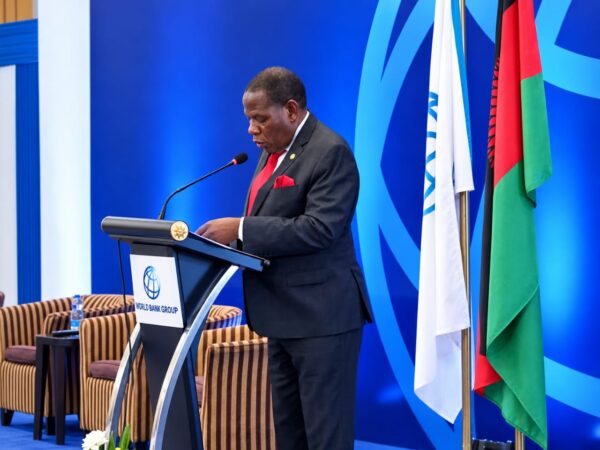
Speaking as guest of honour at the launch of the report, Minister of Finance, Economic Planning and Development Joseph Mwanamvekha welcomed the findings, describing them as a fair reflection of government’s efforts to restore fiscal discipline.
“I want to thank the World Bank for this candid and balanced report. It confirms that the tough decisions we have been making are beginning to bear fruit,” said Mwanamvekha.
He pointed to the narrowing of the fiscal deficit to 8.8% of GDP, down from higher levels the previous year, and to government staying within its approved budget for the first time in over five years, as evidence that fiscal consolidation efforts are taking hold.
The minister also praised the MRA for driving revenue growth through measures including the VAT increase and the expanded e-invoicing system, which he said had helped lift domestic revenues to 18.6% of GDP and tax revenues to 16.8% of GDP, now on par with the regional average.
Mwanamvekha said government intends to sustain this discipline in order to reduce reliance on expensive domestic borrowing, stabilise the economy, and create room for investment, job creation and private sector growth.
“Our focus now is to ensure that this discipline is sustained and that Malawians feel the benefits through lower inflation, stable prices, and more resources for development,” he said.
Follow and Subscribe Nyasa TV :