

Zomba rated third poorest district in southern Malawi
Zomba District has been rated as the third poorest district in Southern Region of the country (Malawi) after Nsanje and Machinga, the district’s 2017 Social Economic Profile (SEP) has revealed.
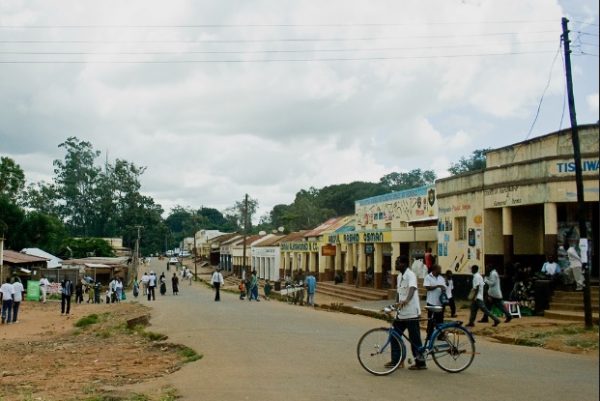
The old capital’s social economic status was revealed during presentation of the district SEP at an extra ordinary full council meeting on Friday. The document was compiled under Local Government Accountability Project (LGAP).
A consultant for LGAP, Markward Themba, said Zomba was not doing well in terms of development.
“There is need for authorities to consider looking back and reflecting on their potential to find ways of improving in this devolution time.
“Being the former capital city of Malawi, I was not expecting Zomba to be on third position when it comes to poverty level of the citizens,” said Themba.
In an interview, Chairperson for Development Service Committee at the council, Councillor Evance Namakoka said revelation by SEP of the district’s social economic status was a wakeup call to authorities, especially the secretariat.
Namakoka said the profile would help the council to know areas which remained behind in development.
He added the SEP would also be used as a tool at all development structures, so that all development decisions are kept in line with the situation at hand.
Speaking in a separate interview, one of the councillors who opted not to be mentioned said he was not surprised to hear that the district was rated that way.
He said lack of transparency, poor commitment and selfishness among council secretariat members were some of the major issues ‘killing Zomba’ in terms of development.
“Zomba is blessed with a lot of projects but in terms of implementation it is where we need to focus on and improve,” he said.
He cited projects like Shire River Basin Management and Malawi Flood Emergency Recovery Project (MFERP) as some of the projects which he said could really change things in the district.
‘Millions of kwacha are invested in such projects but when you go on the ground you will believe me that something fishy is happening,” he said.
He however commended the Department of Forestry for changing the face of Sub Traditional Authority Ngwelero through the project called Food for Assets implemented by World Food Programme (WFP).
He said the area had improved in terms of reforestation as the hills around were now turning into forests. Among other areas, the social economic profile tackles security, commerce, health, education and agriculture.
Follow and Subscribe Nyasa TV :
How did a misguided report of this unprofessional nature get to be published or publicized. There are processes that are followed in inviting consultancy studies. Lets dig further to determine the authorities in the District Council/City Council/Financing Entity who are behind such shoddy work.
I think there is confusion on what is called ‘Zomba District’ in this report. Under the Local Government Act there are two territorial local governments in Zomba. The urban one is a city headed by a Chief Executive who works under the political structure headed by a mayor. Strictly speaking the gathering of the city representatives of councillors is what is called a ‘City Council’ previously called an ‘Assembly.’ The area of the City Council extends from somewhere near Chinamwali where a signpost welcomes you to ‘Zomba City’up to somewhere near 3 miles. That territory is actually the forth most developed place after Blantrye, Lilongwe and Mzuzu.
There is another jurisdiction with its own territory. It constitutes all the rural area before chinamwali and after 3 miles. Again before the air wing and after Zomba mountain edge. All that area outside the city is Zomba District. It is a different jurisdiction headed by a District Commissioner. It has its own councillors who also constitute an ‘Assembly’ or a ‘Council.’ Their head is called a ‘Council Chairman,’ they only call them mayor when they chair ma councillor a mu city area not a ku district area.
All the so called cities in Malawi have two local government areas. A district headed by a District Commissioner and a City headed by a Chief Executive. In Lilongwe if you have a rural ‘issue’ such as zokhudza estate yako you go kwa a D.C. near Area 3 because estates or farms are found in Lilongwe District .i.e. the rural area. However if its an issue about plot yako ku Area 25 you go ku City Council office ili ku City Centre kumene kumakhala Chief Executive komanso a Mayor a Lilongwe chifukwa za ma plot ndi za mu city area osati ku district.
The report produced is about Zomba District not Zomba City which is the forth most developed area in Malawi. Zomba District is indeed so poor it always competes with Nsanje and Machinga for the bottom slot.
The two entities work independently. They do different developments and are funded separately by government.
As a matter of fact all districts in Malawi are poor. Poverty is poverty. It is mediocre mindset to start rating which district is more poorer than the other.
Get rid of Mutharika. Arrest all his corrupt croonies. Then see all districts emerge out of poverty.
This is quite surprising considering that Zomba is apparently a city. At this rate it would be more advised to remove the City status of Zomba. In my view, the significance of Zomba as a city is past its prime.
Let us not forget that in Zomba there is Zomba District Council and Zomba City Council with jurisdictions over rural welfare and urban welfare respectively.
The study gathered data in rural areas of Zomba where poverty levels are high and generalized the findings of the study as if they also apply in Zomba urban which is under the jurisdiction of Zomba City Council.
This is persuasive and misleading as income per capita in the urban Zomba is never captured in the study.
For your information Zomba City is considered as the administrative capital of the Eastern region with relatively high income per capita as compared to all districts in the Eastern region and second to Bt City in the southern region.
University of Malawi, Chanco. Domasi. Cobbe Barracks, Changalume Barracks, Airwing, Police Eastern region headquarters, Prison headquarters, Central Hospital, National Statistics, MANEB, YONECO. Chawe inn, Southern Region Water board, Lands Offices DIGNITAS, MIE, Hotel Masongola Annes Logde, Robins Park, Banks etc Let alone Asians and Chinese shops provide job and businesses opportunities to the residents of Zomba. This translates into high income per capita.
Chancellor College alone brings money from all districts in Malawi through students especially with the increased intake of students who rent houses in the nearby areas in Zomba
Surprisingly the study has ignored the contribution of these institutions in improving stds of living for Zomba residents.
It is buffling to hear the consultant saying Zomba being a former capital City cannot be on position 3 on poverty levels.. bla bla bla yet he surely knows that he is using information gathered from rural areas of Zomba which in no way has got nothing to do with Zomba City let alone Zomba District as a collection of Urban and rural Zomba)
In conclusion the study is a flop and misleading. It has applied data captured in rural areas of Zomba indiscriminately and carelessly with no data in urban Zomba to portray that Zomba is the 3rd poorest district in the southern region.
SHAME Zandinyasa heavy. Next time pass by my office. I will give you relevant information.
The report is about Zomba as a whole. So it is not misleading. Let the authorities manage the district properly with a mind to serve the people well.
That’s why people talk about federal system of govt whereby each region will be able to develop based on the resources generated within their jurisdiction. As it is now, all monies generated in the whole eastern region go to Lilongwe as a capital city and little is left to develop other districts. Too many big projects are embarked in Lilongwe and Blantyre and yet monies are collectively collected from these districts. Ndalama zonse za Eastern region zizigwiritsidwa ntchito yachitukuo mu eastern region not otherwise. Za Southern region, Central region and northern region same same. Statistically, how much money are we generating in the eastern region?. Panopa all the monies collected as taxes from this region zikumapita ku Lilongwe ndi Blantyre. Nice infrastructure, road network, etc only in BT and LL. What about the rest of the districts?
Resources are allocated efficiently except where the sitting president comes from that district kumadzatukuka kamba ka iyeyo otherwise forget about devt.
The removal of the capital city from Zomba to the central region by the MCP government impacted negatively on the economic growth of the town.I urge all Zomba residents not to entertain the MCP when it comes to your district to campaign for votes in the next general elections.
MCP has no place in Zomba, they must know it. They created a notorious maximum security prison, mikuyu prison, domasi prison where suspects/ convicts were severely tortured to death in these prison cells. People were chained like dogs for the rest of their lives. What remain in Zomba are: Prisons and Mental Hospital. We all believe that Peter Admin thru Zomba City Council has constructed several small roads with tarmac and when we vote him into power in May, 2019 he will build more roads. In Zomba we believe in DPP-led govt that it will deliver after May, 2019.
This is a false survey. Zomba cant be the third poorest in Southern Malawi. Where is Neno which has no tarmac road , no district hospital , no bus depot, no visible trading activity, no hotel, no secondary school, no university, no teachers college, no any tangible farming activity? Zomba has a new beautiful tarmac road, it has a general hospital, its has a bus depot, the town is a bit developed, it has Ku Chawe Hotel, five big and famous secondary schools ( Box 2, Masongola, Mulunguzi, Police, St. Mary’s ), its the home of Chanco, Domasi Teachers College and Domasi Institute of Education. There is rice scheme in Zomba. Can you compare all this with Neno?
A fictitious survey indeed. Generally, it is correct to say that Zomba was not doing well in terms of development. It is also correct to say that there is lack of transparency, poor commitment and selfishness among council members who are indeed ‘killing Zomba’ in terms of development. These selfish councilor members award contract to entities in which they have “shares” or one which belongs to a relative. The work that these entities execute raises a lot of questions. This point to the revelation that planners to develop Zomba with high standards are in deep slumber. Among others, the council does not have a deliberate policy of advising property developers to erect buildings that have three or four storey along the M1. Most of those erected along that stretch are single buildings such that in a few years’ time these will look substandard. Then you have the Gymkhana Club. It is now in state of disrepair. Are council members or town planners aware of the status of this building? These observations need attention in order to enhance the image of Zomba as a city. But to lank it after a smaller district such as Neno is very questionable.
It is per capita income than matter not infrastructure development bambo. If you take your time to go through socio-economic profiles of all districts, you would get answers to your questions. For instance, Neno people are very much involved in production of fruits and vegetables on top on being one of the main source of chacal (Makala) and curios which are hot businesses. Similarly the shire highlands, (Blantyre, Thyolo, Mulanje, Chiradzulu and Phalombe) are the main producers of milk for the whole country, smallholder tea farming, legume (Nandolo, Sawawa) production at large scale at national level, fruits and vegetables feeding Blantyre and source of construction materials (trees, bricks and sand) for Blantyre city etc. Tell me, how much do residents of Zomba directly benefit from the presence of Chanco, Ku-Chawe Inn and the schools you mentioned? Chiradzulu was one of the poorest a few years ago but now benefits from construction boom in Blantyre city. There are many districts that think they are doing well based on past records when dynamics have changed.
These are indeed there but what do the general population of Zomba do to earn a living compared to Neno people who grow a lot of vegetables fruits and earn money. Most likely the vegetables that college uses come from Nemo. So the Nemo farmers benefit from Zombas college than the Zomba populace. In other words Zomba people are consumers and Nemo are producers.
is chiladzulo, Nneno, Mwanza, Chikwawa, Mulanje, and Phalombe better than Zomba?
It may not be a false survey as you call it. If you check Malawi Demographic and Health Surveys (2011, 2017), which are government/official reports, they have a similar statistic on poverty line (both poor, and ultra-poor) as expressed in this article. The measure is not about infrastructure. Rather, it’s about household income. So, even though Zomba has an advantage in infrastructure (like those you’ve mentioned), and its city residents may have better income, the masses in the village is poor and others ultra-poor. Also, note that it’s not about Zomba City. Rather, it’s about Zomba District. That’s why Zomba district rates third poorest in the country.