

African countries revive calls for debt cancellation: Push lenders to ‘free’ Africa once and for all
Dozens of delegates from African countries have converged in Malawi’s capital, Lilongwe, to push developed countries and global lenders – including the World Bank and International Monetary Fund (IMF) – to cancel their debts.
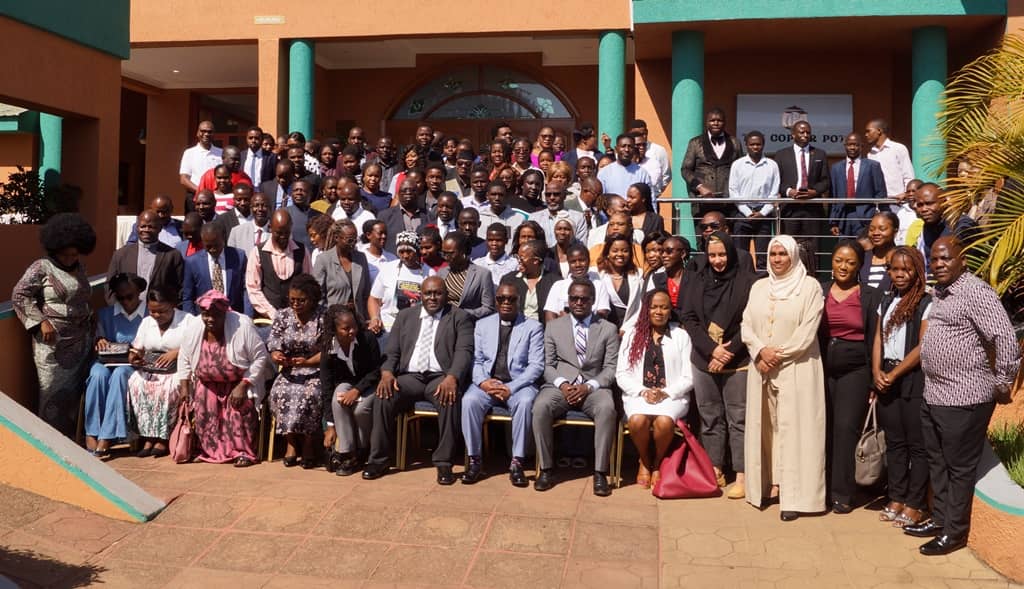
Riding on the banner of Africa International People’s Tribunal on Public Debt, the conference has brought together senior government officials, the academia, representatives from the civil society, youth, women movements, legal practitioners, analysts, and the media.
The Malawi Economic Justice Network (MEJN) has organized the conference in collaboration with the African Forum and Network on Debt and Development (AFRODAD) and Save the Children International.
In his opening remarks, Malawi’s Chief Economist in the Ministry of Finance and Economic Affairs, Dr. Waziona Ligomeka, lamented that ‘external debt has become a fiscal burden and a structural barrier to development’.
“The costs of debt servicing have, in many cases, hindered investments in health, education, and other key sectors. We therefore call upon international creditors both bilateral and multilateral as well as private lenders, to consider comprehensive debt cancellation for low-income countries burdened by unsustainable debt. This is not a plea for charity, but a demand for fairness and recognition of the development constraints we continue to face due to factors not of our making,” said Ligomeka.
According to the Chief Economist, the current debt accumulation in Malawi, and many other African countries, did not arise in a vacuum, highlighting historic structural vulnerabilities, including dependency on commodity exports with fluctuating prices, natural disasters and climate shocks as some of the factors.
Ligomeka also cited unfavourable borrowing terms, especially from commercial lenders, with high interest rates and short repayment periods, as another reason for the skyrocketing debt levels for African countries.
“Even as we advocate for debt cancellation, we affirm Malawi’s responsibility and commitment to reform and self-reliance. As Malawi, we are actively pursuing a domestic reform agenda aimed at raising our tax-to-GDP ratio to 22% by 2028. We developed a Domestic Revenue Mobilisation Strategy (DRMS) that is ending next year targeting to increase the tax to GDP ratio from 12% in 2021 to 17% in 2026. We are largely on target with this hence the revision of the target to 22% by 2028,” he said.
Speaking earlier, MEJN Vice Board Chairperson, Reverend Innocent Chikopa, demanded demanded debt cancellation and reforms that prioritize people over creditors.
Chikopa also recommended that African leaders ‘must adopt a new public debt management system, ensuring transparency, accountability, and parliamentary oversight’.
“Borrowing must be tied to high-impact projects that benefit our people, not just enriching a privileged few,” he said, lamenting reduced spending on essential services.
At this point, the cleric called upon African governments to speak with one voice, pushing for a fairer global financial system that serves people’s needs.
Chikopa vowed that Africa will no longer be held hostage by debt-driven development models that sacrifice its future for the benefit of creditors.
“Together, we can forge a new path, one that prioritizes economic justice, human rights, and sustainable development,” se emphasized.
In her remarks, the AFRODAD Policy Officer, Afshin Nazir, disclosed that that by 2022, Africa’s debt was hovering around USD 1.8 trillion, adding that several African countries are paying more in debt servicing than they are paying to fund essential services.
Follow and Subscribe Nyasa TV :