

ANALYSIS | Experts Commend Minister Mwanamveka for Steering Malawi’s Economy Towards Recovery in Six Months
Governance and economic experts have commended Minister of Finance Joseph Mwanamveka for his role in steering Malawi’s economy towards recovery within six months of returning to office.
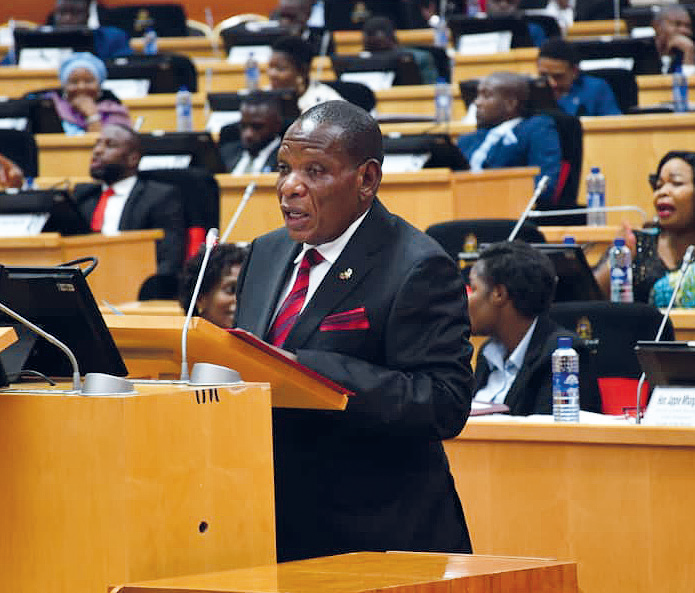
In just six months, Mwanamveka has moved from crisis management to laying a measurable foundation for recovery, with economists and governance experts crediting his “calm, calculated” approach for pulling Malawi’s economy back from the brink.
Returning to office amid severe macroeconomic strain, Mwanamveka inherited an economy choked by forex shortages, fuel debt, and runaway public spending. Six months later, key indicators are shifting.
Mwanamveka has overseen the formulation of a K11 trillion national budget for 2026 anchored on stabilisation and growth. Under his guidance, the economy — which is projected to have grown by about 2.7% in 2025 — is expected to improve to around 3.8% in 2026.
The recovery is being driven by targeted investments in four productive sectors: agriculture, mining, tourism, and manufacturing.
Economist Mavuto Bamusi says the difference is leadership that “diagnoses before it prescribes.”
“What we are seeing in six months is not rhetoric. It is sequencing,” Bamusi said. “He has prioritized forex inflows first by re-engaging international financial institutions. You cannot talk about industrial productivity when you can’t import raw materials. He understood that easing the forex crunch was step one, and he’s delivering on it.”
Mwanamveka’s engagements with multilateral lenders have been aimed at unlocking critical foreign exchange, a move Bamusi says is already easing pressure on imports and industrial output.
On public finance, Mwanamveka has taken what experts call “firm, unpopular but necessary” steps to restore discipline.
He has ordered a purge of ghost workers from the public payroll, launched recovery of over K250 billion in outstanding public loans, and enforced transparency in politically sensitive funds including the Constituency Development Fund (CDF).
Governance expert Undule Mwakasungula says these moves signal a break from past fiscal recklessness.
“For years, the problem has been leakage. Money budgeted never reached the people,” Mwakasungula said. “Mwanamveka is closing those taps. Eliminating ghost workers and chasing K250 billion in loans is not easy politically. But it shows commitment to prudent use of public resources. That’s what Malawians have been demanding.”
Mwanamveka is also tackling structural debt head-on, including managing a K1.2 trillion fuel-related debt burden that had threatened to cripple energy supply chains.
Crucially, Mwanamveka has resisted calls for abrupt currency devaluation, opting instead for long-term stability.
Bamusi argues this is the mark of “calm leadership” in a volatile environment.
“Devaluation is the easy button. It gives you forex on paper but destroys households overnight,” he said. “What Mwanamveka is doing is harder: rebuild reserves, manage debt, restore production. It’s slower, but it’s sustainable. In six months, to have inflation expectations starting to cool and growth projections revised upwards — that is measurable.”
Both experts agree the measures are being rolled out in a tough climate. Inflation remains high and debt is heavy. Yet the direction, they say, is unmistakable.
“What more should Malawians expect in a minister in six months?” Mwakasungula posed. “You have a K11 trillion pro-growth budget, ghost workers being flushed out, K250 billion in loans being recovered, CDF transparency enforced, fuel debt being managed, and forex negotiations yielding results. That is a full plate.”
He added: “These are deliberate and calculated efforts to rebuild Malawi’s economic resilience. He is not chasing headlines. He is laying a foundation.”
Bamusi said the next six months will be about converting stability into household relief.
“The first six months were about stopping the bleeding. The next six are about recovery reaching the market, the pump, the pay slip,” he said. “But you cannot recover without stabilising first. That’s what Mwanamveka has done.”
In half a year, Mwanamveka has shifted the narrative from crisis to control: growth projected up from 2.7% to 3.8%, fiscal leaks being sealed, forex inflows being negotiated, and structural debts being managed without shock devaluation.
For Mwakasungula, the scorecard is clear: “Calm leadership with measurable results. That’s what Malawi needed, and that’s what it’s getting.”
Follow and Subscribe Nyasa TV :