

Calls for Malawi to bring back Freedom Day: Scrape off Kamuzu Day holiday, ‘it’s glorifying rejected dictator
Some Malawians and commentators have argued that Kamuzu Day holiday on May 14 to celebrate the life of founding president Hastings Kamuzu Bands who died on November 25 in 1997 must fall and Freedom Day should be reinstated on June 14.

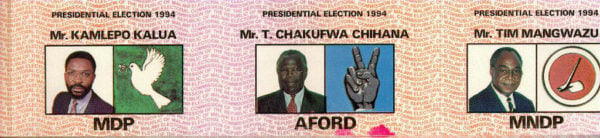

arrested, tortured, sent into exile, and sometimes maimed or killed.

Those who spoke to Nyasa Times said holiday on May 14 and should be scrapped off and the nation should stop glorifying the rejected dictator if democracy still matters as it did in 1993 when Malawians wanted change.
Kamuzu Day has often been a low key event and is mostly celebrated by his family and the Malawi Congress Party (MCP).
Malawians want to the Freedom Day on June 14 back so that citizens should commemorate reintroduction of multi-party democracy in the country and share history to the youth on the struggles to end one-party dictatorship.
June 14, 1993 is a day Malawians took to a decisive referendum to publicly reject their long time silent hatred of 31 years of Kamuzu Banda’s dictatorship.
The day was set aside by former president Bakili Muluzi, Malawi’s first democratically elected president in 1994, who gallantly fought for multiparty democracy and defeated Kamuzu in 1994 elections.
Muluzi’s handpicked successor, late Bingu wa Mutharika who rose to the Presidency in 2004 —charged by politicking not a sense of statesmanship and collective memory—just moved and scrapped off June 14 as a public holiday.
“Hypocrites are leaders who muted the June 14 holiday immortalizing the Big No to the excesses of the so-called ‘father and founder of the Malawi Nation’ in preference for an overdrive in honour of the very monster we wholeheartedly wanted to forget,” James Chavula is on record writing.
And another writer Ephraim Nyondo also argued that is imperative that Kamuzu Day must fall and Freedom Day should be reinstated.
He argues that the nation should not value the deeds of one man whose rule left terrible scars on people’s conscious.
“I don’t know about you, but I refuse, with a deep sense of arrogance and protest, such a discourse. I refuse to let the might and spirit of those that—amid threats, whips, property forfeiture and killings—braved the seasons and voted NO to continued Kamuzu’s 31-year-rule of ‘death and darkness’, to use the late Chakufwa Chihana’s catchphrase.
“Kamuzu Banda, like every subsequent president, was not extraordinary. I argue, and I can write a paper on this, that he was just an average leader with a privilege of having too much power to dictate things to the advantage of himself and those close to him,” he wrote.
Great and honoured in his fighting times, revered and reviled in the three decades Kamuzu ruled and fallen graciously in his end, he was one of Malawi’s rare son, the nation’s fighting and liberating spirit only fallen in the memories of posterity as ‘that dictator’.
University of Malawi political scientist, Blessings Chinsinga, believes Kamuzu was responsible for atrocities since he was the president of the country.
“We may not say he was directly responsible for the killings. But since he was a leader and in control of Malawi’s administration, he was to blame. Thus he sanctioned those incidents just as leaders give authorities,” explains Chinsinga.
Some political experts share the view that Kamuzu was responsible because as president, he was responsible for the welfare of his people and incidents as those could not have happened behind his back.
External and internal pressure forced Kamuzu to call for a referendum in 1993, giving Malawians a chance to choose whether they wanted to continue with his one party authoritarian rule or to adopt multi-party democracy. 64% of Malawians chose the latter. This led to a 1994 general elections where Kamuzu lost to Bakili Muluzi. Kamuzu was gracious in defeat; he congratulated Muluzi and wished him well before the vote count was over.
Before his death November of 1997, the aged and frail Kamuzu made a public statement asking Malawians who suffered under his autocratic leadership to forgive him. It was an unprecedented and unexpected move. The once mighty “lion” had been humbled, it could no longer roar and it was now owning up to its brutal past. Malawi prides itself as a “God fearing nation”, so probably Kamuzu knew that these “God fearing people” would indeed forgive him, as their Bibles teach. Kamuzu tolerated no dissent or opposing views for the entire 30 years he was in office. If Malawi is indeed a “God fearing” nation then Kamuzu was second inline – he was a demigod to be feared and revered.
Kamuzu created an inward-looking country, where he acquired this divine status that all his people were supposed to look up to.
Muluzi was slightly different probably because he was a direct successor. Yet he did his best to erase Kamuzu’s name, renaming almost everything that bore Kamuzu’s name. It was Bingu wa Mutharika who built Kamuzu’s lavish mausoleum at taxpayers’ expense. Yet in life Mutharika , who also copied the Kamuzu title of ‘Ngwazi’, feared Kamuzu so much that he spent years in self-imposed exile during Kamuzu’s reign. After only one year in office, Joyce Banda also already renamed State House “Kamuzu Palace”.
It is this kind of nostalgia that has compromised transitional justice in Malawi. Malawi could well be the only country that celebrates the life of its autocratic dictator.
Tossing around Kamuzu’s name and image as a political tool is making Kamuzu into a heroic saint that bears little resemblance to the historical record. He was a ruthless authoritarian that caused a lot of pain to many people whose relatives and parents languished in jails, exile and some were killed without committing any crime at all. He ran a state without a justice system. He was the sole arbiter of truth. This is the side of Kamuzu that is slowly being erased from nation history, deliberately or not, and as we blur the lines of our past, it becomes more and more difficult to understand our present. Airbrushing Kamuzu’s legacy and creating false nostalgia that is only aimed at diverting the national psyche from current leadership failures is not only injustice for those that suffered during his reign, it also stifles national progress and development.
Malawi will not develop if nostalgia and hero-worshiping are drivers of its leadership. The country needs visionary leaders ready for public service. Leaders with policies that can drive the nation forward; this has nothing to do with anybody’s age, gender or tribe. Here the electorate have a role to pay: look beyond personalities and focus on their policies instead.
Follow and Subscribe Nyasa TV :