

Chakwera says Affordable Inputs Programme ‘huge success’ for Tonse govt
President Lazarus Chakwera has said the Affordable Inputs Programme (AIP) for the 2020/21 growing season which his government launched to replace Farm Input Subsidy Programme (Fisp), has been a success.
Fisp which was run by the previous regime was associated with a number of challenges, including fraud, corruption and logistical issues especially in hard-to-reach areas.
But Chakwera said the Tonse Alliance government’s flagship AIP to give all farming households in Malawi access to cheap fertilizer has been “a huge success.”
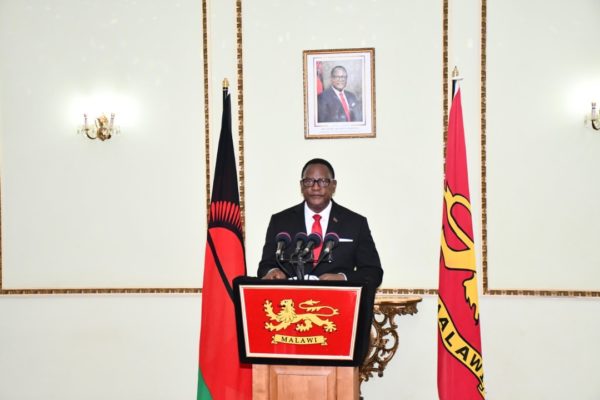
Speaking in a televised national broadcast on Sunday said on Tuesday this week, the Minister of Agriculture Lobin Lowe will present a report on how AIP has performed.
He said the report will include video footage of the maize fields across all regions.
“I hope you will make time to watch that report live on television,” he said.
However, Chakwera said his administration will not be complacent by allowing unscrupulous middlemen to exploit the AIP success “to impoverish the farmers who have done the hard work of ensuring that this year’s harvest is bigger than that of any year on record. “
To ensure that farmers are the primary beneficiaries of their produce, Chakwera said bhis government has ensured that the State-run Agricultural Development and Marketing Corporation (Admarc) has enough funding to buy maize from farmers directly and as soon as the maize moisture content is right.
“Additionally, I have instructed that markets should open early enough to facilitate this policy, and I do not want to hear that ADMARC officials are exploiting this policy to enrich themselves and defraud farmers.
“The same applies to buyers of tobacco at Auction Floors, where I am confident that farmers who succeed in maintaining crop quality will be rewarded by buyers with the offer of competitive prices.”
Initially sold as universal subsidy by the Tonse Alliance during the campaign, the initiative turned out to be a near five-fold expansion of Fisp that only targeted 900 000 farming families for less than K30 billion per year while AIP is covering 4.2 million households for K158.3 billion at a much lower redemption price.
Every smallholder farming household is entitled to a 50-kilogramme (kg) bag of NPK; a 50-kg bag of Urea; either five-kg of maize seed or seven-kg of sorghum or seven kg of rice seed, depending on the farmer’s preference.
Follow and Subscribe Nyasa TV :