

Economic inequality potential for conflict in Malawi: Gwengwe urges IMF and World Bank for specific interventions
Chairperson of the Budget and Finance Committee of Parliament, Sosten Gwengwe, has said income inequality between the richest and poorest in Malawi continue to widen and says it could be recipe for conflict if not well managed.
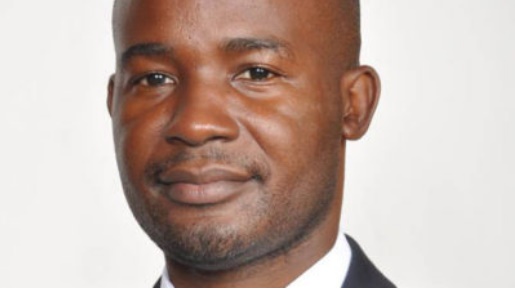
Gwengwe drew attention of Bretton Woods Institutions in Washington DC, United States of America where he is attending a 2019 Joint Annual Meeting by the World Bank and the International Monetray Fund (IMF), pointing out that the wealth continued to be owned by a small minority in the country.
He said government need to invest public funds into essential services like schools and hospitals, and creating jobs for young people.
“Income inequality erodes social cohesion in society and this is a potential source of conflict between the haves and have nots [the rich and the poor] if not managed properly,” said Gwengwe.
Gwengwe is part if the Malawi delegation led by Minister of Finance Joseph Mwanamvekha and participated in the Global Parliamentray Workshop hosted by the Parliamentray Network on the World Bank and IMF.
He said a large section of Malawians continue to get poorer and poorer while on one hand the rich are getting richer.
A report by Oxfam ‘A dangerous divide: the state of inequality in Malawi’, warned that If Malawi does not change the trajectory of its growing inequality, 1.5 million more Malawians will fall into poverty by 2020.
It said: “In 2015, 8 million people—50 percent of the country’s population—live in poverty.”
The experts warn that if the situation is not reversed, the figure could hit 9.5 million, pulling an extra 1.5 million Malawians into the poverty trap.
“Solving inequalities cannot work with blanket solutions. IMF and World Bank should help fund specific interventions for specific countries,” Gwendwe suggested.
Malawi’s Gini coefficient shows the extent to which robust economic growth is benefiting the rich while leaving the poor behind.
Gini Coefficient, which is a commonly used measure of income inequalities, shows how close a given distribution of income is to equality and inequality with the closer it gets to one the more unequal is the distribution the country is.
The 2019 African Economic Outlook Report commissioned by the African Development Bank (AfDB) painted a gloomy picture of Malawi’s poverty levels, showing that poverty remains widespread at 51.5 percent nationwide as at 2017, up from 50.4 percent in 2010.
Follow and Subscribe Nyasa TV :